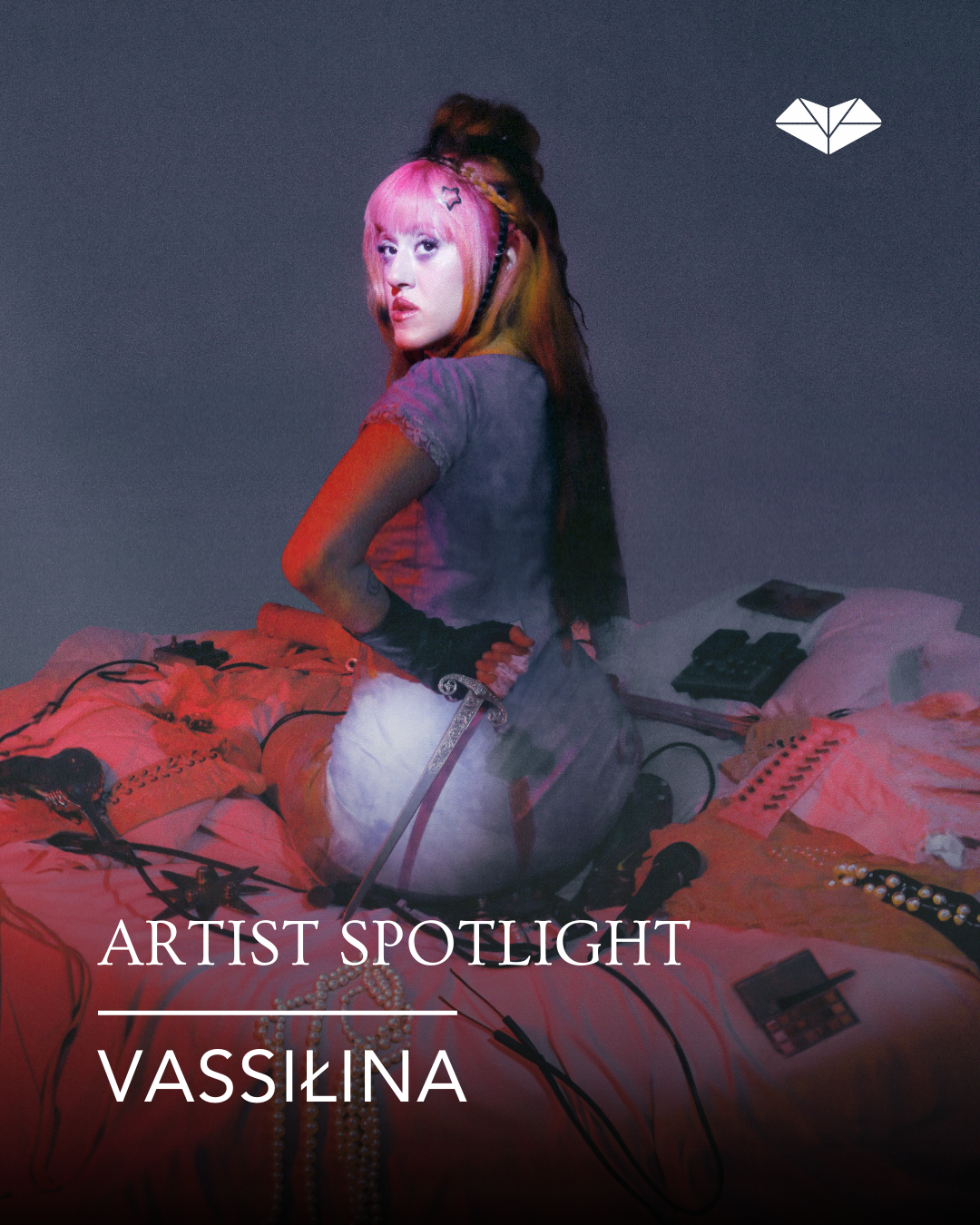
Vassilina x Lissyelle
Athens-born, London-based avant-pop artist VASSIŁINA returns with i.par.ksia.ko, her second album and first written entirely in Greek. Released via Kiki Music, the record was developed between London and Athens with producer TOTALWERK (Tom Wright), building on the dark electronic and electro-pop foundations of her 2021 debut Fragments while moving into more personal territory shaped by migration, identity, and family.
The project began as a collaborative EP with Greek indie and alt-pop artists before evolving into a full-length album. Its title—Greek for “existential”—reflects the experience of living between places and versions of yourself. Tracks including “Dolini,” “Red Flag,” and “Katadiki” explore belonging, emotional inheritance, and the uncertainty of entering a new phase of adulthood, while an interlude featuring a recorded conversation with her mother brings these themes into direct focus.
Inspired in part by Alice in Wonderland, the album incorporates AI-processed vocal excerpts alongside field recordings and layered vocal arrangements, reflecting shifts in voice, language, and identity. Since releasing Fragments, VASSIŁINA has performed across Greece, the UK, and Germany, including shows at the Athens Digital Arts Festival and London’s Shacklewell Arms, and has opened for artists such as Miss Kittin and Kadebostany.
In this conversation, she discusses the personal experiences behind i.par.ksia.ko, her approach to voice and technology, and the realities of building an artistic practice between cities.
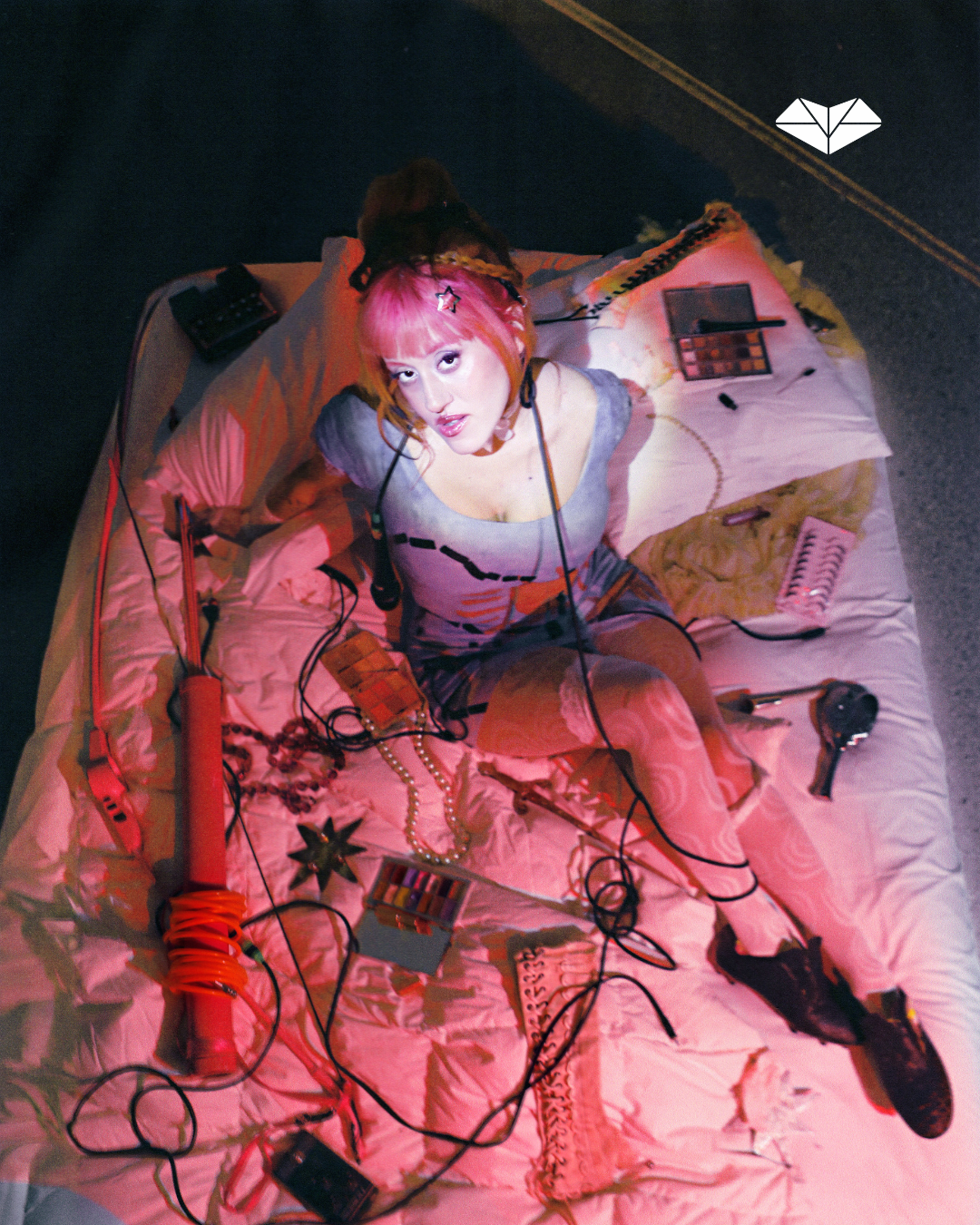
Vassilina x Lissyelle
Your album i.par.ksia.ko explores identity, belonging, and existential transitions. What is the story behind the project?
i.par.ksia.ko /“existentia” was written during a time of constant movement between London and Athens. It was a period of intense questioning: where do I belong and who am I in the process ? When you migrate between cities and countries, your identity doesn’t feel stable, it adjusts depending on the language you’re speaking, the room you’re in, the version of yourself that environment expects.
The album became a map of those parallel lives: the small-town girl, the city girl, the Greek girl in London, the ex-orthodox Christian girl, the daughter, the immigrant, the girl in therapy, the artist vs the girl in depression .It captures the sensation of living on unstable ground, as if the ground could collapse at any moment and choosing to remain present rather than escape
After years of therapy and taking SNRIs, I kept confronting the same question: why do I have this need to radically change my life? Is it a pattern of self-sabotage or is it evolving and curing your trauma?
The record also explores inherited guilt, shaped by growing up within an Orthodox Christian Environment and the emotional legacy that passes quietly between mothers and daughters. Constant shame that is rarely spoken but deeply rooted .
It’s the first time I’ve written entirely in my mother tongue. That choice made the process more exposed and more truthful and weirdly it became my most extroverted work so far.
The record incorporates AI-processed voice excerpts and conceptual storytelling. How did you approach using AI as part of the creative process? What did it allow you to explore sonically or conceptually?
I didn’t use AI as a replacement for humanity. I wanted to reflect exactly the feeling that we’re constantly being asked to adapt, accelerate, and reshape ourselves in order to survive within late capitalism. The pressure to produce more, to optimise, to become more “efficient” versions of ourselves , more westernize. It reshapes our confidence and identity.
We move countries for opportunities. We shift accents to be accepted more. We fragment who we are to fit systems that were not built for us.
So using AI on my voice just to alter my accent was about exaggerating that fragmentation. It became a sonic metaphor for how we are already being altered by technology and music industry by the demand to constantly reinvent ourselves and how awkward and unreal that actual make us sound.
What is your favourite part of making music, and what is the most challenging part that audiences rarely see?
The best part is the creation itself, that raw, unfiltered moment of inspiration. It feels almost like a drug. A creative rush that takes over your whole body. It’s like stepping into a deep emotional retreat or an intense, non-verbal therapy session. You access parts of yourself you didn’t even know were there. That state is addictive. It’s one of the few spaces where I feel completely aligned instinctive, present, untamed.
The most challenging part is everything that follows that goes beyond the music itself. The waiting. The planning. The endless emails. The rejections.
You pour your whole self into something vulnerable and then, suddenly, you’re expected to become the manager, the strategist, the content creator, the producer, the negotiator, the art director everything except the musician. You’re asked to package and promote something deeply personal within systems that often ignore or dismiss it.
There’s also a subtle pressure to reshape yourself in order to make that personal work more “marketable.” So you find yourself altering parts of who you are just to amplify something real inside you. And when the results are slow or invisible which they often are, it can be deeply disheartening. It takes enormous emotional stamina to continue creating when recognition isn’t immediate.
For emerging artists trying to build meaningful connections, what is your best networking tip?
I think we hear so many tips and stories but realistically Is very subjective. Most of the times is all about luck. Of course, if you are staying back home and not talking to anyone You will rarely see results. For me, I can only do what works best with my ethics. I freak out when I have to network. I still do it but My social anxiety peaks. I prefer real connections and to be honest that where I see actual results. I love collaborating with other creators.
Collaboration should feel aligned, not transactional. Show up consistently. Support others genuinely. Don’t be competitive with others. You are you and they are them. The right people stay and will support you when there’s mutual respect and support.
Which three women in music have inspired you the most?
Bjork; for building entire ecosystems around her work and never compromising her artistic language.
SOPHIE; she didn’t just contribute to hyperpop, she reshaped the sound of contemporary pop altogether.
Kate Bush; for theatrical Performativity and fearless experimentation long before it was safe to do so.
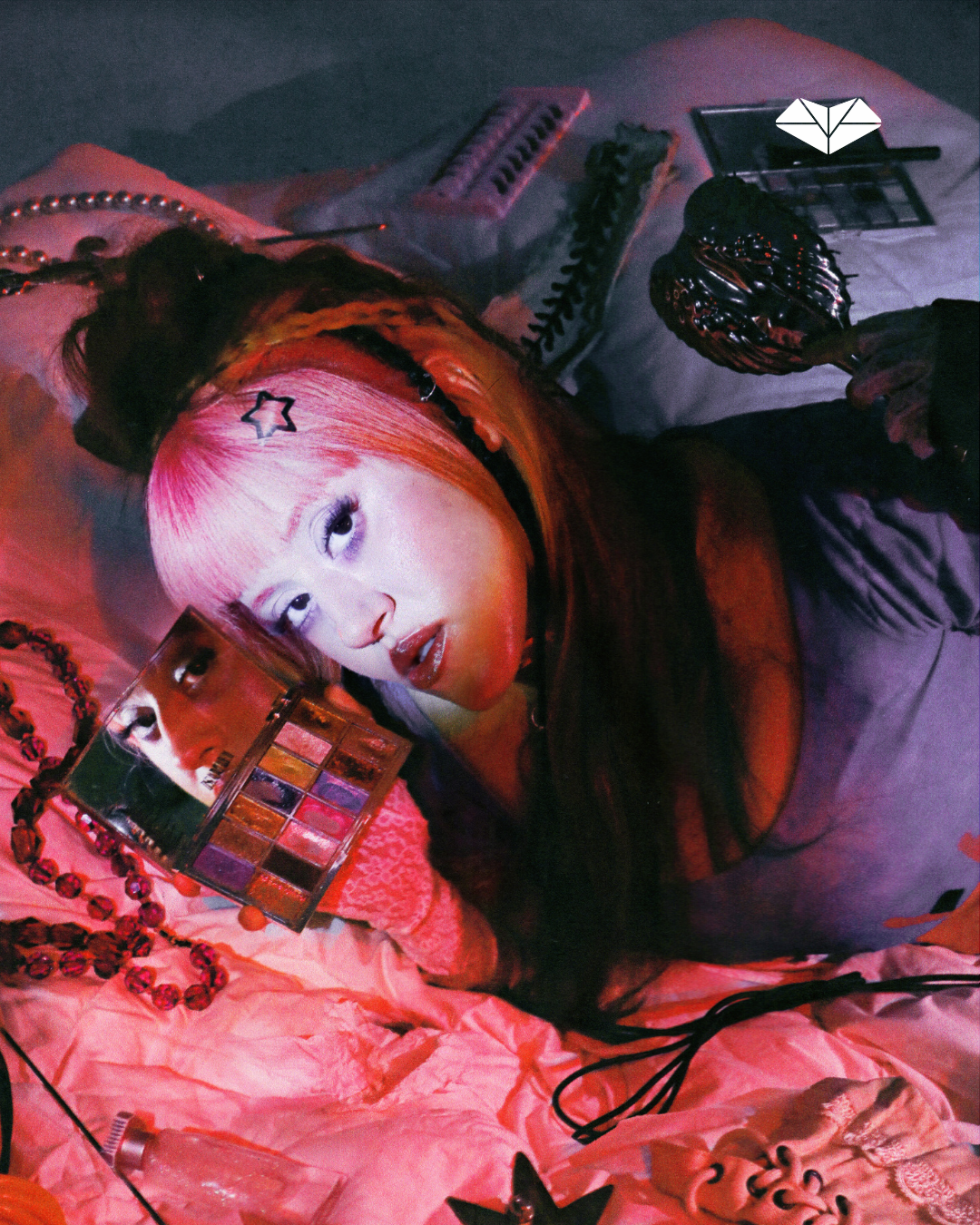
Vassilina x Lissyelle
What is your best advice for young people who want to become producers, singers, or songwriters today?
Do your research and talk to other artists. Stay open. As women especially, we believe that we have to struggle alone in order to prove our worth by doing everything the hard way. That process is so isolating.
My perspective shifted completely when I started connecting with other femme artists while studying at Goldsmiths in London. I attended a female and non-binary music technology group called Omnii and for the first time I felt genuinely empowered in production spaces. Community changes everything.
Understand production at least to the level of building strong demos. Learn the basics of the music industry, contracts, publishing rights, booking etc. Observe how other artists made it. Talent alone is not enough. At the same time, don’t let the industry take away the reason you started creating in the first place. If you have a vision stay true to it. Be patient with your timing.
And build a team. No meaningful vision is built entirely alone. Collaboration doesn’t weaken your voice ,it strengthens it. You can create much more powerful worlds when you allow others to contribute to them. I keep on saying how my stylist and co-art director is now essential part of my band. I grew up so much and evolved as an artist and a person since I started collaborating with Vinyl Face.
What are you listening to most at the moment?
I go through phases but It’s been almost two years that I can’t stop listening to Oklou. So I’d say Oklou’s music . it’s not a phase for me. I also love the new album of A Greek artist and a friend of mine Olina and I love to explore new artists.