Credit: Leanne Dixon
In a culture that still often presents DJing as open and accessible, the reality for many emerging artists tells a different story. Access to equipment, music libraries, networks, and physical space continues to shape who gets to participate and who progresses.
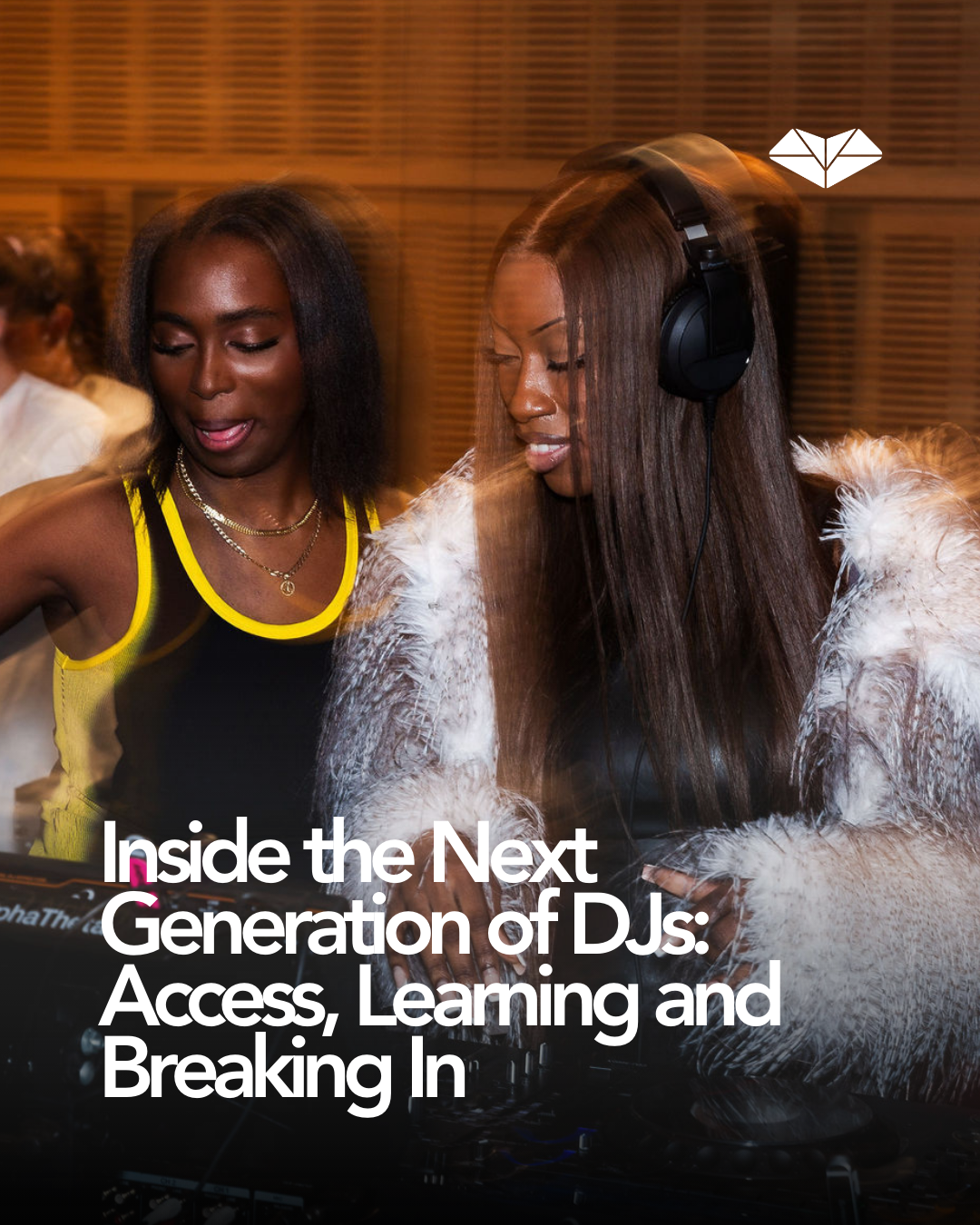
Set against this backdrop, Foundation FM delivered a hands-on DJ workshop in London in partnership with Apple Music, Platoon, and AlphaTheta bringing together emerging women and non-binary DJs inside a professional studio environment to learn, experiment, and connect.
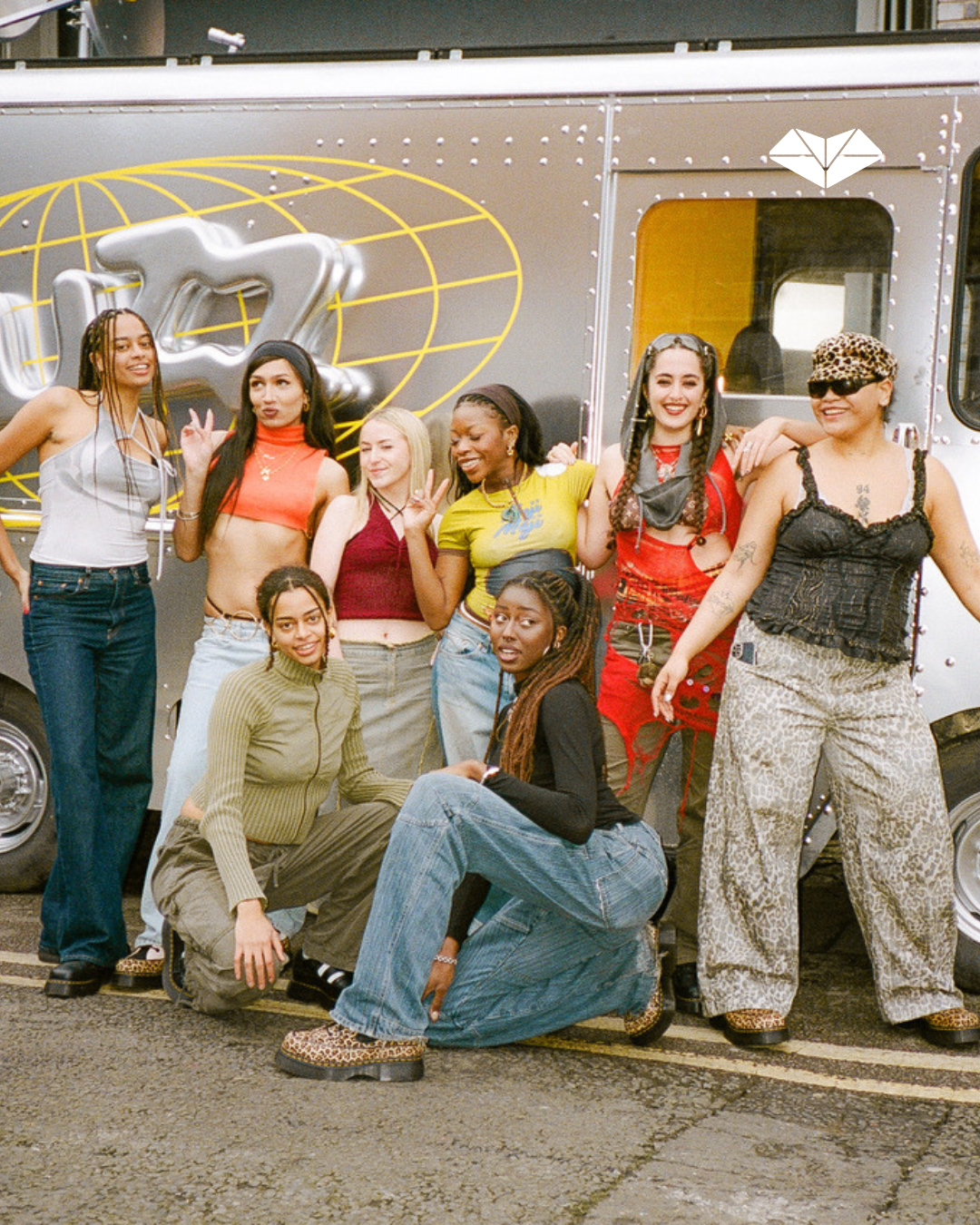
Founded to challenge the structural barriers that shape access to the industry, Foundation FM has built a reputation as one of London’s most important platforms for emerging DJs, offering not just airtime but long-term support, community, and infrastructure for underrepresented talent.
The workshop opened up wider conversations around what it actually takes to build a career today; from developing a sound and navigating bookings, to understanding the role of community, mentorship, and infrastructure.
In this Q&A, AlphaTheta’s Amy Francesca and DJ, producer and Platoon artist Charisse C reflect on the session; from the importance of hands-on learning and the barriers new DJs still face, to how technology, community platforms, and shared spaces can reshape access for the next generation.
Foundation FM has built a reputation as a platform for emerging DJs. Why are community spaces and radio stations still such an important entry point for new talent?
AF (Amy Francesca): Radio is a really powerful space for DJs. It quietly motivates them to experiment, showcase their sound, and put in their practice hours. You also meet a lot of like minded people through radio. It becomes a space where you can be seen, share ideas, and grow your confidence. Many radio stations also have a full club setup available, which means DJs can practice on professional equipment that they might not otherwise have access to.
CC (Charisse C): It was amazing to see how diverse each participant was in taste and perspective; it truly speaks to the incredible work Foundation FM has done in cultivating a roster of incredible women DJs from all walks of life. Community radio will always be an important stepping stone for new talent to quite literally find community, start building an audience, and curate an archive of mixes that showcase their talent.
Foundation FM
What kinds of questions or challenges did participants raise during the session about entering the DJ world today?
AF: A few people asked about becoming more confident and knowledgeable when using DJ decks. There were also questions about how to move things forward career wise, such as connecting with management or booking agents.
What I found interesting was that the Foundation FM DJs were already very comfortable with their sound and the music they play. The questions were more about what the next step looks like and how they can build on what they’ve already started.
CC: A lot of the questions were around how to establish their own sound, narrative, and identity, acquiring new bookings, and building relationships with bookers and promoters. The business side of DJing came up a lot; understanding the role of a manager and or an agent, and knowing the right time to build a professional team.
What surprised you most about the participants during the workshop?
AF: At one point we spontaneously did a back-to-back where everyone mixed three songs from a shared Apple Music playlist. It became a moment where everyone could showcase their taste in music, but what surprised me the most was how many different genres came up and how naturally they blended together. It ended up being a really warm and memorable moment in the session. We honestly could’ve started our own club night.
CC: It was amazing to see how diverse each participant was in taste and perspective; it truly speaks to the incredible work Foundation FM has done in cultivating a roster of incredible women DJs from all walks of life.
Is it important to create hands-on learning environments like this workshop for people who are starting out in DJing?
AF: In-person workshops are really important because people learn in different ways. Some people learn by seeing, some by listening, and others by actually doing something themselves. Being in the room allows all of that to happen at once. But beyond that, workshops offer something the internet can’t always provide, which is confidence and reassurance. When someone is standing next to you showing you something and encouraging you to try it yourself, it helps remove that fear of getting started.
CC: Experience truly is the best teacher, especially with something like DJing that is a social practice. Once you get to the stage of playing for other people, learning to read rooms, and skill-sharing with other DJs, hands-on learning is the only way.
One of the themes of the workshop was access; from equipment to music libraries. From your perspective, what are the biggest practical barriers new DJs still face?
AF: I think the biggest barrier is knowledge. There are actually a lot of different DJ decks designed for different stages of learning, but many people don’t realise that. Most new DJs only see the standard club setup in studios or venues and assume that’s the only option available to them. In reality, there are more tailored setups that can make learning much easier whether you’re starting out or at the height of your career. An AlphaTheta FLX2 or FLX4 or Omnis-Duo is designed for beginners, while an AlphaTheta FLX6 or FLX10 or GRV6 suits intermediate DJs. Seasoned DJs, on the other hand, might opt for an AlphaTheta XDJ-AZ.
CC: Space to practice is a major barrier. Pirate Studios once filled this gap but has now become quite expensive. Community radio is one of the few accessible spaces where DJs can practice with club-standard CDJs, often live in front of listeners. Living outside of London also presents a barrier, as opportunities are heavily concentrated in the capital and travel costs can be prohibitive.
How does the integration between Apple Music and rekordbox change the way new DJs can practice, experiment and build their first sets?
AF: For me it comes down to access and ease. Apple Music gives DJs access to over 100 million songs, which means they can explore a huge amount of music while learning. What’s great is that they can also use the playlists they already listen to every day and start experimenting with them straight away. It’s a really simple way for someone to bring their own taste and personality into DJing from the very beginning.
CC: The Apple Music integration is great for DJs who don’t have a library of music and are still figuring out their sound. There is a cost commitment to buying music to build a library, which many budding DJs may not be able to afford early on. It allows for more freedom in testing out transition ideas and exploring genres outside of their norm.
For someone just starting out, what are the most important skills to develop early on, beyond simply learning how to mix? And for emerging DJs who want to start getting booked, what are some realistic first steps they should focus on?
AF: When I teach new DJs, I always start with music structure. Understanding the four count and phrasing is the real foundation of DJing, because that’s what allows you to mix songs together seamlessly. Once someone has that down, they can start developing their creativity, whether that’s using FX or learning how to read and control a crowd.
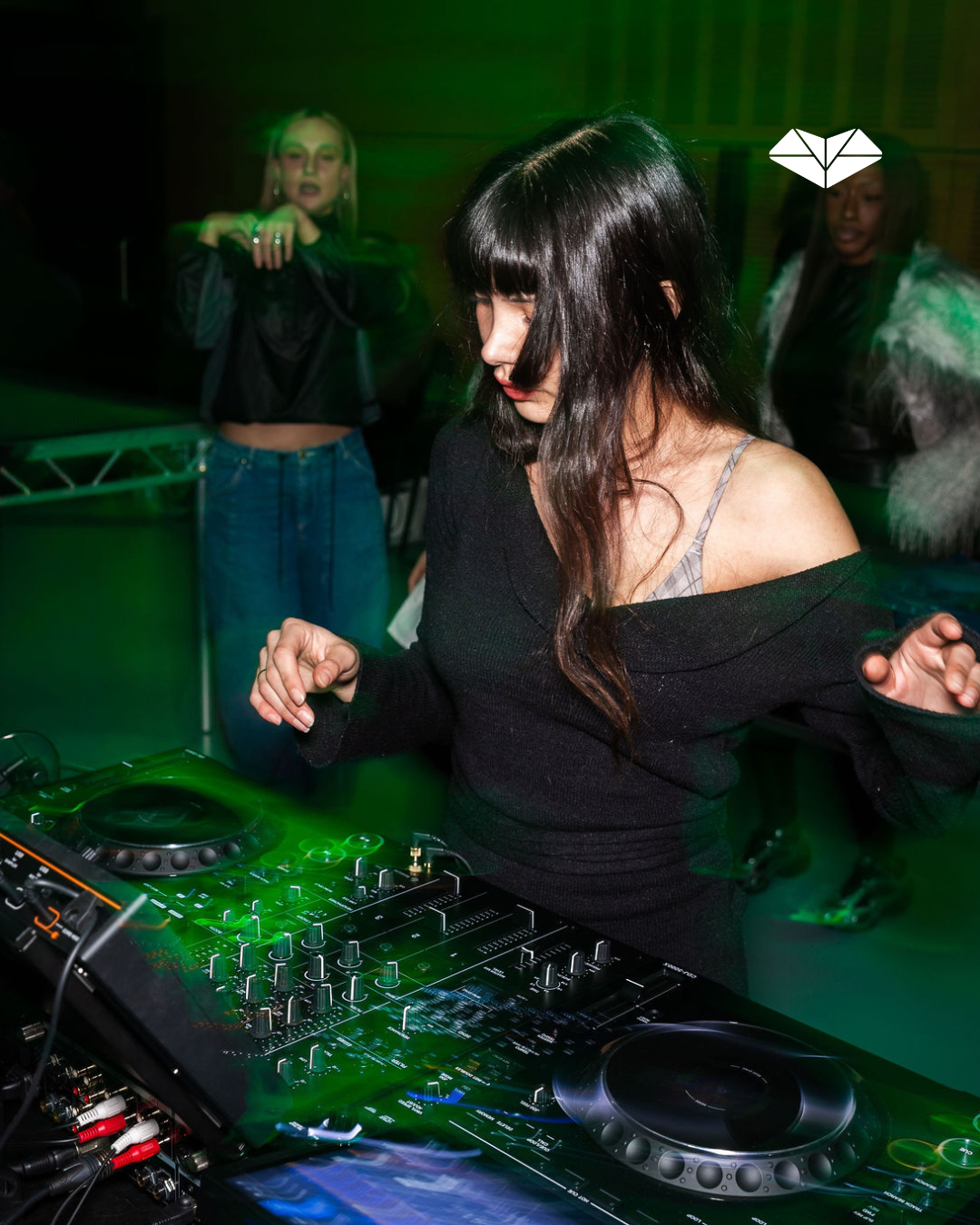
Credit: Leanne Dixon
Those things are what really help a DJ stand out within their scene. For DJs who want to start getting booked, I always suggest starting locally. Ask venues if you can play an early one hour slot or attend open deck nights. Those spaces are great for networking with promoters and collectives, and they often lead you naturally toward the communities that suit your sound.
CC: DJ etiquette is super important, for example knowing the difference between an opening set, a headline set and a closing set. Being intentional about the types of spaces you want to play in and what your sound is helps with establishing your lane and communicating clearly with bookers.
What advice would you give to someone who wants to start DJing but feels intimidated by the technical or financial barriers?
AF: When I first started DJing, I only wanted to mix songs by women who rap, artists like Latto, Megan Thee Stallion, and Nicki Minaj. It began with something very simple that I loved. DJing is a freeing experience, if you want to start out, play what you love listening to.
Have a look around for your closest free workshop or pick up a second hand controller so you can experiment without spending too much money. Give yourself the time and space to explore and see if it’s something you truly enjoy.
CC: Start wherever and however you can. As long as you’re doing it for the love of the music, you will find your way.