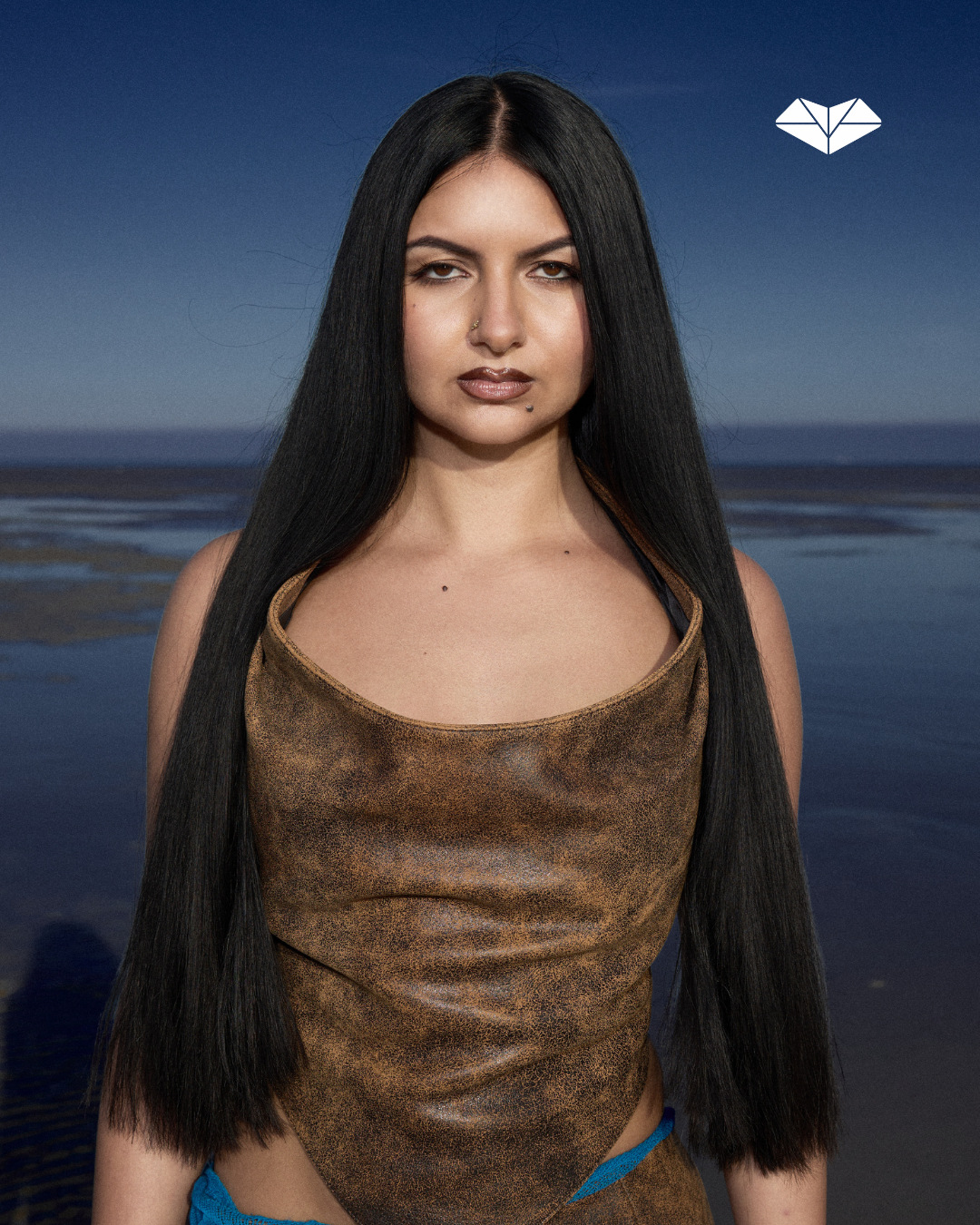
Photo credit: Morrigan Rawson
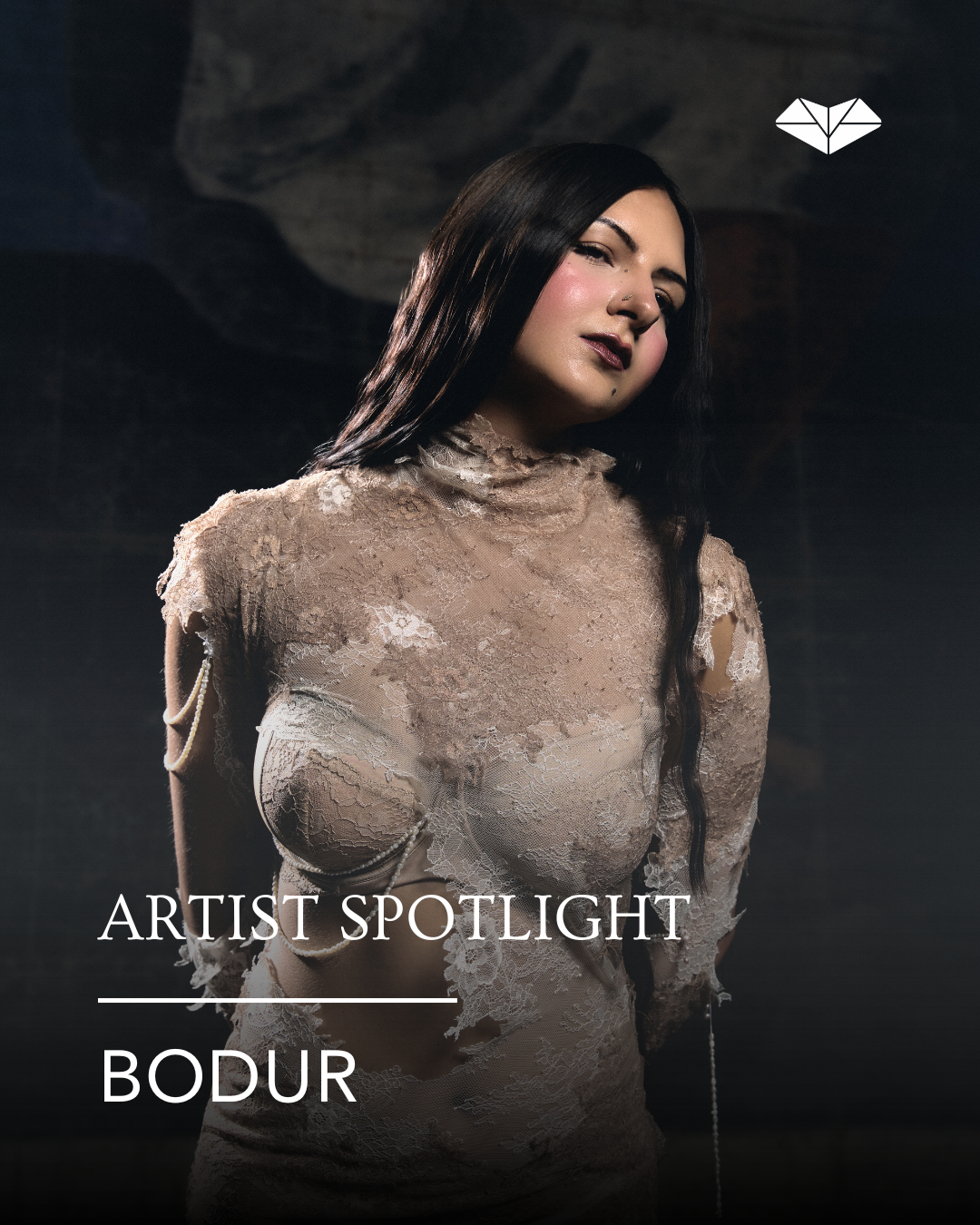
London-based artist BODUR emerged with a clear artistic language through her debut album MAQAM, a conceptual project shaped by her decision to study the oud and work within the maqam system after studying at The Arab British Centre.
The album brought together alternative electronic production with maqam structures and across the record, BODUR addressed racism, Islamophobia, generational trauma and her own mental health with directness and precision.
Tracks such as DOGTOOTH [INTRO], UGLY [NAHAWAND] and MY BLOOD, IT’S IN THE SOIL [SABA] positioned personal testimony alongside wider political reality, including her vocal support for Palestine and fundraising work, including a London benefit alongside Joy Crookes that raised over £90,000 for Gaza.
Since MAQAM’s release in March 2025, BODUR has moved fluidly between music, fashion and performance. She has appeared at London Literature Festival, Rally with NTS, collaborated with Levi’s London, and featured on Manni Dee’s Is This Not What You Came For?. Her role as Musical Director for Di Petsa at London Fashion Week, where she also performed with her oud on the AW25 runway, marked a further expansion of her practice into live conceptual performance. Alongside this, her earlier EP ÖZ (2023) continues to resonate as the foundation of her sound, earning support from Jamz Supernova, Rinse FM, Radio 6, COLORS, Notion, The Line of Best Fit and Wonderland.
This month, BODUR turns toward process itself with SECOND LANGUAGE, a three-day live installation at V&A East Storehouse that runs from 10–12 December, with a final performance on Saturday, 13 December at 6pm. Across the installation, Gallery 2 becomes a functioning recording studio where BODUR will compose new music in real time with her long-term collaborators Malte Henning, James Hazel, Will Heaton, Jono Pamplin and producer Gabriel Gifford.
With no separation between artist and audience, visitors are invited to observe the full working dynamic as it unfolds. Every session will be filmed, with the resulting material feeding directly into her next project. Staged in front of Le Train Bleu (1924), the largest Picasso artwork in existence, SECOND LANGUAGE places contemporary composition inside a space shaped by archive, history and exposure.
Your debut album MAQAM combined alternative electronic music with themes of racism, Islamophobia, generational trauma and your own mental health. What are you exploring now as you move into SECOND LANGUAGE?
I’m exploring the conversation that is had between musicians when we’re creating music together both with and without words. Also - the idea that music is everyone’s first language and that everything else comes secondary.
I want this performance art piece to highlight what unites us rather than divides, as there is no language barrier when it comes to the conversation that is had through music.
SECOND LANGUAGE opens up your recording process in real time. What drew you to the idea of letting people witness the earliest stage of a song rather than its final version?
I think with the rise of AI music and music that is created in an extremely corporate way - I wanted to open up what is essentially a very old school, ‘human’ way of creating music - which is just a band getting together, messing around and seeing what happens. I wanted to demystify the process of creating music this way for anyone interested in getting started in songwriting, to encourage them to hopefully do the same.
Also, the moment a song is born in the studio is the best day of a songs life for me. By the time I actually perform a song to the audience, usually a couple years have passed and I’m less excited about it. This way - audiences get to witness that initial spark of an idea and to experience that excitement with us.
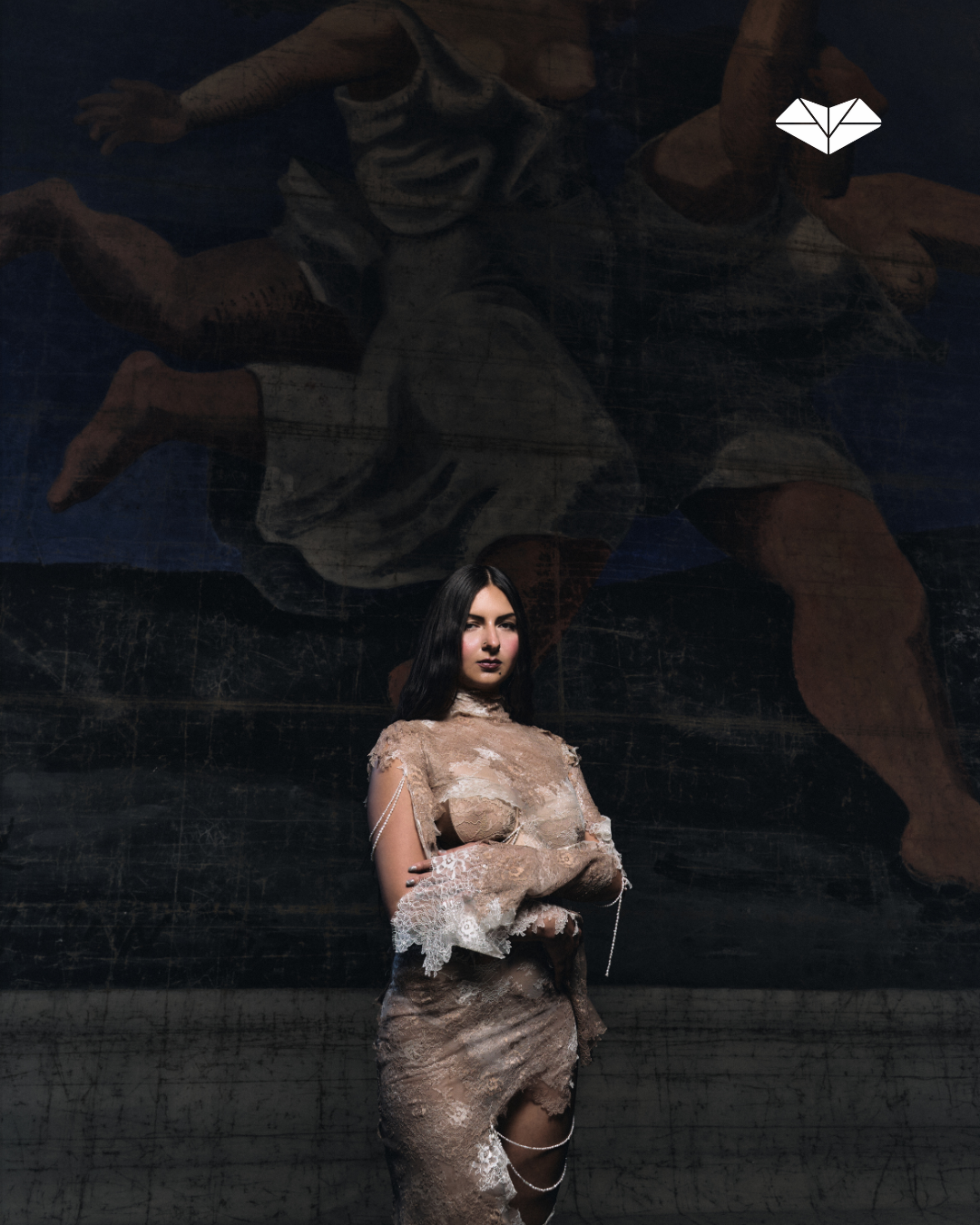
Photo credit: Morrigan Rawson
You will be composing new material with no separation between you and the audience, and the music will shift depending on who is in the room. How are you preparing yourself and your collaborators for a process that is shaped by the public in such a direct way?
I think we all understand the intensity of what we’ve signed up to do and will be preparing for it differently in our own ways.
I’ve personally deleted most of my social media and have taken a break from TV so my mind can be as clear as possible for original ideas to arrive to my subconscious, despite the pressure of having an audience present.
The more silence I sit in during the lead up to the experiment - the more room there is for melody and lyric ideas to arrive
Your projects involve research, discipline and experimentation. How do you structure your creative routine so that ideas actually develop into finished work?
I don’t ’over-create’. I know some artists make a song a day, every week, always. For me that doesn’t work and becomes quantity over quality. My creative routine involves being extremely active and present in the lives of my family and friends, living a very full life and allowing myself to feel everything extremely deeply. That’s what inspires me to create things that feel essential and meaningful that I always *want* to develop into finished work. I don’t know what’s inspiring about sitting in a dark studio all day everyday. What do you have to write about? You have to go out and live as much life as possible in order to have a story to tell through your music.
For emerging artists who want to build meaningful relationships in the industry, what practical advice would you give on finding collaborators and creating the right networks around their work?
Find people you have a natural friendship connection with, kind and funny people whose company you enjoy - that is the most important thing as you’ll have to spend so much time together.
Making music is such a vulnerable act, you need to surround yourself with people that make you feel comfortable enough to make mistakes in front of without feeling ashamed. Stay around people that make you feel good and that’s where you’ll make your best work.
To keep them around - always make sure you’re feeding them well. Food is the key to longevity in creative partnerships. Food and friendship.
What would you say to artists who want to bring their personal or political realities into their music but are unsure where to start?
Everyone has a special and unique perspective to bring to the world because of their individual lived experience.
Once you realise that your individuality is what sets you apart from everyone else and that that is the most valuable thing you have as an artist, rather than it being a hindrance, you can lean into creating your best work.
I think people like to be part of a scene and stick to the status quo sometimes to protect themselves from exposing the most vulnerable and unfamiliar parts of themselves - but in unfamiliarity is where groundbreaking creativity can happen.
There’s nothing more valuable than a unique perspective as an artist because all we are are storytellers, and nobody wants to hear the same story 10,000 times. People always want to hear a brand new story. In your unique lived experience is where lyrics that have never been written before or sounds that have never been made before can step forwards. Lean into your individuality rather than trying to blend in. Your unique perspective is essential.
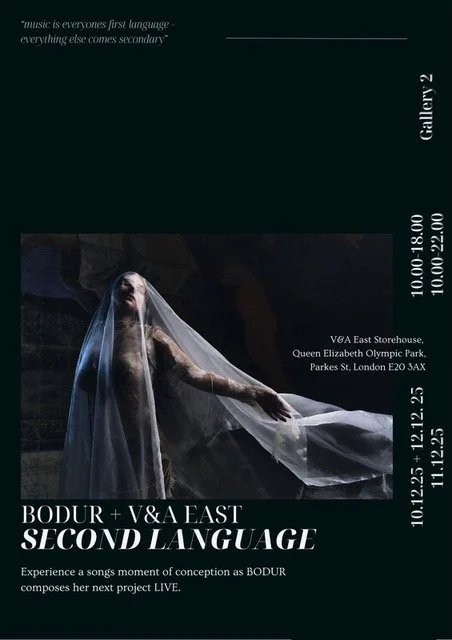
Event Details:
Live Installation: 10th-12th December, Gallery 2:
Wednesday (10th): 10am–6pm
Thursday (11th): 10am–10pm
Friday (12th): 10am–6pm
Final Performance: 13th December, Collections Hall at 6pm
Location: V&A East, Storehouse, Parkes Street, Queen Elizabeth Olympic Park, Hackney Wick, London, E20 3AX