
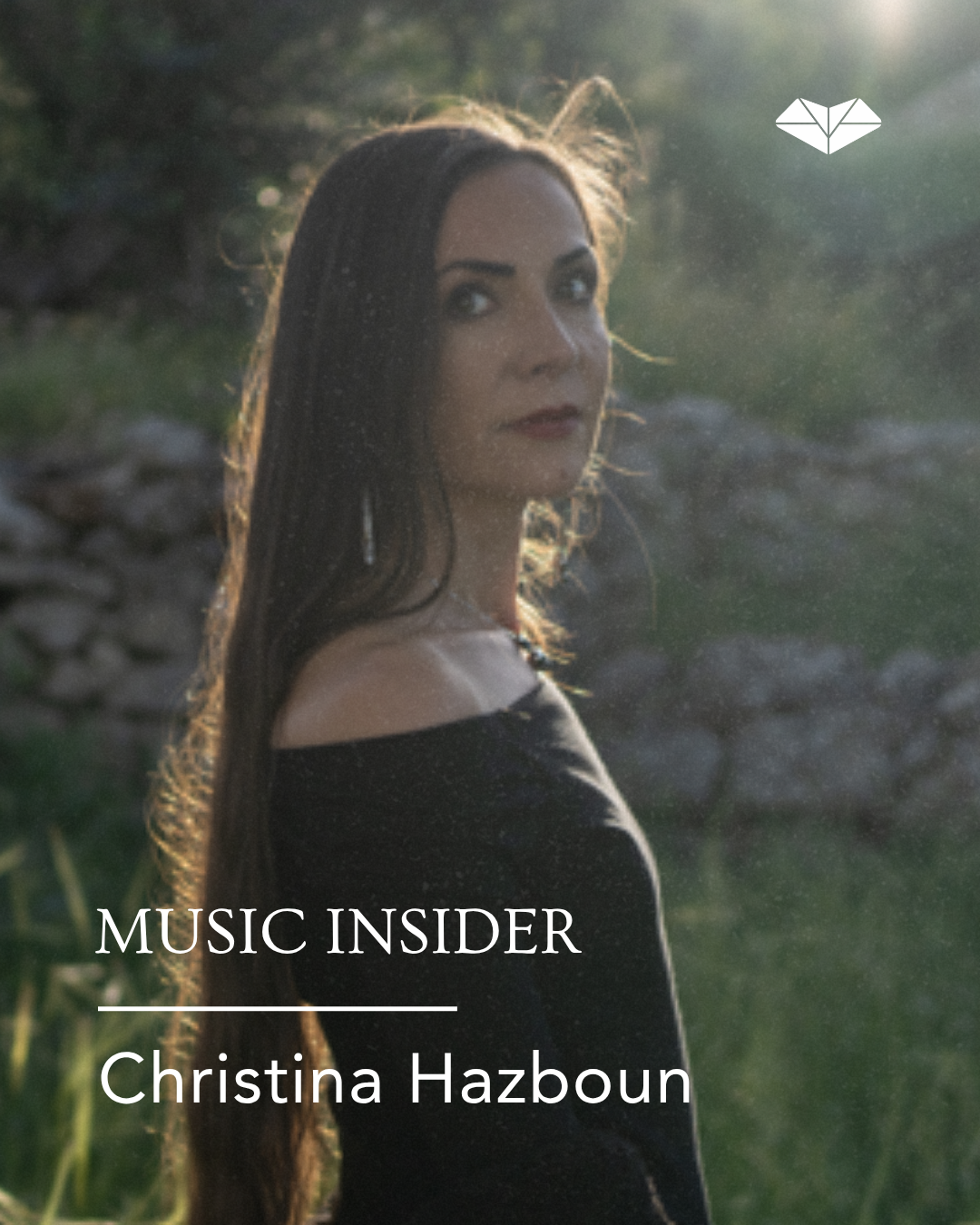
Christina Hazboun by Samar Hazboun in the olive groves
Christina Hazboun is a Palestinian writer, researcher, curator and cultural practitioner whose work explores the relationship between music, sound, memory and place. Working across journalism, radio, research and cultural production, she has become one of the leading voices documenting musical cultures from Palestine and the wider SWANA (South West Asia and North Africa) region, while championing artists and stories that have long existed beyond mainstream music narratives.
As the founder of The Sonic Agent, Hazboun has developed an interdisciplinary platform that brings together writing, broadcasting, curation and artist development to examine sound not simply as culture, but as a form of documentation, resistance and collective memory. Her work asks what music, field recordings and everyday listening can reveal about a place that words or images alone often cannot, preserving sonic histories that risk being forgotten or erased. Alongside her independent practice, she serves as UK Project Manager for Keychange at PRS Foundation, where she works to advance greater equity and intersectionality across the international music industry.
Hazboun's writing has appeared in publications including The Guardian, The Quietus, Bandcamp Daily, The New Arab and Middle East Eye, while her audio work has been broadcast by platforms such as Stegi Radio and Radio AlHara. Whether documenting contemporary Palestinian music, producing soundwalks through Bethlehem and Jerusalem, or supporting artists from across the SWANA region, her work consistently returns to a central question: who gets to tell cultural histories, and how might listening offer another way of understanding them?
You've worked across writing, research, radio, curation and cultural production. What first drew you to working with music and sound as a way of telling stories?
The “first” is an interesting starting point, but life is a series of sparks that make one big fire, so pinpointing that one spark isn’t easy. I was lucky to grow up in Bethlehem, in a household surrounded by music, radio, books and research. I remember that one of the most intriguing books I picked up as a 10 year old was a book on Sumerian legends that had references to a story similar to Noah’s arch, but was much older. The Sumerians developed one of the world’s oldest writing systems and when you grow up in a city like Bethlehem, Palestine and you have to go to church every morning at school, and sing songs based on Biblical stories, you start to question the preservation of history and the importance of writing and song in carrying those moments forth.
Then there was the whole reality that we were immersed in: the constant listening to radio before the advent of digital media and mobile phones for news updates to understand if there are incursions, curfews or other events unfolding, in addition to the omnipresence of music in our house and my immediate surrounding: my mother would play the piano and teach us to play; one of my extended uncles had a band and we would gather around to listen to their music. There were also weddings and engagements, in addition to social occasions and celebrations which were THE moment to dance and celebrate life in moments of calm. Palestinian society in the end is a mediterranean society that loves life, music and joy, it’s just that we’ve been unfortunate to be colonized for so long, that grief plays a big part in our lives.
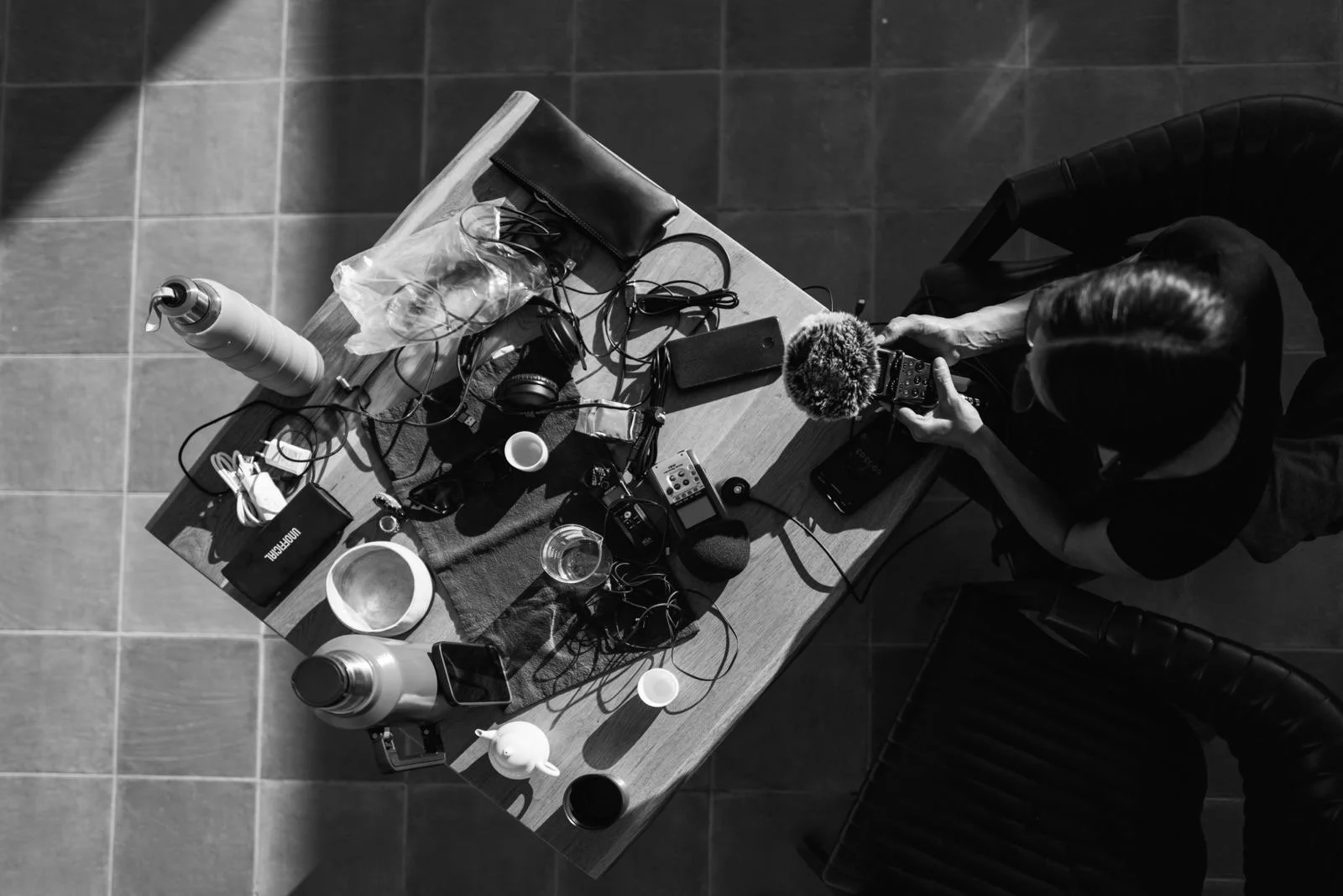
preparing for soundwalking in Bethlehem photo by Nadir Mauj
I remember being 4 or 5 and seeing a keyboardist at an engagement party whose synth riffs were just ecstatic. As I was dancing and watching him play, one of my aunts told me that he was blind, which made me think about how he perceives the world around him.
So my practice became an accumulation of all those sensory experiences that I was surrounded by, but most of them were “produced” by male bodied people. I wanted to see women write and tell our histories and stories too and I thought that instead of convincing someone else to do it, I can give it a go.
Many precious souls encouraged me to expand my knowledge and practice along the way. Two important people in terms of writing were Professor of Cultural and Political Theory at the University of East London Jeremy Jilbert and Scottish Pakistani journalist and senior producer Zab Mustefa. In terms of radio and audio, it was Caspar Melville, may he rest in power, who deepened my knowledge of audio work, in addition to professor emeritus Angela Impey who drew my attention to deeper layers of listening.
The Sonic Agent has become a platform for amplifying voices and sonic histories that are often overlooked or erased. What inspired you to create it?
I had been working in the music industry for a while and I was noticing who would be given visibility and who wouldn’t. I saw how women bodied people were more humble and shy about their rights (payments, line-up order, etc.) in comparison to male-bodied counterparts and how patriarchal the industry was, with elements of patronizing and domination which I wasn’t comfortable with. I decided to move from the seat of the spectator to the person who does something about it. One of my early steps came when I was studying at SOAS where I took a course on Broadcasting and discovered that SOAS Radio had no programmes dedicated to music from South West Asia and North Africa. So I decided to start a radio show which I called DanDana podcast and invite a couple of friends to join me. I had been inspired by the work done on the Palestine Broadcast Service, which was founded in Palestine in 1936 by the British “Mandate” and was acutely aware that we need to have our own platforms through which we tell the stories of our music and the radio became one of those mediums.
When I started writing my thesis on the Palestinian contemporary music scene I was reading Fanon and Brandon LaBelle and the concepts of “agency” kept popping up, and I pondered how voice and sound are important in making spaces for our demands. I made a conscious decision to listen to more women throughout my research, because of the challenges they were facing. This was all happening before 2020, and then in 2021 the May Uprising erupted, when many Palestinians went into the streets of Sheikh Jarrah to protect the home of Mohammed and Muna El-Kurd and 27 Palestinian families from being displaced. At the time people on the streets were using their voices, chants, singing, clapping and noise to counter the military industrial violence and I was documenting those sonic acts through my diaries and recordings. This all culminated in my piece Sonic Strategies in the Palestinian Struggle – A Soundtrack of the May 2021 Uprising in Palestine.
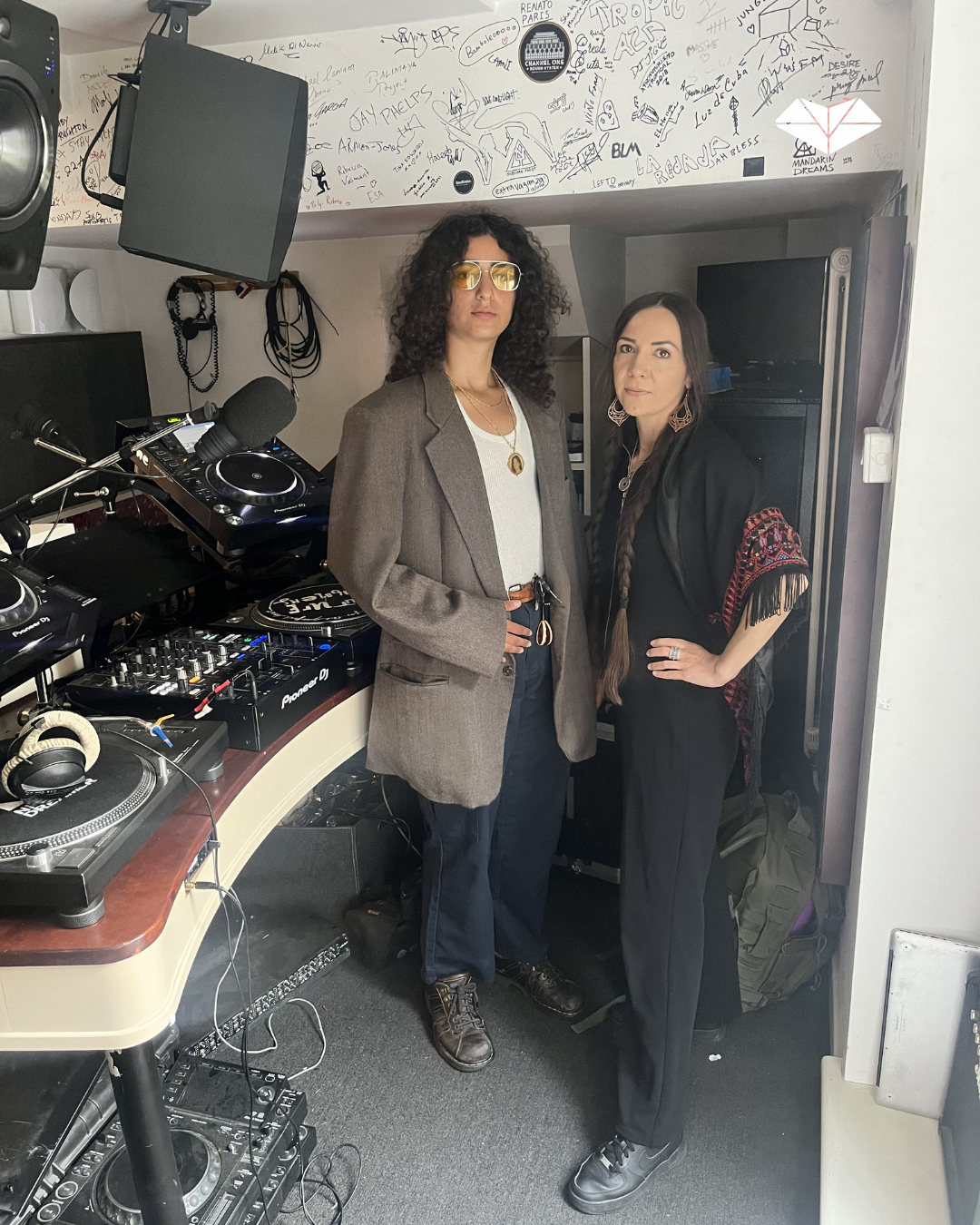
Christina Hazboun and Etaf at Worldwide FM studio - Phot by Pedro Montenegro
In parallel I started working with Palestinian singer Terez Sliman and we were planning tours and performances across Europe and I also worked with Rasha Nahas and Bashar Murad and I saw the practical implementation of voice, gender and music through pushing back at the music industry via different means whether that is at soundchecks where as a woman bodied person I am often treated as though I have no idea about technology, or with techriders and hospitality riders where certain equipment, products, foods and beverages assume a deeper meaning than their use in the performance. Take for example a hospitality rider and the constant assumption that everyone drinks alcohol, or the provision of “hummus” without thinking who has made it. Little details can make a difference.
When I noticed that most pieces written about music from our part of the world were written “about” us and often through a lens that doesn’t accurately reflect reality, I decided to start writing on music as well. Bandcamp have been very supportive and have often provided a great space for me to write through my eclectic taste.
And then there were the more practical elements of working with touring artists where you need to demand that your boundaries are respected within festivals and venues whether we’re talking about booking travel at reasonable hours to be mindful towards the artist and their crew, or thinking of the safety of artists who are performing from multiple perspectives that are outside of the Anglo-European-music industry norms, especially when it comes to Palestinian artists.
The last few years since 2023 were especially difficult, in terms of festivals and spaces for music trying to impose restrictions and censoring Palestinian voices. And those forms of censorship can be very mellow and mild, from asking you kindly to “say things differently” (i.e. asking me not to be clearly outspoken) or having to “check if it’s safe” for festivals and events for me or the artists I worked with to speak out about what was being done to our people. But I’m glad that many people have been brave enough and have been speaking out against injustice, because as Audre Lorde says “Your silence will not protect you”.
Much of your work explores Palestine through music, sound and listening. What can sound reveal about a place or a community that words alone sometimes can't?
Not only words, but also images can’t reveal certain elements that sound and music can. I think that there is something more honest and raw about sound than images and words, and this is why I like to collect field-recordings. Music, sound and listening activate inner senses that make space for internal reflections and freedom of imagination, while also revealing smaller nuances about the person or the place “speaking”. Take for example my soundwalk essays Echoes of Space and listen to the soundwalk of Jerusalem.
You will hear the sounds of Old Jerusalem’s streets bustling and busy with people, you will “overhear” the stories of passers-by and flaneurs who will enter your listening sphere so naturally without posing, because those moments were not staged nor orchestrated. They reflect the “crude” reality without much beautification and they reflect moments and sounds that are now gone and the reality is completely different. A hundred years from now, what would the city sound like? Not many people are keeping an “ear” on those changes of space and place. Since 2021 more people have become aware of the importance of sound and have been focusing on it, but there is still a lot to say about listening and the changing of sounds, spaces and souls all around.
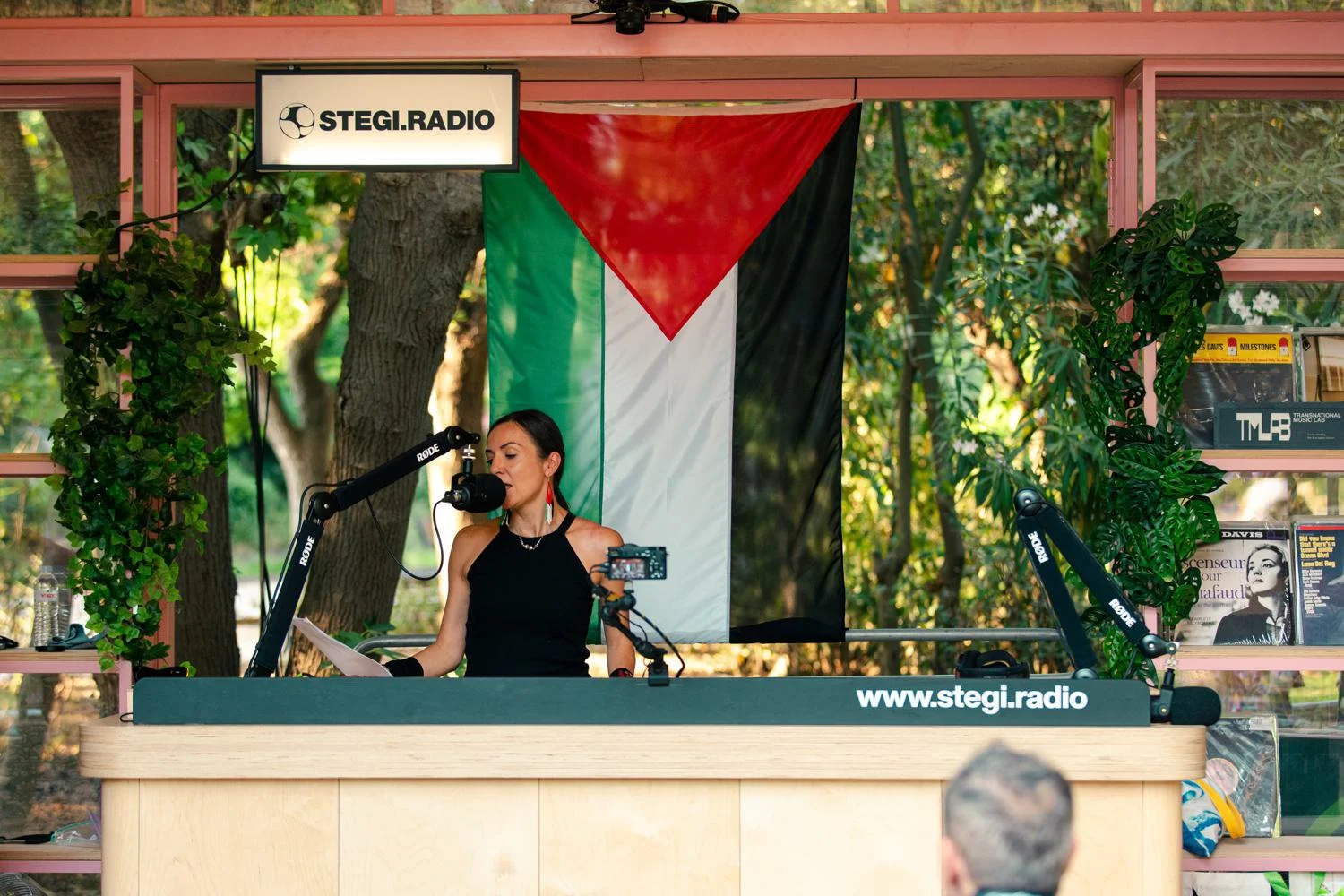
Christina Hazboun at Stegi Radio
If anyone is interested in listening to soundwalks, then I’d invite “listeners” to lend their ears to THIS soundwalk cum live broadcast that I did with fellow Bethlehemite artist Nadir Mauj as we walked from Checkpoint 300, through the Islamic cemetery and into the Aida Refugee camp. We move through our ancestral geographies shaped by division and displacement, where multiple layers of cyclical time collide. It was important for me to document our walking through sound as a form of connection and embodied archive.
In a more recent experimental writing project titled “Sonic Evocations of the Visual” which appears in the publication Trigger #6 Assemblies I have worked with five Palestinian photographers to “listen through images” following Tina Campt’s theories. By exploring the layers of the imaginatively heard, audibly forecast and silenced, I dug into deeper histories and times of the five spaces: Bethlehem, Jerusalem, Gaza, Tul Karem and Nur Shams refugee camp to explore the stories that those images tell us. So for example the photo from Gaza is of fishermen who have been banned from entering the sea to practice tjhe centuries old craft of fishing. This was often accompanied by signing up until the late 1960s, then two things happened: motorboats arrived and the rise of the Islamist tide which both changed the nature and volume of singing. The recent genocide has obviously silenced the fishermen, and the naturally silent fish as well!
Music on the other hand makes stories easier to tell and digest. Take for example the work and lyrics of Kuwaiti artist Etaf with whom I have also worked. On “Don’t Call Me Baby” Etaf uses cultural references from both the Arabic-speaking world and Britain to portray the spirit of love and relationships, as well as the playful, vibrant world they seek to blend through the inter-cultural and interdisciplinary practice in a pretty unique musical expression bringing in gulf rhythms with pop aesthetics with a London sound. Music can add playfulness and light-heartedness to the heavier and more serious matters that we face in this world and that we sometimes can't express as bluntly as we would like to.
No matter what, words are important in preserving and passing on practices, experiences and memories, especially when it comes to music. Dear friend and festival director of Beirut and Beyond International Music Festival Amani Semaan has also been aware of this in addition to the scarcity of writers on music and sound in the Arabic speaking world, so she and her colleague Yara Mrad invited me and French scholar Pierre France to develop a bespoke writing workshop that we called The Craft of Writing About Music & Sound for the community in Beirut. Our work documented live events and musics which were part of the festival’s programming and the outcome was a beautiful series of written pieces by Lebanese writers documenting their own scene. So much more work is needed in that regard.
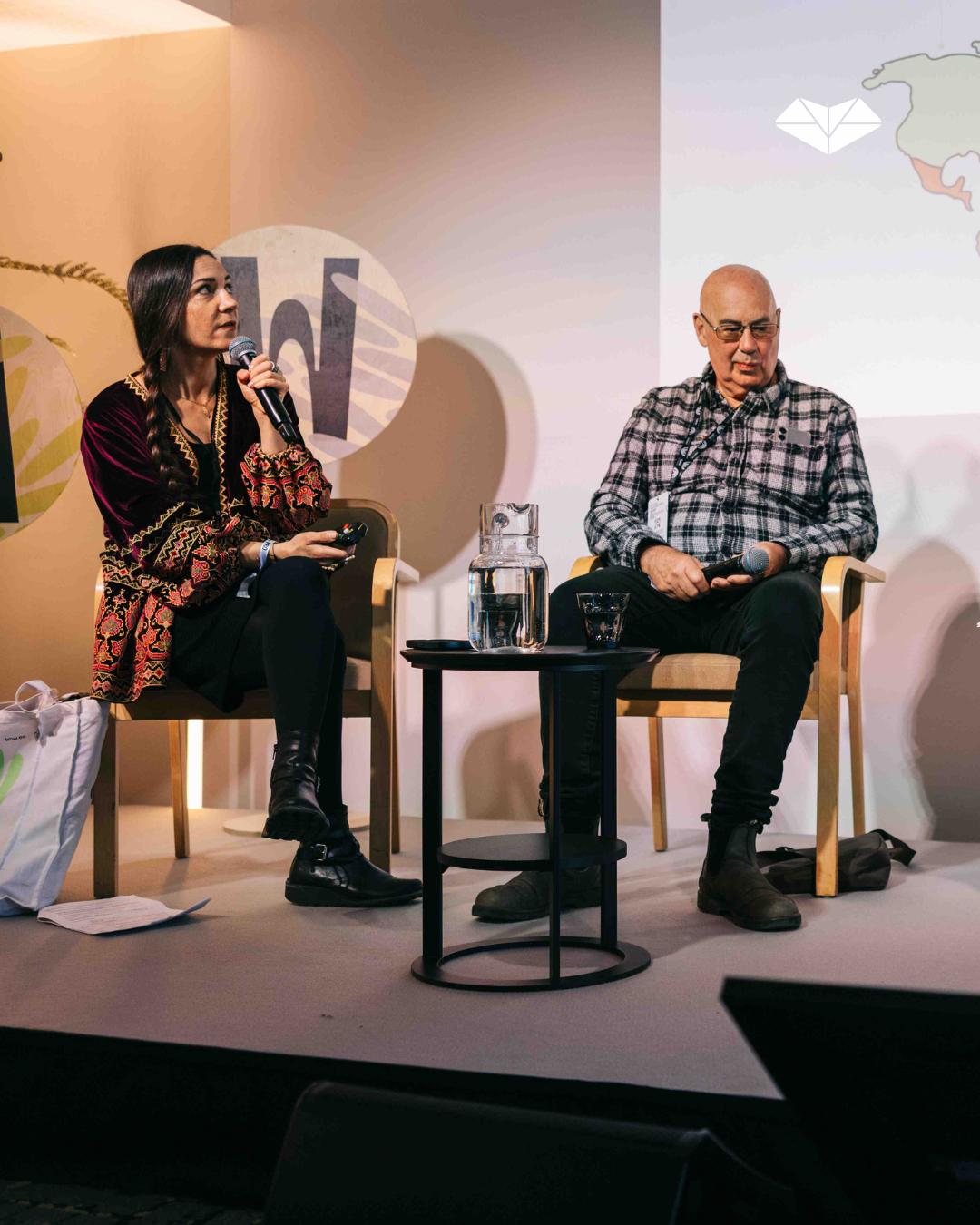
As UK Project Manager for Keychange, you've helped shape conversations around equity and representation across the music industry. What changes have you been most encouraged by, and where do you think there's still the most work to do?
Keychange have been one of the pioneering gender equity initiatives in music since their inception in 2017. From inviting festivals to achieve a 50/50 gender balance to actively encouraging conferences to programme more gender-diverse acts, Keychange have made a mark on the landscape of the music industries through the collaborative work of several unique individuals from across Europe. I took over the project in the UK from Francine Gorman in 2023 and have tried in cooperation with my colleagues to make many changes in terms of how we operate the Pledge.
One of the first things I set off doing based on the Action Plan was to raise more awareness of intersectional dimensions. The ecosystems within the music industries differs widely between different geographies in Europe and Canada and the way we have been engaged with festivals through programming our acts and planning our presence has given us space to encourage critical thinking and widening of perspectives in an ever evolving and shifting climate.
The Pledge workshops sessions at different festivals are there to invite more music industry bodies to self-monitor their gender and intersectional “music operations” no matter what they are; whether that means programming at festivals or radio stations, or designing their websites and newsletters. Language also plays a huge part in how we remain inclusive and accessible. The current Keychange Leaders project aims to equip women and gender diverse people in leadership positions to take the lead within their fields to create a more equitable future.
That said, there are many brilliant initiatives that have been around since then like shesaid.so and We Make Noise in addition to the many who have emerged since We Are The Unheard, Amplify Her Voice, Arte Sonica Amplificada (Brazil), Ruidosa (Chile/Global LatAm) or The Leading Vibe Initiative (Nigeria). In the Arabic speaking world there was Jidariyya and there are more recent and mainstream initiatives, but the grassroots ecosystem of music and gender-equity seems to be often driven by artists and their supporting networks as opposed to more formal initiatives, which actually highlights the importance of collaborative and cooperative work across the violence of borders, hegemony and patriarchy, especially in these times.
For someone interested in working across research, curation and cultural programming, where would you recommend they begin?
Networking can feel intimidating, especially when you're entering the industry without existing connections. What's the best networking advice you've ever received, or the tip that's helped you most throughout your career?
Networking can have many aims and connotations, but personally I feel like there is nothing better than a genuine connection with the person who is standing in front of you. We all have stories and experiences to share, and it is fascinating to listen to people’s experiences if they are willing to share. I would say, first and foremost “show up”. Someone once said “80% of success is showing up”. It took me a while to understand what it means, but it is actually the act of being present that takes the most effort, and then what follows next is in the hands of the universe.

Bodies of Sound (Becoming a Feminist Ear) book launch at Cafe Oto
I would say always remain genuine and curious and don’t be afraid to ask and introduce yourself. Most people are nice and happy to talk about their work and what they’re doing and you can find common interests or questions that ignite your interest.
I have come across some people (especially men) who would initially brush me aside as “less senior” or “foreign” (whether it’s my accent or the way I look, some people can make funny comments like “So, what “extraction” are you?” in an attempt to understand where I come from) but that is all about their own perceptions and insecurities or preferences and that doesn’t affect who I am (or who you, as a person trying to make it in the music industry are).
So I would say just remain nice and curious and if a situation is uncomfortable you can walk away.
The most valuable advice I received though was from Martin Goldschmitt, founder of Cooking Vinyl and co-founder of Palestine Music Expo who told me once when I was thinking about starting The Sonic Agent that I should just do what I want to do and keep doing it. He said that everything will follow after. It’s also in line with one of my favourite quotes by Rumi which says “What you seek is seeking you”.
What's one piece of advice you wish someone had given you when you were starting out?
I have recently delivered a mentoring session to a beautiful group of womxn from Georgia, Armenia and Azerbeijan who are taking part in the Empowering Women in The Music Industries initiative Music Export Georgia co-founded by Keychange alumni Mariam Karalashvili-Laan and Salome Vardanashvil and your question resonates with questions I received from women who took part in the session. There is a lot of advice to share though, as the music industries are a wild space and not always “safe”.
We still need to talk about the multi-layered inequalities that prevail due to dominance, but the most important advice is to trust your “gut” instinct and always follow your heart. Check in with yourself and see if the person you’re dealing with is genuine, caring and aligns with your values.
I often see women making compromises in order to make it in the industry, while men are more ready to challenge the status quo (especially when it comes to payments). And to be honest, it is important that we try to stay true to our values and aspirations, despite all the challenges and always ask for what we need. If someone can’t provide that, then check in with yourself and see how that aligns with where you’re heading.
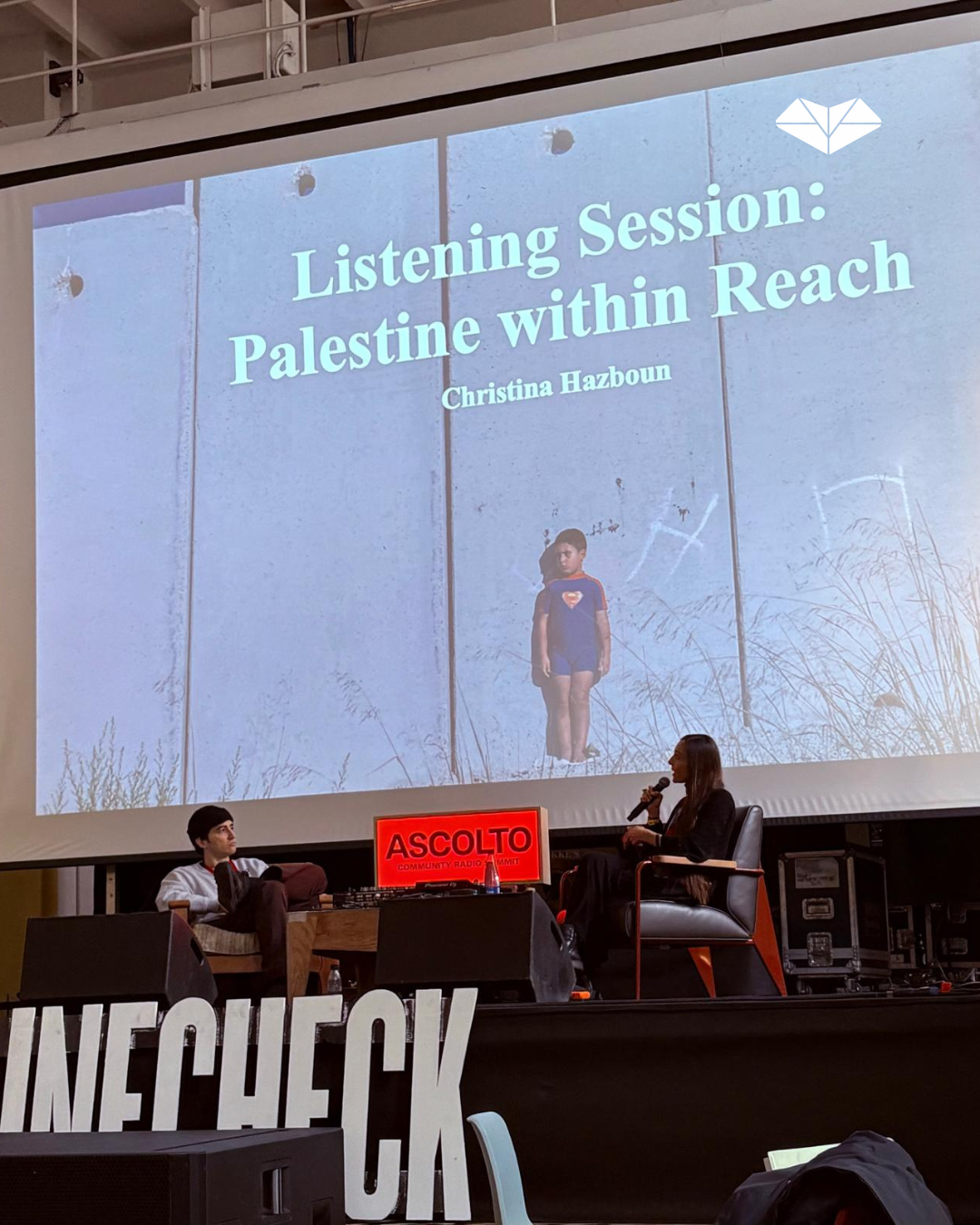
Listening Session at Linecheck 2024 with Claudio Biazzetti.
What are you listening to at the moment?
I’m listening to a wildly eclectic selection of musics. I often try to keep my “ear to the ground” and so have been listening to Palestinian artist Ahmed Eid’s latest album “min ghazzeh la baghdad min haifa la beirut من غزة لبغداد من حيفا لبيروت. I really like the track ilhilm y’oud الحلم يعود (The dream returns). Ahmed has been doing amazing work with The Palestine Music Space in Ramallah working with emerging artists and sharing his experience with people on the ground.
I have also had the opportunity to have a sneak-listen to Belgian-Tunisian artist, DJ, composer Sara Dziri’s upcoming EP “Sacred Disorientations” which is coming out on her newly launched record label SILT on the 4th of September. She has so far released one track titled “Aziyar” and the whole EP has a very spiritual feel that transitions from spiritual beliefs to moving bodies on the dancefloor.
Given my latest work within Keychange and PRS Foundation on the Music Export Georgia project I have also had the opportunity to “listen in” to a wide range of musics from Georgia, Armenia and Azerbeijan. I have been finding the work and compositions of Lusine MLKE-Galstyan with her band Tiezerk really compelling and soothing. I especially found “Zartir” from their 2024 album “To Me or To You” moving.