

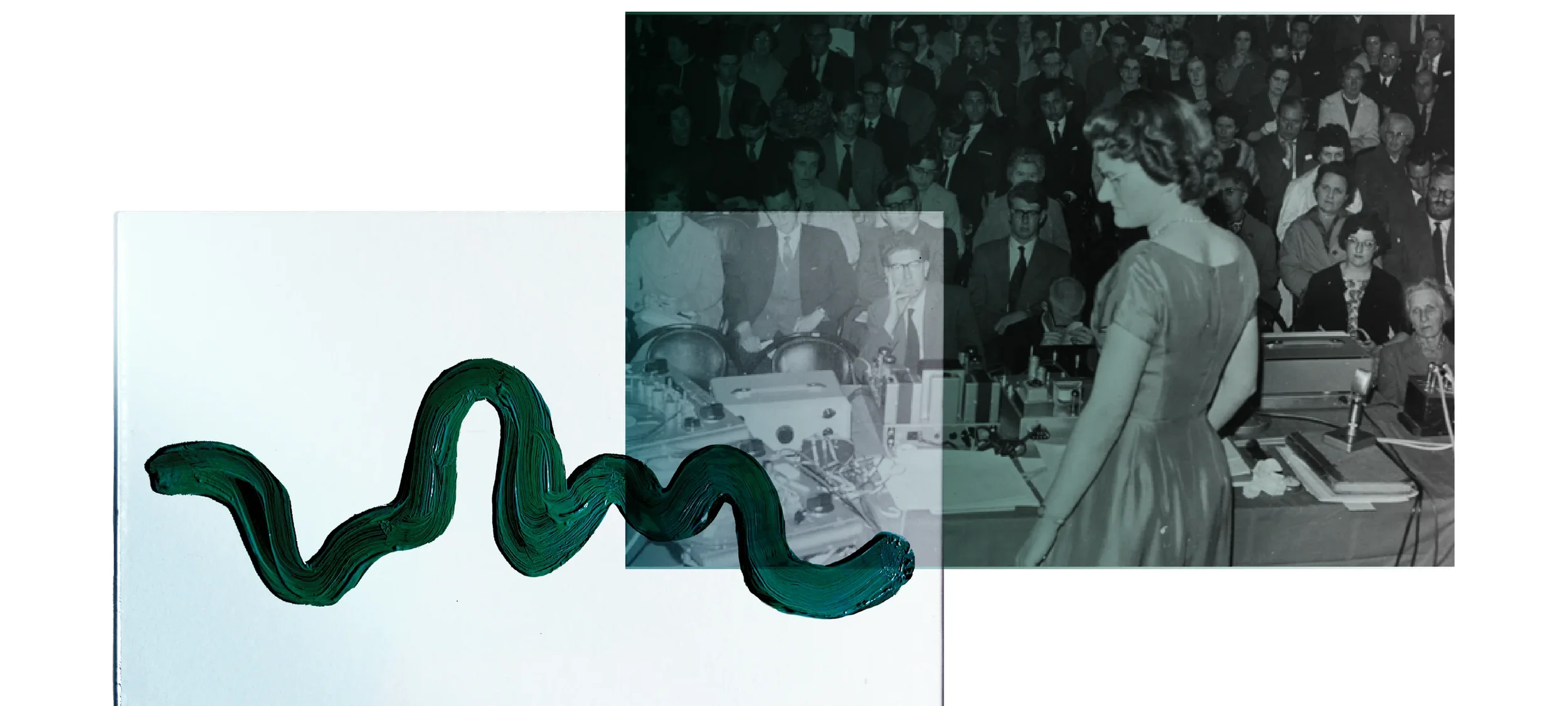
Daphne Oram giving a presentation at East Surrey College. Red Hill in 1980 - Photo Credit Keith Harding
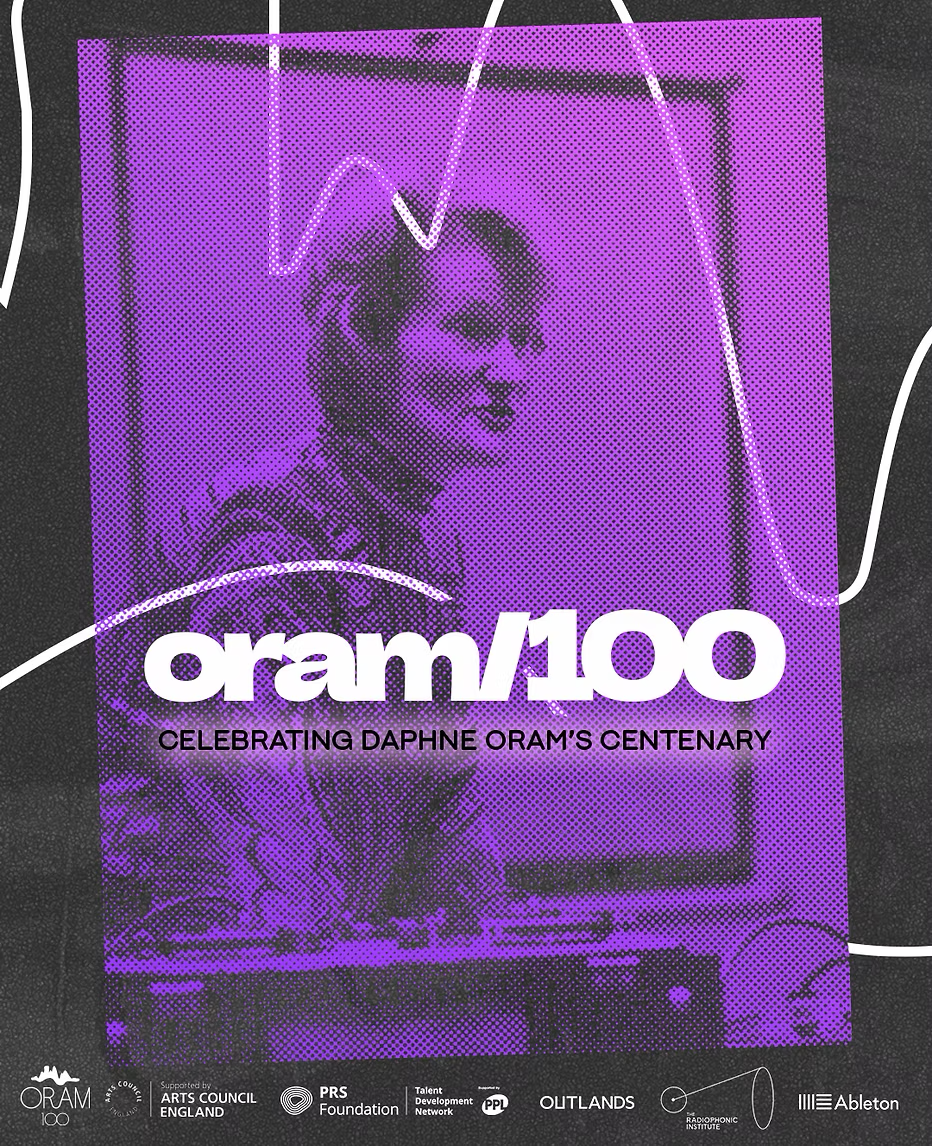
2025 marks the centenary of Daphne Oram, the electronic music pioneer who co-founded the BBC Radiophonic Workshop and invented the Oramics system, one of the earliest graphic sound technologies.
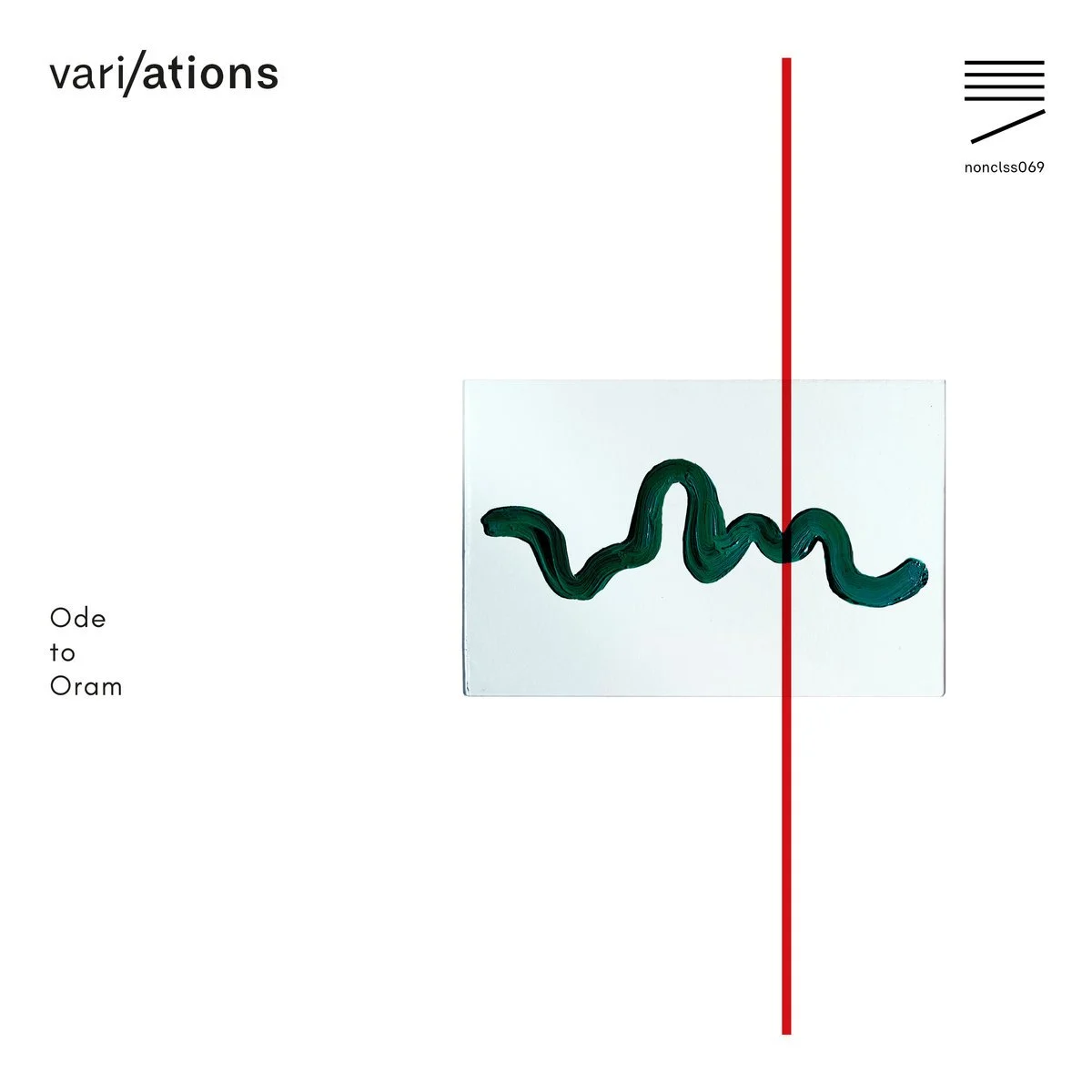
To honour her legacy, nonclassical has partnered with the Oram Trust and the Oram Awards on vari/ations – Ode To Oram, a new compilation built entirely from Oram’s archive: more than 280 tapes recorded between 1956 and 1974, including material that has never been publicly heard before.
The release brings together leading and emerging electronic artists—TAAHLIAH, Marta Salogni, Deena Abdelwahed, Arushi Jain, Nwando Ebizie, Lola de la Mata, xname, afromerm & abi asisa, among others to create new works shaped directly by Oram’s sounds, processes and ideas.
Alongside the album, a live performance at the Barbican on 4 December, where composers worked with Oram’s original reel-to-reel tapes, custom-built instruments and the Mini Oramics machine. The centenary programme has also included a UK grassroots tour produced by the Oram Awards, supporting women and gender-expansive artists and expanding access to electronic and experimental practice.
For this Q&A, shesaid.so speaks with The Oram Trust as well as contributing artists Nwando Ebizie, Lola de la Mata and afromerm, to explore the archive, the creative processes behind the compilation, and what the “next step” for Oram’s legacy looks like in 2025 and beyond.
When you revisit Oram’s archive today, what aspects of her thinking or methodology feel most radical or forward-looking?
Her music continues to sound unique in terms of pure timbre - no one else sounds like her. I think this underscores the fact that Oram wanted to create new sounds as well as new ways to compose with them.
his is a tendency that lies at the heart of late 20th century music making, both avant-garde and popular, and something first made possible with post-war tape recording technology.
Several recordings in the archive are being heard publicly for the first time through this project. Can you share which specific tapes or sound materials have been newly opened up?
In terms of the archive, Sarah Angliss and Ian Stonehouse sifted through a huge range of material for this project, including source tapes that were used to make final mixes. So, a lot of what you are hearing are individual component sounds used to create finished pieces, both commercial commissions and her own experimental explorations.
These sounds haven't been heard before in this form, whether it be a test recording of a theme played on the Oramics machine or a sound effect for a headache tablet.
The compilation brings together established and emerging electronic artists interpreting Oram’s archive. From the Foundation’s perspective, what feels significant about the range of voices involved in this centenary release?
These radical, experimental and electronic artists have all approached Oram's archive from different directions, often bringing their own lineage in electronic and electroacoustic music into conversation with Daphne's archive, offering fresh approaches to her work. Their variety of approaches reflects the curiosity, lateral thinking, inventiveness, and the polymath aspect of Daphne's work.
The Trust wants to continue this lineage and legacy, as it remains relevant – we are looking after her part in the conversation now, and maintaining her legacy into the future.
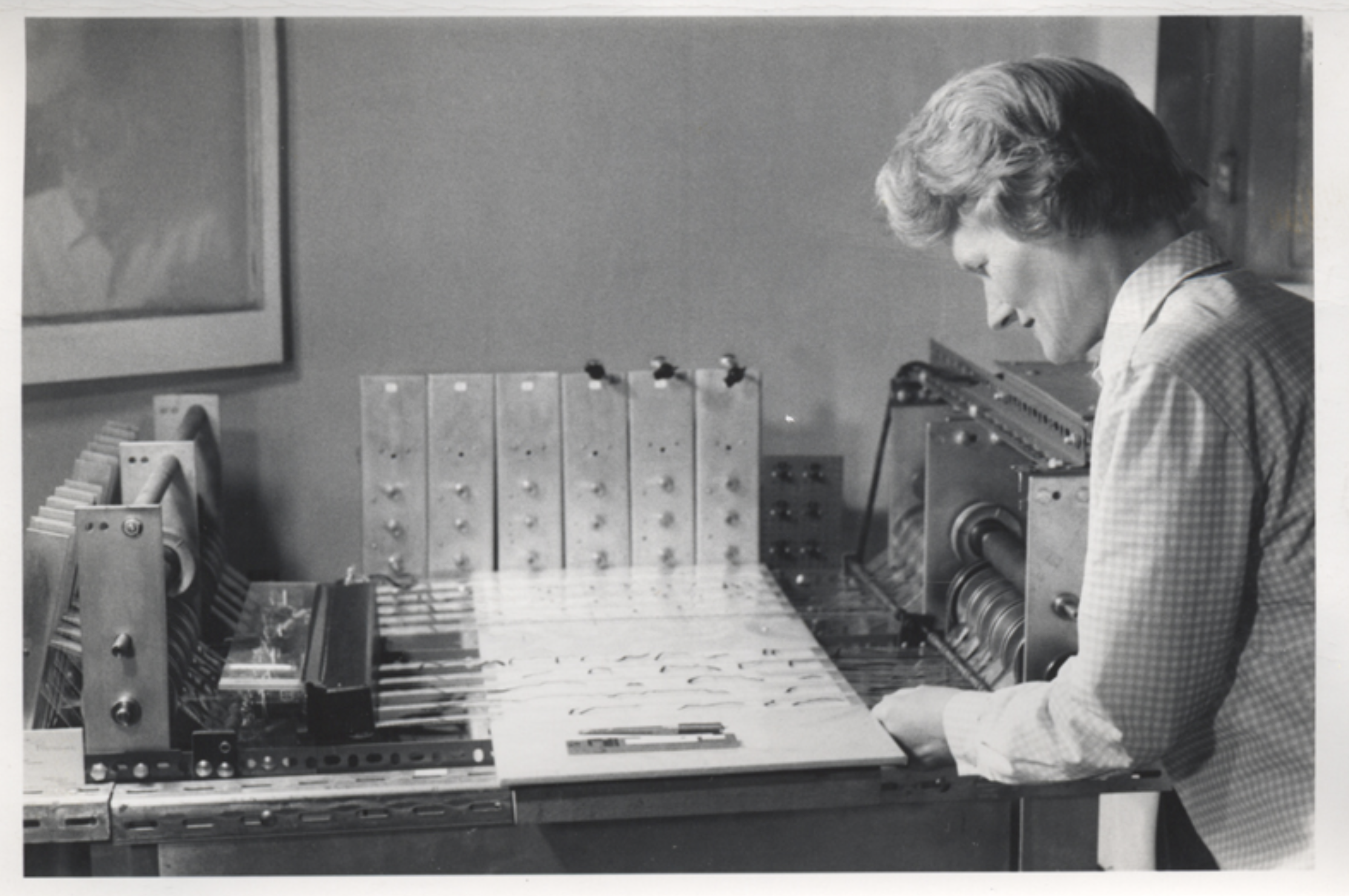
Daphne Oram and the Oramics Machine - Photo Credit: Fred Wood
The Oramics system was radical in its vision of drawing sound. How would you describe its significance today in the lineage of sound synthesis, digital interfaces and graphic composition tools?
You can read about its significance relating to other technologies here.
Many of the artists on the compilation speak about Oram’s philosophical approach to listening, perception and the body. How central is this dimension to how the Foundation positions her legacy today?
Listening and perception, and to some extent the body, are central to her legacy, yes.
** Responses from The Oram Trust and the Awards, answered by Jennifer Lucy Allen, Ian Stonehouse and Karen Sutton.

Photo credit: Joby Catto
Nwando Ebizie
Nwando Ebizie is a multidisciplinary artist whose work spans experimental performance, music, neuroscience and African diasporic ritual. Drawing on her own neurodiversity, she explores perception, Afrofuturism and speculative worlds through research-led, immersive practice.
Her projects include the sensory environment Distorted Constellations, her pop-performance persona Lady Vendredi, and the long-term operatic work Hildegard: Visions. Her work has toured internationally, with performances in Tokyo (Bonobo), Rio de Janeiro (Tempo Festival), Berlin (Chalet), Latvia (Baltais Fligelis Concert Hall), Zurich (Blok), and major UK venues such as HOME Manchester, the Barbican and the Southbank Centre.
Working across media and genre, she creates interconnected mythic and scientific narratives that invite audiences to consider alternate realities and expanded states of perception.
When you revisit Oram’s archive today, what aspects of her thinking or methodology feel most radical or forward-looking?
The first most exciting element for me was engaging with her essay - An Individual Note.
I was inspired not only by Oram's music, but by the way she lived, the way she dreamt and thought and drew together a theory of sound, electronics and what it is to be human. I wanted to draw all of these elements together into a sonic reality.
I feel very at home with her conception of sound - she talks about not wanting to create an ‘inhuman sound with a clinical quality, lacking the possibility of subtlety and nuance’. For her electronic music should be alive and breathing. Listening to her sound palette - this really struck me - that everything was constantly moving, exploratory.
Oram’s archive contains both highly refined compositions and fragments of pure experimentation. How did artists navigate the tension between honouring her sonic language and pushing it into entirely new aesthetic spaces?
I wanted to create a finished piece that was its own island in the world of Oram's Archive. So I wanted it to reflect the sounds and feelings whilst being its own piece of music. I was guided by these worlds from An Individual Note:
‘To visualise a human being in this way we would need a most wonderful mixture of fundamentals, harmonics and overtones, all subtly changing from moment to moment… a whole spectrum of resonate frequencies which are never at rest, never in a steady state, but are vibrant with pulsating tension.’
I structured the piece around this quotation - trying to capture the feelings within her words. Oram posed the question “What is the next step?” in An Individual Note. Looking ahead, what does the Foundation see as the “next step” for the Oram legacy creatively, technologically, or institutionally?
The next step continues on in her vision - drawing together modes of thinking and practice so that practitioners can better understand perception and creativity. Drawing together neuroscience, philosophy, engineering and art into new forms. Reaching into the future whilst reaching backwards into lost forms of knowledge.

Lola de la Mata
Lola de la Mata is a conceptual sound artist, composer and musician (theremin/violin/voice) based in Liverpool. She takes the anarchic being - the ear, as her muse, while tinnitus and aural diversity are at the core of her research practice, her quiet, teetering on the inaudible and imagined sounds emanate from self-made glass and metal instruments.
In 2024 Lola won an Oram Award and a Sound of the Year Award for her experimental debut album ‘Oceans on Azimuth’ released to much acclaim (The Quietus, Electronic Sound Magazine, New Scientist, BBC Radio 6, Crack Magazine), with broadcast on BBC 3, BBC 6, NTS and Resonance FM.
She has received commissions from the Riot Ensemble, Lisson Gallery, Zubin Kanga, Spitalfields Music Festival, and crafted soundtracks for experimental film, documentary and the award winning feature film STOPMOTION (2024) by Robert Morgan.
What kind of creative challenges or discoveries emerged from engaging with Daphne Oram’s material?
At first I instantly recognised Oram’s signature, and although I knew I wanted to find a way to duet with her and meet her in her own sounds, I also didn’t want to ‘remix’ one of her tracks. I was after her in-between sounds, or samples which surprised me were made by her hand. The biggest discovery? Her echoing spring bass beats!
Oram’s archive contains both highly refined compositions and fragments of pure experimentation. How did you navigate the tension between honouring her sonic language and pushing it into entirely new aesthetic spaces?
I am often told my work is intense, I guess I tend to look in, sink into my body - but my aim is to be joyous, not make anything ‘too’ serious. In Oram’s archive I found a similar humour emerging from her playful approach to the iterative process and so the character of the piece emerged quite organically. Perhaps somewhat uncanny…dark pools, ghosty sounds - punctuated by Oram’s upbeat, bright voice and unexpected beats.
Oram posed the question “What is the next step?” in An Individual Note. Looking ahead, what do you see the “next step” of the Oram legacy, creatively or technologically?
More women and gender non-conforming artists developing technology perhaps? Let's be honest, we're rebellious innovators at heart! By that I mean new instruments, be it analogue or digital - more tools as well. Plug-in companies and studio houses almost exclusively have men at the helm.
Wouldn’t it be fantastic to see the industry expand? I’m so grateful to Nonclassical for working with mastering engineer Katie Tavini (Weird Jungle). This is the way forward.

afromerm
afromerm is the solo project of Oram award-winning composer and sound artist, Cecilia Morgan.
Her work draws from contemporary, jazz, and experimental disciplines, blending electronic elements with live instrumentation, field recordings, spoken and sung vocalisations, and her self-built motion-reactive instrument, Juniper, to create electroacoustic soundscapes that immerse us in the elemental mythology of her project. afromerm has been platformed by BBC Radio 1 (described as a ‘sonic innovator’), BBC Radio 3, NTS Radio and The Line of Best Fit.
Her live work has found audiences at the likes of Le Guess Who? Festival, London Jazz Festival, ICA and Cafe OTO. Composition credits under Cecilia Morgan span independent film, contemporary dance, theatre and fine art media, with notable clients including Tate and The Fitzwilliam Museum.
Working directly with Oram’s tapes, instruments and sonic gestures can be an intensely tactile experience. what kinds of creative challenges or discoveries emerged from engaging with her material in such a hands-on way?
Visiting Oram's archives was fascinating; the sheer volume of material was overwhelming. I was struck by her beautiful construction of language in her letters. Her description of 12-tone equal temperament as a "rectangular.
grid, imposed on an uncharted continent as a makeshift means of administration and surveying”, alongside the mountainous curvature of her hand-drawn Oramics slides, informed our approaches to pitch and form.
Oram’s archive contains both highly refined compositions and fragments of pure experimentation. How did you navigate the tension between honouring her sonic language and pushing it into entirely new aesthetic spaces?
We did a great deal of listening, but rather than sampling Oram's archive, abi asisa and I chose to interpret two Oramics slides as graphic scores, so our honouring of Orams sonic language was rooted more in process than material. Emulating the analogue uncertainty of Oram's work in a digital environment was a challenge that I addressed through the liveness/immediacy of my audio processing.
Oram posed the question “What is the next step?” in An Individual Note. Looking ahead, what does the Foundation see as the “next step” for the Oram legacy creatively, technologically, or institutionally?
Daphne Oram interrogated what it meant to be a composer and foresaw what a huge impact technology would have on composition. The Oram Awards specifically is helping to both document and create a largely overlooked part of sound/music history, and like many of my fellow Awardees, my composition practice has been shaped heavily by the increasing accessibility of audio technology. I'm curious to witness how this might evolve throughout my lifetime.
Follow Nwando Ebizie | Lola de Mata | afromerm
Centenary Celebrations
The 31st December 2025 is Daphne Oram’s 100th birthday. This is a great opportunity to celebrate her unique contributions in lots of different ways. We hope that you will have an opportunity to hear some of her music live at various events of listen to recordings on some of the new releases out this year. In response to this Centenary year composers from the electronic music community are also producing exciting new compositions and performances that draw on the influence of Daphne Oram.
vari/ations - Ode to Oram by Various Artists / Daphne Oram is out now
Oram/100 Tour
Vari/ations – An Ode to Oram Thu 4 Dec 2025, 19:30, The Barbican Hall
There will be a free pre-concert talk with Arushi Jain, Lola de la Mata and Jennifer Lucy Allan at 6:00pm in the Fountain Room. Due to illness, Cosey Fanni Tutti is unable to speak at tonight’s pre-concert talk. Arushi Jain will be replacing her. Please note that the capacity is limited and seating will be available on a first-come, first-served basis.
Stick around after the show for ClubStage performances from Lola de la Mata and afromerm + abi asisa.
Stage times:
6.00pm - Pre-concert talk in the Fountain Room
7.30pm - First Half
8.20pm - Interval
8.40pm - Second Half
9.45pm - Aftershow Clubstage performances
Info & Tickets

12 Dec 2025, St Vincent’s Church / Stockbridge / Edinburgh
Workshop & Performance Tickets via Hecate
Workshop: Improvised Music Tech Jam - Hosted by Luci Holland & Tinderbox Lab - more info to follow.
Performances: The Silver Field / Vocifer / Justyna Jablonska / Aurora Engine / Bell Lungs / SLY DIG
Panel Discussion: Luci Holland (Tinderbox Lab), Karen Sutton (Oram Awards), Dr John Hailes (Napier University) + more