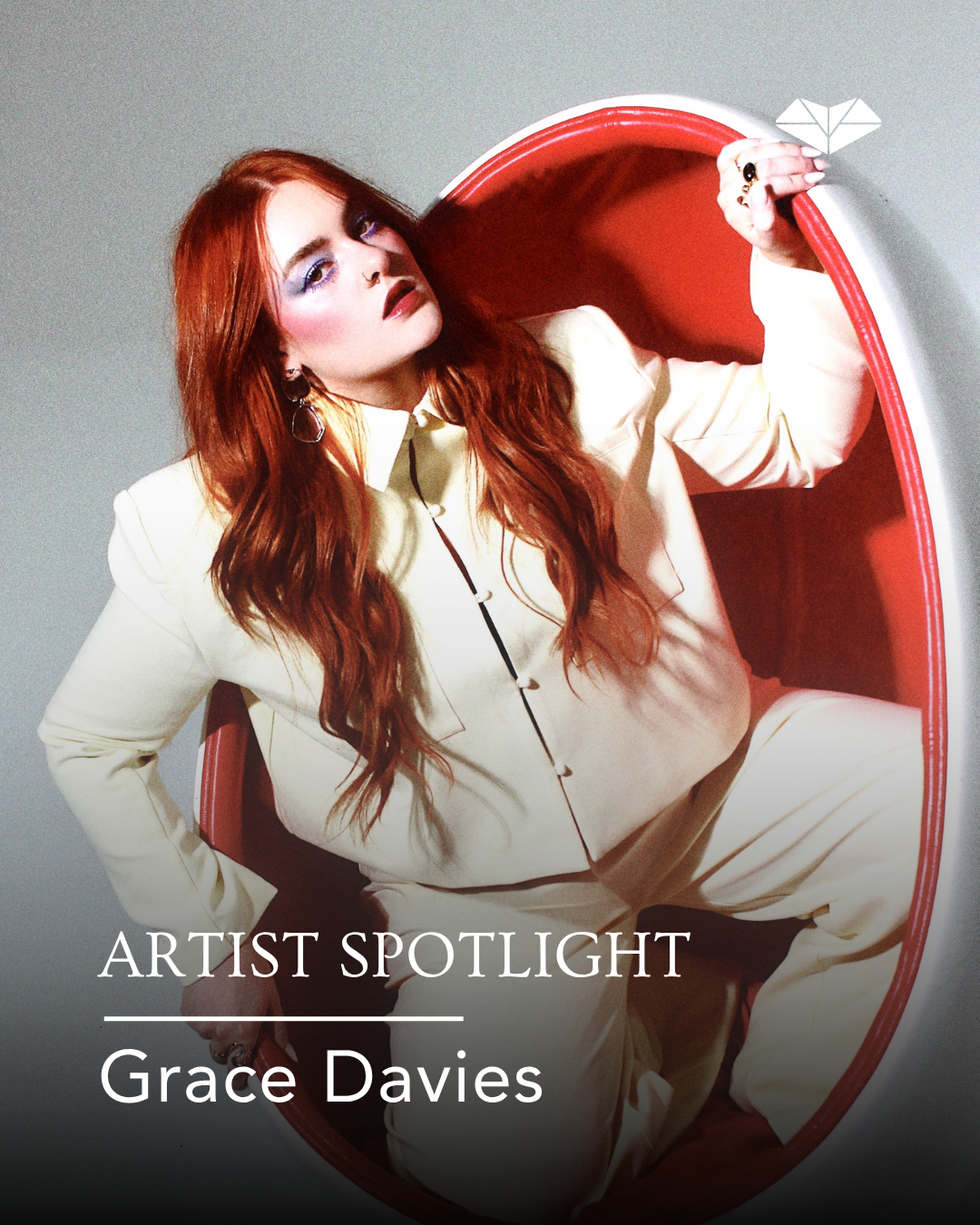
Grace Davies has spent the past decade steadily building a career defined by independence, persistence and creative control. The Blackburn-born singer, songwriter and producer first gained national attention through BBC Introducing before reaching a wider audience in 2017, when her original song Roots went viral during her appearance on The X Factor. Rather than following the traditional path of covering other artists, Davies stood out for performing her own material throughout the competition, a rare move that helped establish her reputation as a songwriter first and foremost.
Since then, she has continued to carve out her own lane in the industry. With more than 100 million streams across her catalogue and consistent radio support from BBC Radio 1, Radio 2 and major commercial stations, Davies has built a growing audience while navigating the realities of an evolving music business. Following the closure of her former label SYCO, she moved fully into independence, self-releasing projects and taking greater control over everything from songwriting to production and catalogue ownership.
Her long-awaited debut album, The Wrong Side of 25, marks a defining chapter in that journey. Written and produced on her own terms, the record reflects years of creative development and hard-earned industry experience.
Your debut album The Wrong Side of 25 was years in the making. How did you decide when the right time was to release it, and what did you learn from that rollout?
I actually don’t think I’ve ever decided when the right time to release something was. It feels like my whole career has just been waiting to be either contractually or financially allowed to put things out. I’d have loved to make an album 8 years ago - but I truly believe everything happens for a reason and my debut album would be nowhere near as spectacular as it is now had I done it back then.
It’s taken a lot of placing trust in the universe and, as frustrating as being an indie artist can be, it does make you appreciate the big milestones that bit more after you’ve worked so hard to make it to them.
You produce your own music, which still remains rare in mainstream pop. How has producing your own work changed your creative control, business decisions, and long-term ownership of your catalogue?
I genuinely think it just made me realise who I am as an artist. I started out by writing songs by myself and making demos in my room, so when I started being put in writing sessions with another top liner and a producer, I just got lost.
I felt inferior and like these are the professionals and I should let them take the lead - but as soon as I learnt and understood production properly, I felt like I was able to take the reins a bit more and find a sound that felt genuine to me rather than the producer’s “go to” sound.
I think on the business side it’s meant that I’m not automatically giving that role - and the rights that come with it - to someone else for the sake of it. It’s made me much more conscious financially as the master holder (than when I was with a major label, for example) but also conscious of how credits, royalties and ownership are structured and making sure I have a stake in those things long term.
Your releases have accumulated over 100 million streams and significant radio support. What were the most effective steps you took early on to build momentum and reach new audiences?
With things like radio, I banged down the doors of gatekeepers until, I think, they played me just to shut me up. In terms of streams and building momentum, I do think consistency is key. Consistently delivering high quality music and delivering it often enough that you don’t slip out of view really helped.
As soon as I became an independent artist, I was able to do that. I stopped treating songs like precious things that had to sit on a hard drive waiting for the ‘perfect’ moment - and while moving back in with my parents in my mid-twenties wasn’t glamorous, it meant that money I would’ve been spending on London rent went into making and releasing music consistently.
That decision gave me the momentum I needed. Social media also allowed me to take songs straight to listeners without waiting for permission. I’ve always tried to be really honest in my songwriting and in how I connect with people online. If someone finds a song and feels like it genuinely reflects their own experience, they’re much more likely to stick around and share it.
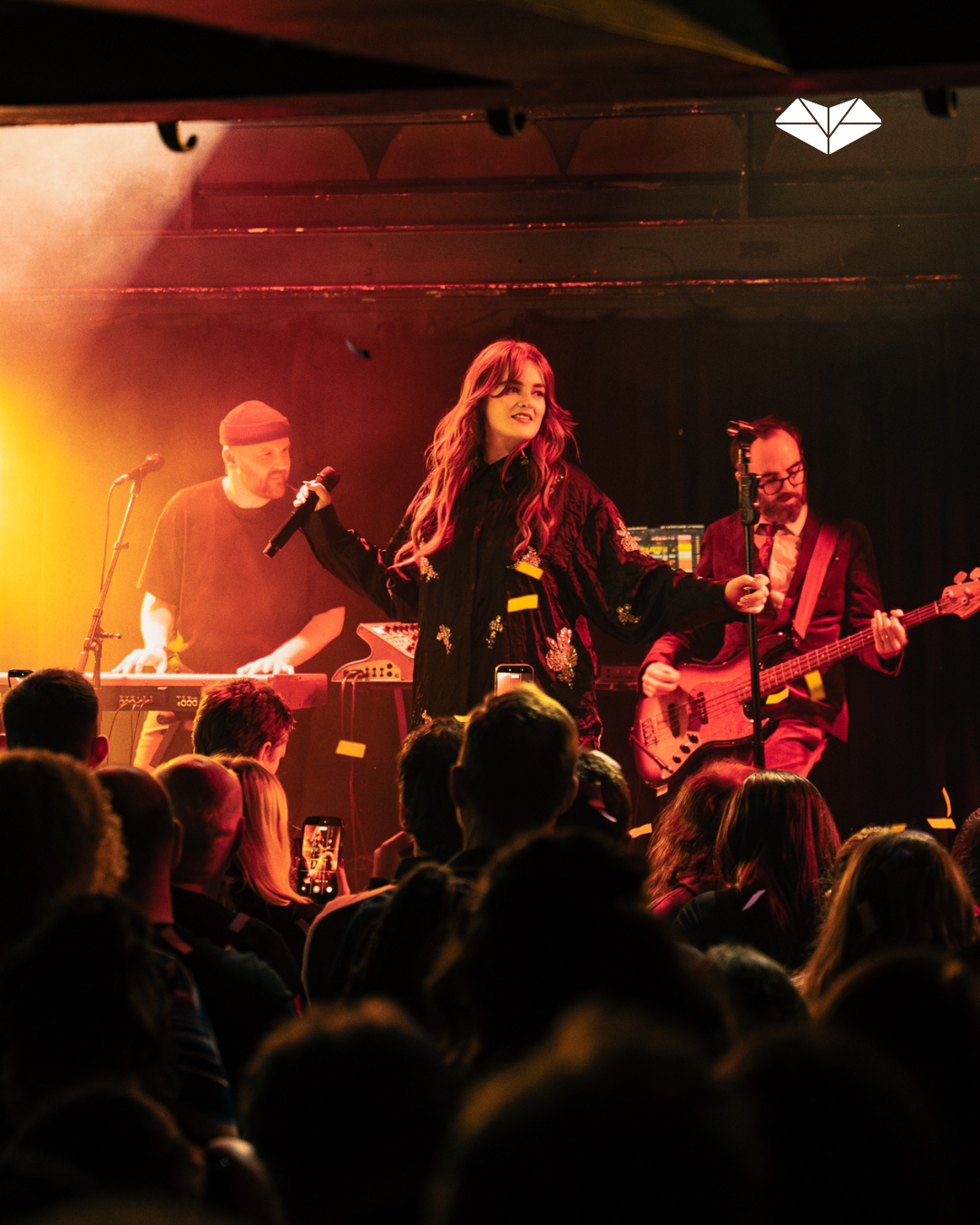
You recently performed a sold-out show at The Jazz Cafe. What did that night represent for you creatively, and how did it shape your connection to this new chapter of your music?
Playing The Jazz Cafe is one of those things you always hope you’ll get to do as an artist, it’s such an iconic venue, so the fact that it sold out felt really special. It was the first time I was able to perform the whole album, many of them for the first time.
I think sometimes when you release a song or project it can feel like shouting into a dark void - you’re never really sure if anyone is there or listening - so to hear an audience singing back the lyrics you put blood sweat and many, many pennies into makes it entirely worth it. That night really made the whole album feel real to me and I’ve honestly never felt more like an artist than I did on that stage
You’ve re-released “Butterflies” with Sonny Tennet. What factors influence your decision to revisit or rework an existing song?
I think when songs are released as part of a project they can get lost. The core fans will know and love them, but let’s be honest, releasing 13 songs in one day is overwhelming for any listener and most people listen to them once - so giving those songs the chance to stand out is always exciting. You also get the opportunity to reimagine them, which is such a fun process.
Suddenly you can ask things like: who would be my dream collaborator, or what would I change if I could revisit the song now? Working on “Butterflies” again with Sonny was a really nice example of that, because it allowed the song to take on a slightly different life.
If I’m completely honest, streaming platforms (potentially) giving songs a chance in playlists really influences a decision. If you don’t treat a song like a single you don’t get those (potential) opportunities, so it’s so worth a shot just in case - because that can really help you reach new audiences and build a bigger platform than the one you can give yourself.
Streaming has transformed how artists build careers. Beyond streaming numbers, what metrics or signals do you personally consider meaningful indicators?
Streams are obviously important because they show that people are finding the music, but I don’t think they tell the whole story. For me, the most meaningful indicators are the things that show a genuine connection with listeners. If people are coming to shows, singing the words back, messaging me about what a song means to them, buying physical copies of the music, or choosing to follow along with each new release - that means far more than a number on a screen.
I also think it’s so easy with streams to get obsessed with following the numbers and wondering why they’re not the same as last week or last month or the artist who just played the same venue as you - it can be such an unhealthy mindset. I pay attention to whether the audience is growing in a sustainable way. Are people sticking around? Are they coming back for the next song, the next tour, the next chapter?
Those are the signals that tell me the music is actually resonating for the long term rather than just having a fleeting moment. At the end of the day, a healthy career is built on real fans, not just big numbers, so those are the things I try to focus on.
For artists trying to build sustainable careers independently or semi-independently, what practical steps would you recommend focusing on first?
Be as self-sufficient as you possibly can. To be an independent artist, especially at a ‘starting out’ level, is to be constantly paying everyone around you and never yourself.
Learn how to play an instrument so you can support yourself live, learn how to produce, learn how to be your own graphic designer and video editor. Write your own press-releases, reach out to radio gatekeepers yourself.
Make contacts. It’s fucking hard but it truly is the only way to shove your face in other peoples faces without bankrupting yourself.