
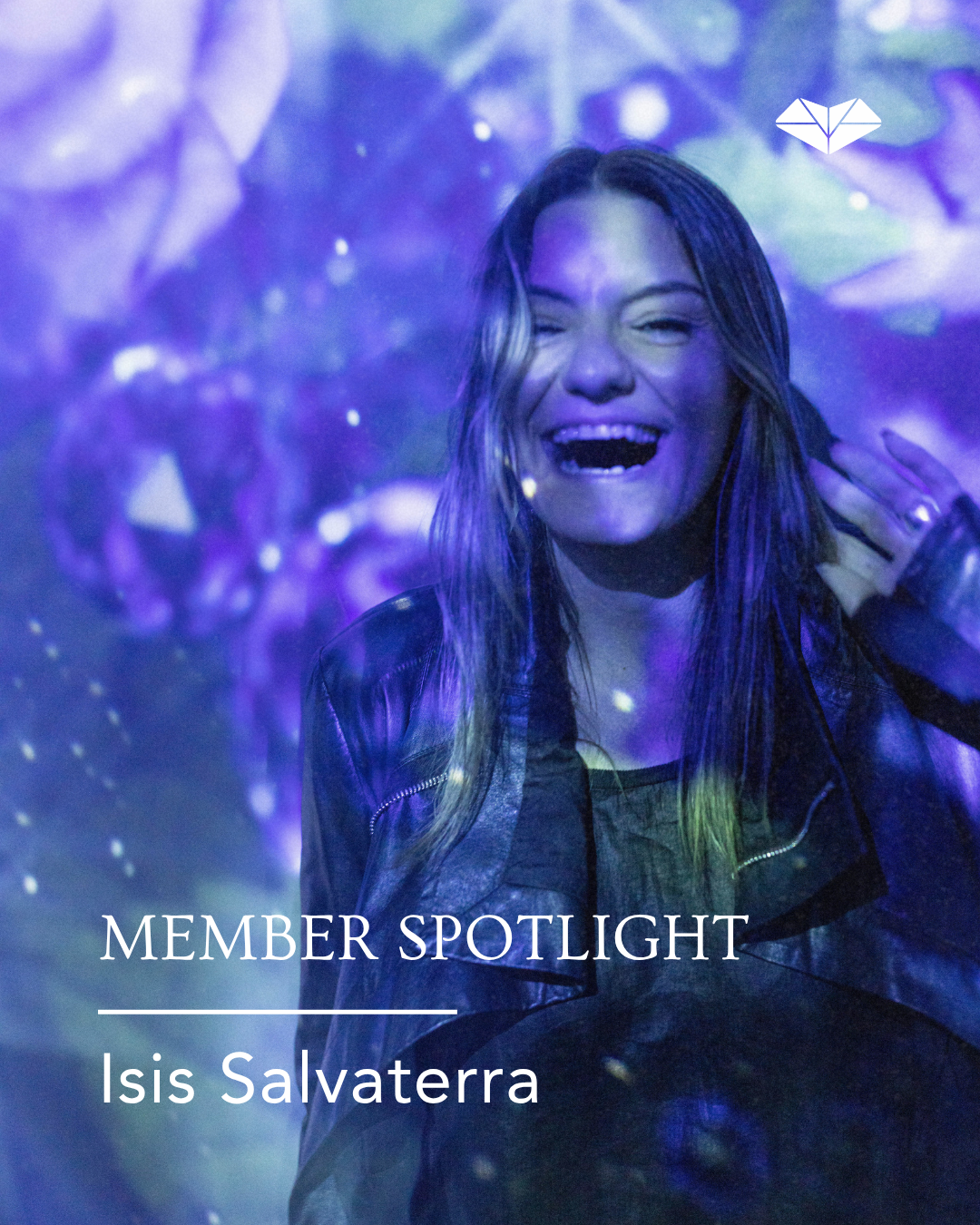
For more than two decades, Isis Salvaterra has built a career that spans artist management, events, coaching and consultancy, establishing herself as a familiar figure within London's underground electronic music community and beyond.
As the founder of Toi Toi Musik, she oversees a platform encompassing artist management, events and a record label, while through ISCoaching she works with artists, creatives and professionals from around the world, combining cognitive behavioural coaching with years of experience working across the music industry.
Alongside her work with Toi Toi, Salvaterra has contributed to projects including Club Guesthouse in Bucharest, Trommel and fabric's international touring programme, while also leading charitable initiatives that have brought the electronic music community together to support humanitarian causes.
Underpinning much of her work is an academic background in Psychology, Sociology, Politics and Ethnomusicology, disciplines that continue to inform her approach to coaching, artist development and community building.
You originally studied Psychology, Sociology, Politics, and later Ethnomusicology before fully moving into music. What first drew you into electronic music culture and the industry itself?
Dancing. I grew up in Brazil, surrounded by an incredibly rich musical culture, and I’ve been dancing since I was five years old. Samba, Lambada, Salsa, Forró, Merengue—you name it. The only dance I never pursued was Tango. It requires an extraordinary level of discipline, much like ballet. As a child, my sister was placed in ballet classes while I was sent to jazz dance. Looking back, that made perfect sense. I was always a little looser, freer, and less suited to highly structured environments.
Alongside dancing, I always loved bringing people together. I rarely went to a party without a large group of friends, and I was constantly organising school events and social gatherings. In many ways, community-building and celebration were already part of my life long before I entered the music industry. Electronic music simply became the place where all of those passions naturally converged.
You’ve worked across artist management, touring, events, coaching, charity initiatives, PR, and consultancy. How did you build such a multi-layered career across different areas of the music industry?
The truth is, it was never intentional. I’m an extremely curious person, and I’m also a doer. Those two traits alone probably explain most of my career. I’ve always been the person asking “why?”, and dance music is a remarkably multidisciplinary ecosystem. Every aspect of it is interconnected; artists, audiences, promoters, venues, media, technology, culture—they all depend on one another. I find that fascinating.
Having an academic background also gave me a broad set of skills and ways of thinking that translated across different roles, regardless of the subject I happened to be studying at the time. The deeper I became involved in dance music, the more opportunities emerged to contribute in different ways. One thing naturally led to another.
Most importantly, none of these roles were part of a master plan. By the time I officially took on a title, I had usually been doing the work unofficially for years already. In the end, they are just job titles, and I’ve never been particularly attached to them.
You’ve been deeply connected to London’s underground electronic music scene and spaces like fabric for over two decades. How have you seen underground culture evolve during that time?
Yes and no.
In some ways, the fundamentals have remained remarkably consistent. People are still searching for connection, discovery, belonging, and transcendence through music. Those motivations haven't changed.
What has changed is the environment around the culture. Technology, social media, the attention economy, and shifts in nightlife infrastructure have all transformed how scenes are built and experienced.
We are living through a particularly unusual period right now—one that I hope is transitional. There is a growing tension between community and consumption, between culture and content. It will be interesting to see where the balance settles in the coming years.
Through Toi Toi, Club Guesthouse, fabric tours, and Trommel, you’ve helped shape communities around music. What do you think makes a music community genuinely sustainable and long-lasting?
The simple answer is that it remains a community rather than becoming purely transactional.
People stay because they feel a sense of belonging, not because they are being sold something. Sustainable communities are built on shared values, trust, contribution, and meaningful relationships. The moment everything becomes a transaction, the social fabric starts to disappear. Music may bring people together initially, but it is the human connections that keep communities alive over time.
Networking is such a major part of the music industry. What practical advice would you give to emerging artists, managers, or promoters trying to build authentic relationships and connections?
Networking is often misunderstood because people treat it as a task rather than a natural extension of participation.
I often give my mentees this example: you can wake up on a Monday morning and spend hours doing Discogs research, which can feel like another item on your to-do list. Or you can find yourself at an afterparty, jumping into a spontaneous b2b2b2b session with several artists, sharing music, stories, and ideas. By the end of the night, your knowledge has expanded far beyond what you might have discovered alone, and you've built genuine human connections in the process.
The point is not that one approach is better than the other, but that relationships are often where the richest learning happens. The music industry is ultimately a people industry. Curiosity, participation, generosity, and genuine engagement will take you much further than approaching networking as a purely strategic exercise.
Many people struggle to balance creativity, career pressure, and mental health in the music industry. What inspired you to launch ISCoaching, and what are some of the biggest challenges you see creatives facing today?
ISCoaching was launched during the pandemic at Electronic Beats - see video here. At the time, I was living between London and Bucharest, I was working at Club Guesthouse. When you spend time in a cultural environment shaped by the legacy of an oppressive system such as communism, you begin to understand many of the psychosocial behaviours that emerge from collective and intergenerational trauma.
For artists to truly express themselves, they first need the freedom to do so. Part of our work, therefore, is helping people identify and remove the barriers created by past experiences, conditioning, and trauma, allowing their creativity and authentic selves to emerge more freely.
Today, I work with clients all over the world, both within and outside the creative industries. One of the most common challenges I encounter is the fear of disapproval. We live in a highly visual and hyper-documented world where so much attention is directed towards the self. This constant exposure often leads people to become overly subjective and self-critical.
For creatives in particular, learning to view their work more objectively is essential. It allows them to separate their identity from their output, develop healthier self-assessment, build confidence, and avoid becoming trapped in cycles of overthinking. In many cases, the greatest obstacle to creativity is not a lack of talent, but the inability to trust oneself.
For artists or creatives trying to approach brands, festivals, or platforms for opportunities, what makes someone stand out professionally today?
If we're talking specifically about festivals, agency representation remains one of the primary routes to securing bookings. Agencies have the networks, relationships, and infrastructure to ensure an artist's work reaches the right promoters, programmers, and decision-makers.
That said, when it comes to building a lasting career and becoming part of a community, I still believe the most effective approach is the most human one. Being present, participating in the culture, sharing music, exchanging ideas, and genuinely engaging with people remains invaluable. The strongest opportunities often emerge organically through relationships built over time rather than through cold outreach alone.
In electronic music especially, credibility is still rooted in participation. People can tell when someone truly loves the culture and contributes to it, versus when they are simply trying to extract opportunities from it. Human interaction, musical exchange, and a genuine passion for the scene continue to be some of the most powerful differentiators a creative can have.
Finally, after more than 20 years in music and culture, what advice would you give to younger creatives trying to build a meaningful and sustainable career in the industry?
First, understand that DJing is a craft. It requires skill, knowledge, experience, sensitivity, and patience. It is a far more complex art form than simply beatmatching records or selecting "bombs" for the dancefloor.
One thing I would like to see more often in younger artists is the confidence to step back when necessary rather than constantly pushing forward. There is value in observing, learning, listening, and allowing things to develop organically. Not every opportunity needs to be chased, and not every door needs to be forced open.
There are also two principles that I have always considered essential. First: never self-praise. Let your work speak for itself. Second: never ask for gigs. Instead, focus on showing your work in a way that naturally demonstrates your value and contribution. How you do that is part of the journey each artist must discover for themselves.
Ultimately, a sustainable career is built on substance rather than visibility. Focus on developing your taste, your knowledge, your relationships, and your understanding of the culture. Recognition may come and go, but those foundations will stay with you throughout your entire career.