
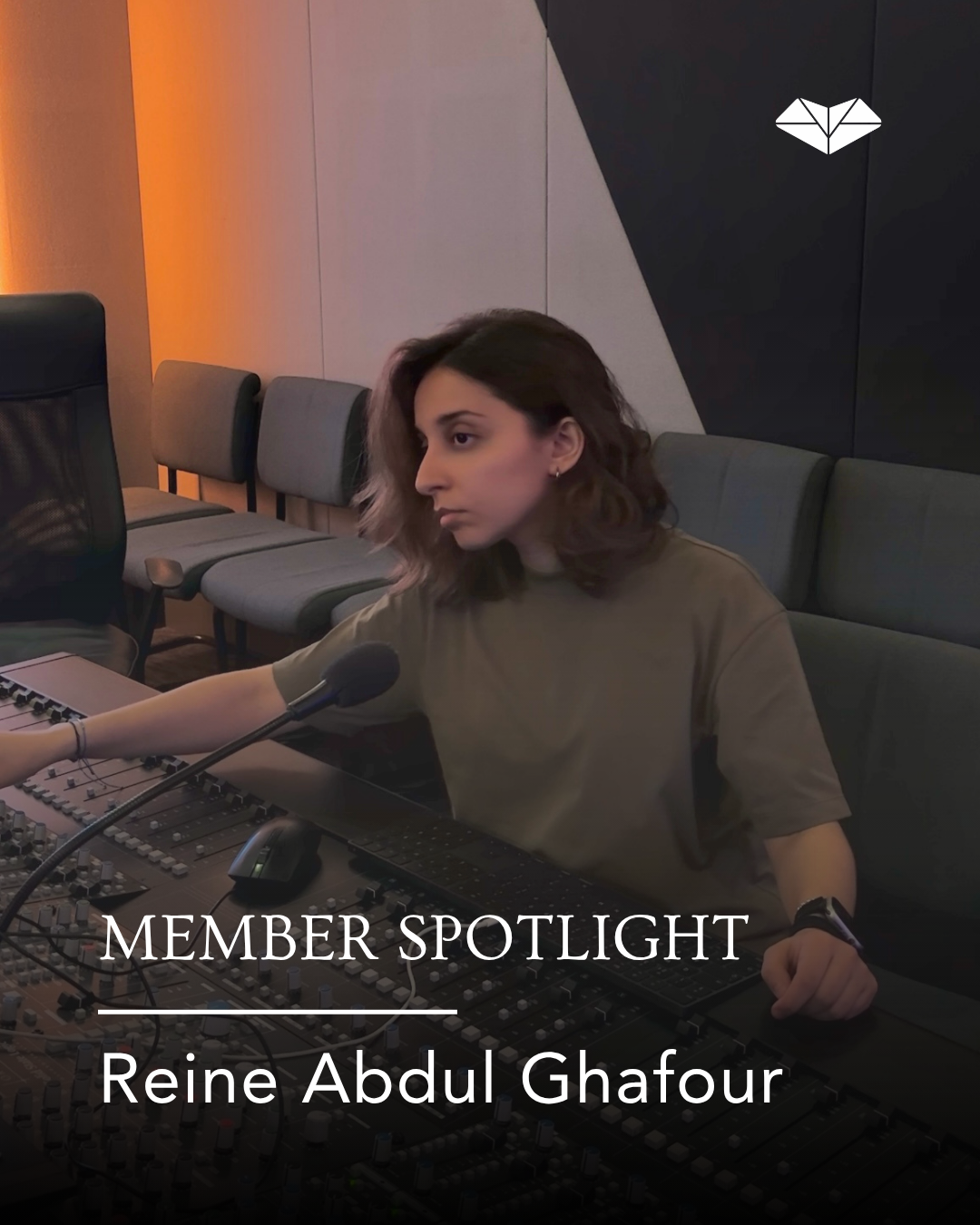
Lebanese audio engineer and sound designer Reine Abdul Ghafour works across live sound, mixing and mastering, music production and audio for visual media. Based in the UK, her practice has taken her from intimate artist shows and independent releases to large-scale concert productions, including the 2026 Spring Sequence of New Sounds at Central Hall Westminster, as well as benefit events raising funds for Lebanon, Sudan and Congo.
Growing up in Lebanon, Reine played guitar and became increasingly curious about what happened behind the scenes of the music she loved. That curiosity eventually took her to London to study audio engineering, opening up a practice spanning recording, live production, sound design, mixing and mastering.
Moving to the UK also changed her relationship with the music and culture she grew up around. Having listened to relatively little Arabic music while living in Lebanon, distance prompted her to reconnect with her roots and develop a deeper appreciation for music from across the SWANA region. Today, working with SWANA artists has become an important part of her practice, informed by shared languages, cultural references and experiences.
That connection between sound, place and memory also sits at the centre of her final-year university project, an audio narrative exploring the emotional experience of conflict and distance without relying on images or dialogue. Drawing partly on her own experience of how sounds such as sirens and fireworks could transport her back to Lebanon and thoughts of family, the project uses recorded and designed sound to allow listeners to construct the story themselves. Reine now hopes to develop the work into an immersive sound exhibition in 2027.
Can you tell us a little about yourself and what first drew you to working in sound
I’ve always felt that sound could change the way someone feels. I’ve always found it difficult to express my emotions with words, but music has always been a language I understood. It became the easiest way for me to express myself and connect with other people.
I grew up surrounded by music. I was always listening to it, and I started playing guitar when I was young. The more I learned, the more curious I became about everything happening behind the scenes. I realised there was a whole world beyond performing, including recording, mixing, live sound and sound design, and I wanted to understand how it all worked. That curiosity is what eventually led me into audio engineering.
What has working in live sound taught you?
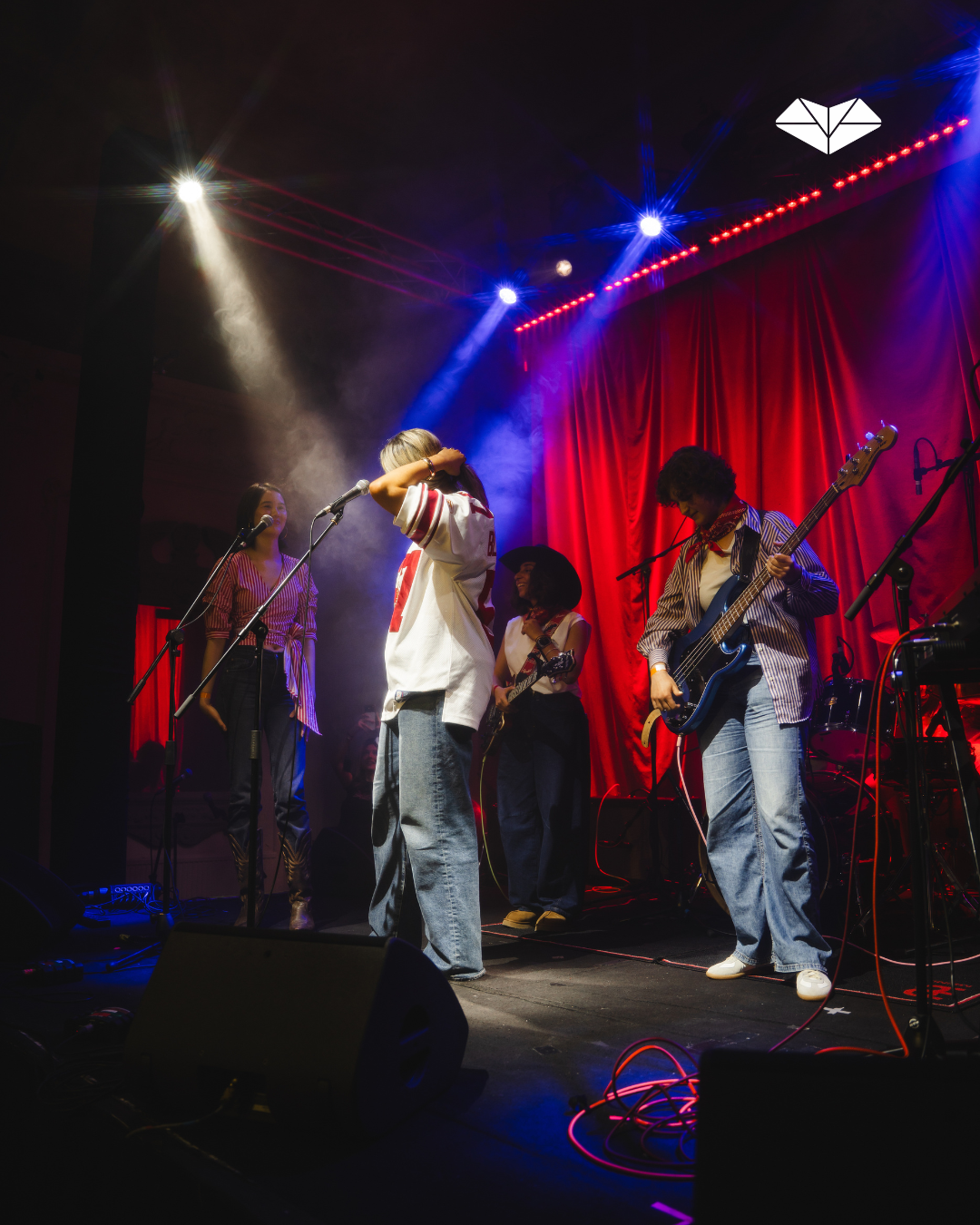
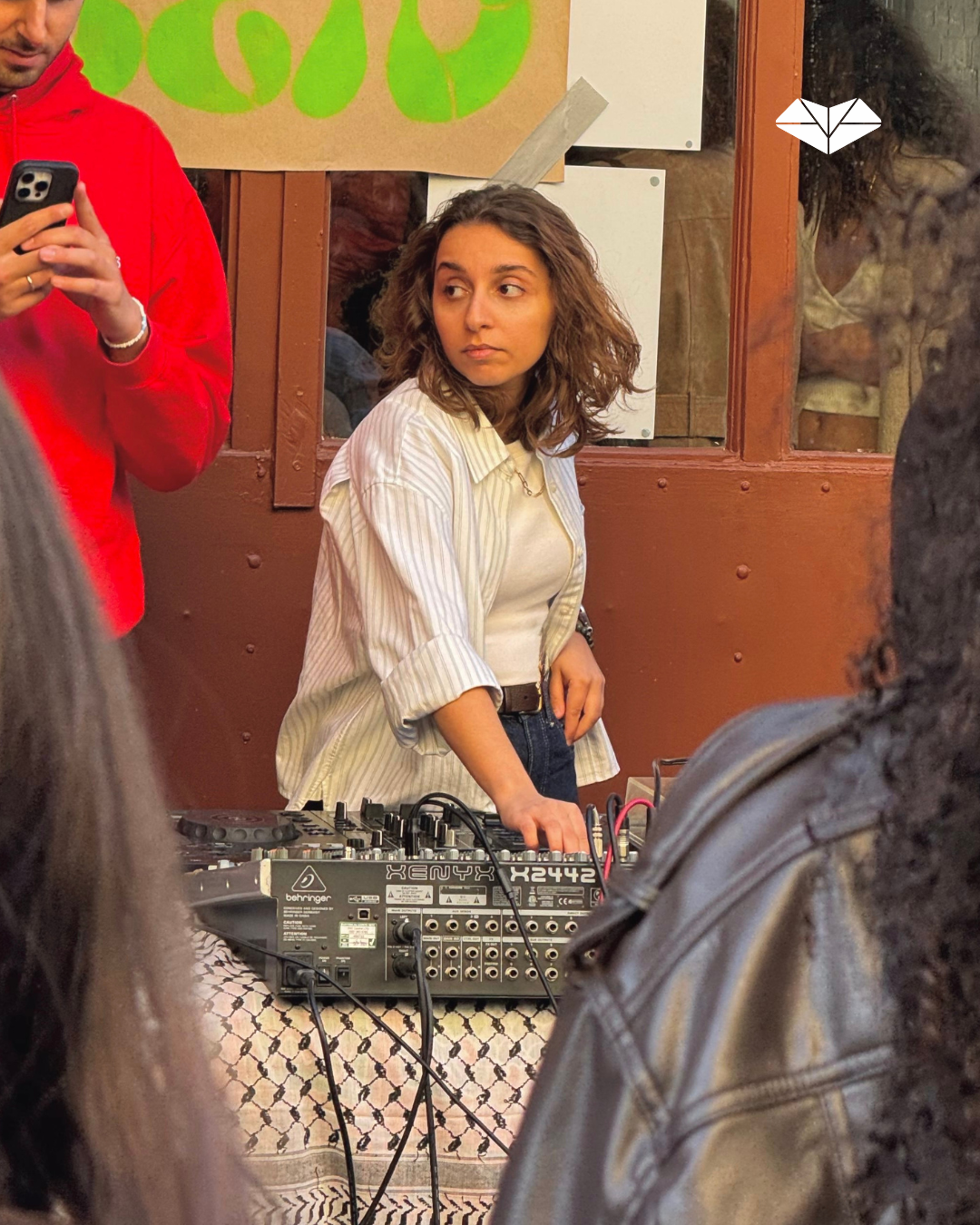
The biggest lesson I’ve learned is that the size of the event doesn’t determine how challenging it will be. I’ve worked on everything from intimate gigs to large-scale productions, and every show comes with its own unexpected challenges. One of the most valuable experiences for me was volunteering as a live sound engineer for the “2026 Spring Sequence of New Sounds” concert at Central Hall Westminster. It pushed me out of my comfort zone and reminded me how important it is to think quickly, adapt and stay calm under pressure.
Live sound has taught me to always have a plan B, and ideally a plan C. No matter how well you prepare, something can change at the last minute, so being flexible is just as important as being technically skilled. It’s also taught me to trust my instincts. Early in my career, I sometimes second-guessed myself, but experience has shown me that confidence comes from preparation.
If you’ve done the work and understand what you’re hearing, you have to trust your judgement while still communicating openly with artists and your team. At the end of the day, live sound is about solving problems without letting the audience notice them. The show has to keep moving, and that’s what makes it both challenging and rewarding.
You’ve also worked closely with artists from the SWANA region throughout your career. How has your background shaped the way you collaborate and communicate with artists?
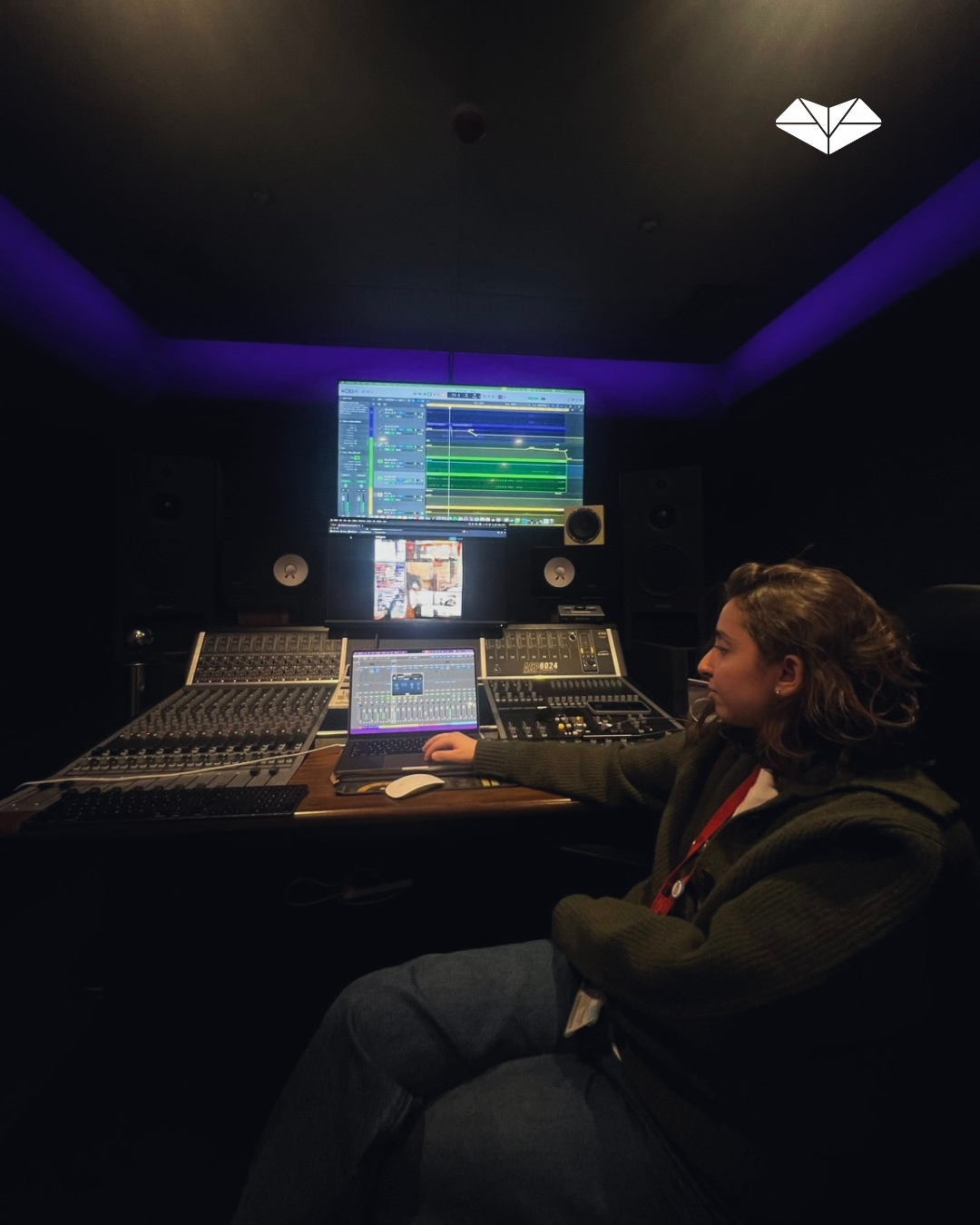
Interestingly, growing up in Lebanon, I didn’t really listen to much Arabic music. I never imagined that one day I’d be working so closely with artists from the SWANA region. It was only after moving to the UK that I began to reconnect with my roots. Studying music and audio engineering gave me a new appreciation for the richness and complexity of the music I had grown up around but never fully explored. The more I listened, the more I realised how deeply I understood it, not just musically, but culturally.
Working with SWANA artists has felt very natural because we often share a language, cultural references and lived experiences. That doesn’t change the fundamentals of collaboration, but it helps build trust and understanding from the very beginning. Today, I’m incredibly proud of where I come from. I want to play a part in highlighting the creativity, diversity and beauty of music from the SWANA region. Being able to support those artists, both technically and creatively, has become one of the most meaningful parts of my career.
Your final-year project explored the emotional experiences of people from the SWANA region entirely through sound. What inspired the project?
The project was inspired by the emotional impact of conflict and what it feels like to experience it from afar. Growing up in Lebanon, periods of instability were part of life. They didn’t define every day. We still went to school, met friends and carried on with our lives, but they were always there in the background.
When I moved to the UK, I found that certain everyday sounds affected me differently. An ambulance siren or loud fireworks could instantly take me back home and make me think about my family. I realised how strongly sound is connected to memory and emotion. I wanted to explore that through sound alone.
Rather than showing images or using interviews, I wanted listeners to build the story in their own minds. Sound leaves space for imagination, and I believe that can create a deeper emotional connection because everyone visualises the experience differently. The project wasn’t about politics. It was about people. It was about uncertainty, distance and the feeling of waiting for a phone call from home, hoping your loved ones are safe.
More than anything, the project confirmed something I’ve always believed. Sound can tell stories just as powerfully as images. It also sparked my passion for storytelling through audio, and I’m now working towards developing the project into an exhibition so more people can experience it.
Networking can feel intimidating, especially when you’re starting out in technical roles. What’s the best networking advice you’ve ever received, or the approach that’s helped you build your career?
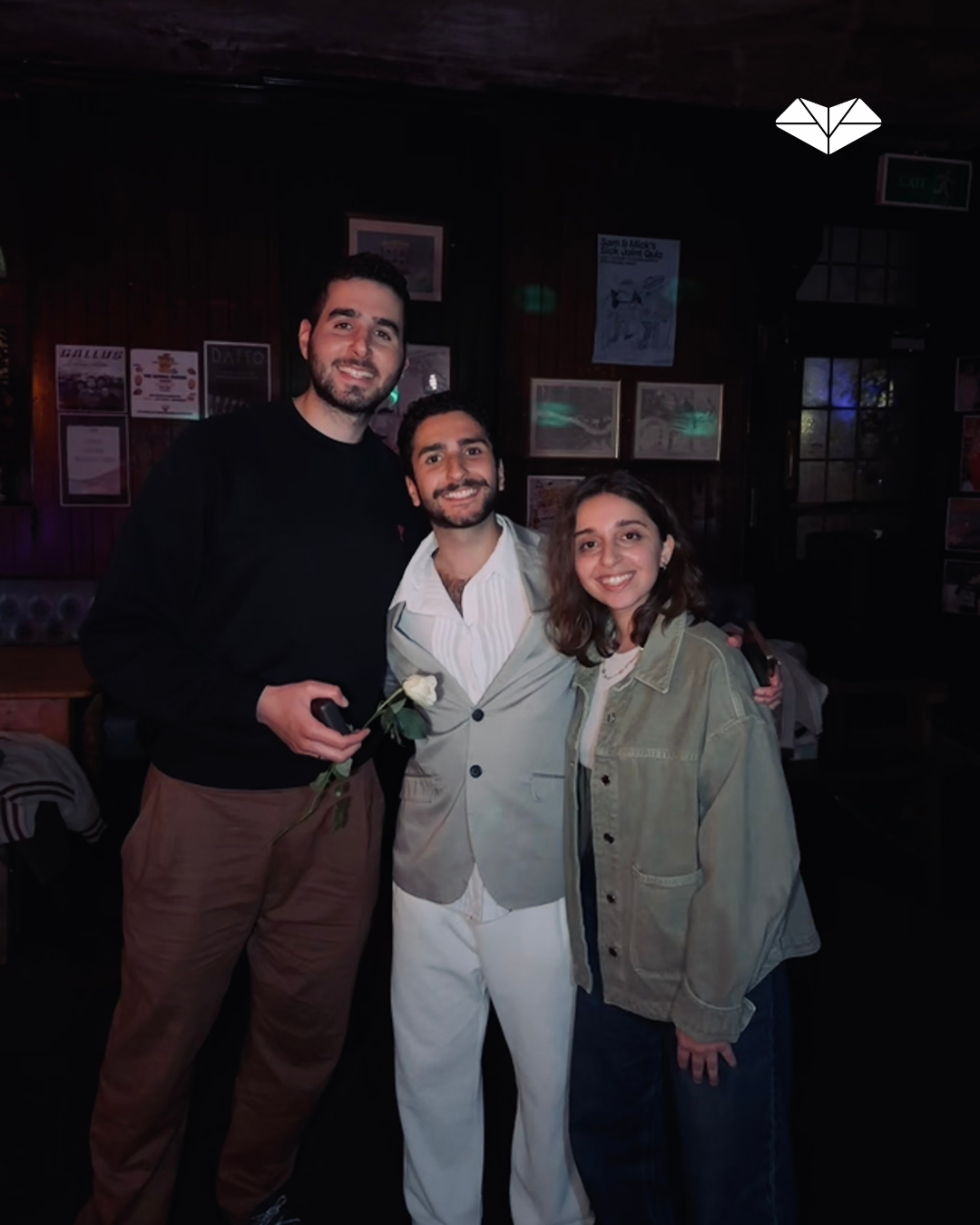
If there’s one thing I’ve learned, it’s that networking isn’t about collecting contacts. It’s about building genuine relationships. Looking back, many of my biggest opportunities didn’t come because I had the most experience. They came because someone trusted me enough to give me a chance. From my first experience in game audio to the opportunities I’ve had in the UK, every step started with a conversation and someone who believed in my potential. That taught me that your reputation matters just as much as your technical skills.
Being reliable, turning up prepared, communicating well and being someone people genuinely enjoy working with will take you a long way. I also believe in saying yes to opportunities, especially early in your career. Volunteering and helping at community events allowed me to gain experience, meet incredible people and continue learning.
Every project introduced me to someone new and opened another door. The best advice I’ve ever followed came from my parents. Always be honest, stay true to yourself and treat people with kindness. Skills can be developed over time, but integrity, reliability and the way you make people feel are what they’ll remember long after the project is over.
What’s one piece of advice you wish someone had given you when you first started working in audio?
I wish someone had told me that you don’t have to know everything before saying yes to an opportunity. When I first started, I compared myself to everyone around me. I thought I needed to have all the answers before I could take on a project or even charge for my work. Looking back, that mindset only held me back. The truth is, experience comes from doing. Even now, I still get nervous before certain shows or projects. The difference is that I no longer let that fear stop me.
Confidence doesn’t come because you know everything. It grows because you’re willing to step outside your comfort zone and keep learning. I’d also encourage people to communicate honestly. If you’re unsure about something, say so. Ask questions, shadow someone more experienced or volunteer to learn. Most people are far more understanding than we imagine, and everyone started somewhere. No one begins their career knowing everything. The engineers you admire today were once beginners too. The most important thing is to stay curious, keep learning and not let fear stop you from taking that first step.