
Moving to a new country and trying to break into the live music industry can feel overwhelming, especially when opportunities don’t come easily. For PB&JAM founder Uliana Τsukanova , that challenge became the starting point for building something entirely new.
After relocating to Romania following her Master’s degree in Music Business at Berklee College of Music, she began working with independent artists across promotion, marketing campaigns, and social media while searching for her place within the local music ecosystem.
Rather than waiting for opportunities to appear, Uliana created one from scratch. What started as a simple idea — building a space where musicians could perform collaboratively without the stiffness of a traditional cover-band setup — has since evolved into one of Bucharest’s most exciting community-led live music concepts. Sitting somewhere between a live concert and an open jam session, PB&JAM has quickly built a reputation for its spontaneous energy, genre-crossing performances, and emphasis on human connection through music.
Supported through the shesaid.so x Ballantine’s True Music Fund, the project has also become a reflection of Uliana’s wider journey: learning to trust her instincts, lead with confidence, and carve out space in an industry that often asks emerging founders — particularly women — to constantly prove themselves.
PB&JAM sits between a live show and a jam session. What inspired you to create the event?
It is indeed a unique format. The idea was born from asking myself, as an amateur singer, a simple question: “Where can I sing my favorite songs live without making musicians feel like part of a cover band?” There weren’t many options in Bucharest, so I decided to start my own project.
I analyzed what each format lacks and what it offers. Freestyle jamming is peak musicianship and offers a lot of creative freedom, but it can feel slightly unwelcoming and limits the number of songs you can come up with on the spot. A program made entirely only of pre-requested songs gives a sense of security and expands the repertoire, though it takes away the fun of spontaneity.
We took the best parts of both and created a great mix where musicians have both direction and room for improvisation. You perform your favorite tune while spicing it up with solos and riffs, treating the song more as “content.” And the jamming breaks we include are for true fans of classic jams, which are equally exciting every single time.
We keep hearing “This is the exact format the city needed,” and we are glad to have filled that niche.
You were part of the 2025 shesaid.so x Ballantine’s True Music Fund. What has that support enabled that you couldn’t have done otherwise?
I am very grateful for this support, and PB&JAM wouldn’t have started so soon. The financial help was exactly what we needed to cover the first season, bringing the best musicians into the house band and fairly paying our designer, engineer, and technician.
Apart from the financial aspect, I was guided by my mentor, Andreea, along the way, and the insights she shared definitely improved the quality of our events, especially from a marketing standpoint. She also gave advice on how to sustain the project, pitch it to future sponsors, and establish timelines.
Finally, being selected for the fund was a great boost that validated the idea and helped us execute it in the best possible way.
You describe the event as “planned but not rehearsed”. Can you explain more about what this means?
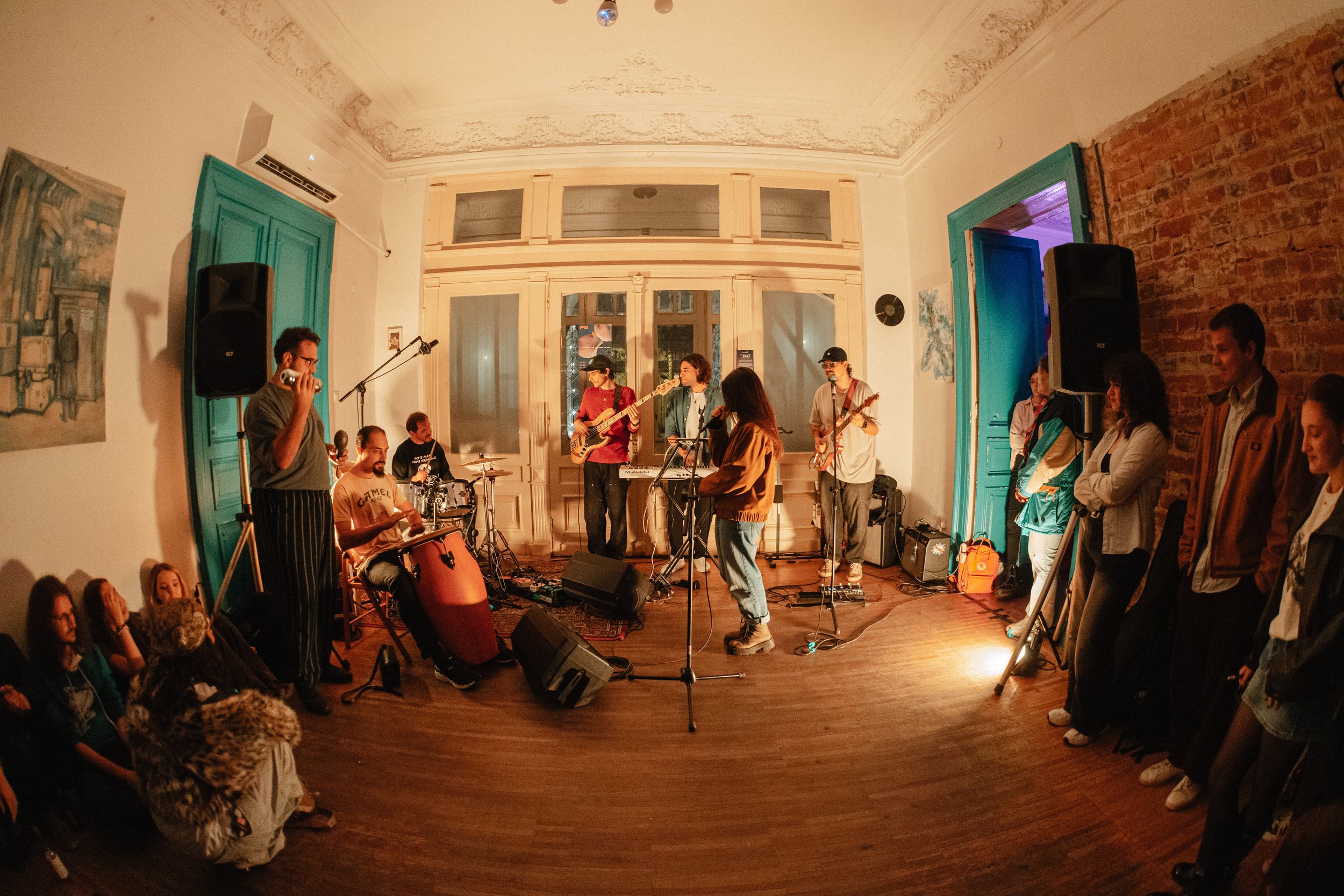
Of course! We have a PB&JAM chat where musicians share song suggestions, and other instrumentalists decide to join on the day of the event. However, there are no rehearsals, so the magic happens on the spot.
As a result, we compile a list of songs, and people get on stage – often without having ever played together before. Throughout the performance, we hear instrumental solos, vocal runs, and sometimes musicians even switch while playing.
You’re bringing together musicians from very different backgrounds; what tends to happen when those worlds meet on stage?
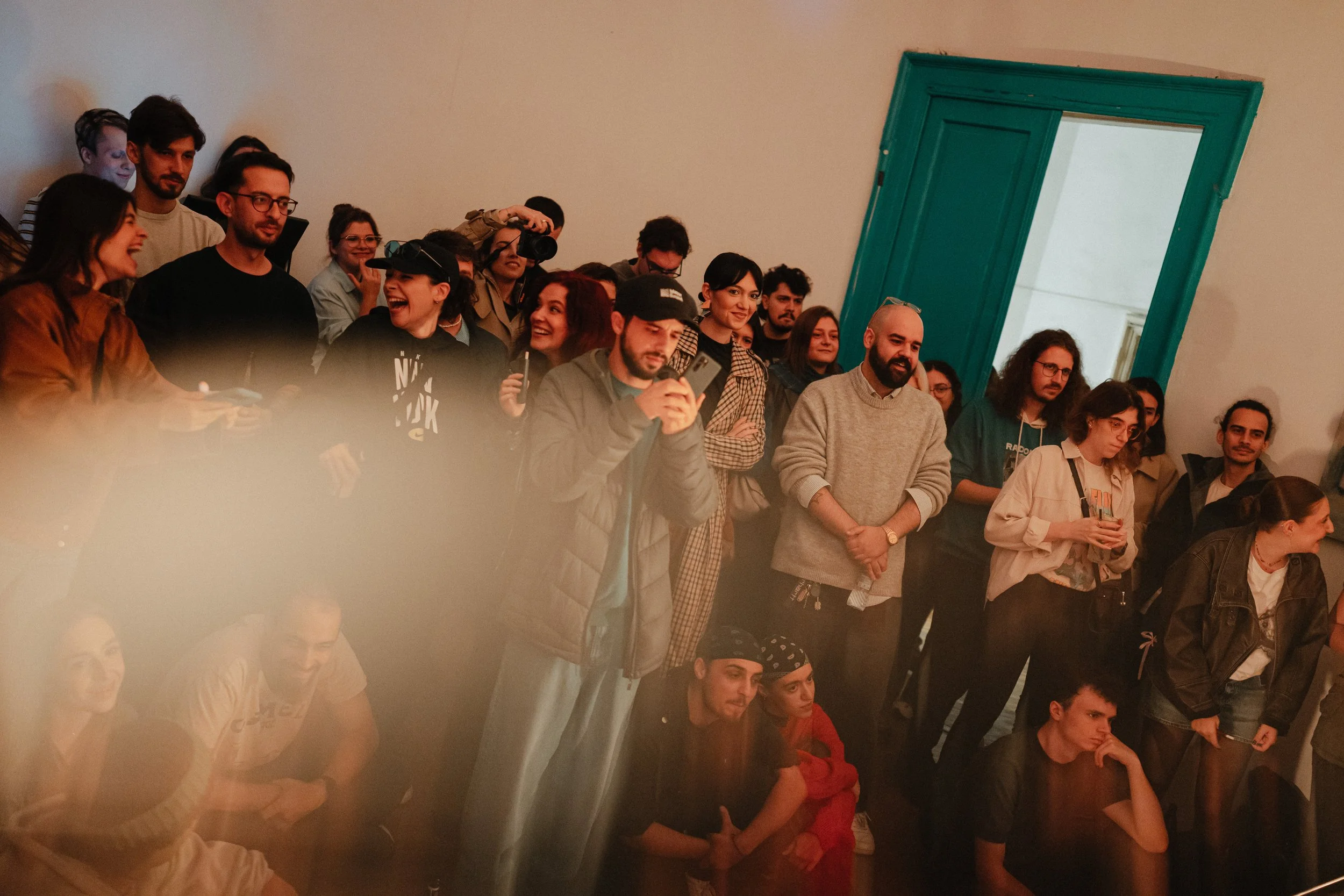
Our events have just proved once again: music is a universal language. Two people can have completely different levels of music theory knowledge, come from different cultures, or even have slight misunderstandings in their second language (mostly English), but the moment one sits behind the drum set and another puts a bass over their shoulder, they are on the same page. All that’s needed is eye contact and an occasional nod – it is a truly beautiful thing.
At the same time, different backgrounds bring new rhythms and a unique spark. We’ve had Chilean musicians bringing Latin grooves to the stage, Romanian musicians playing traditional instruments, and a whole Moldovan band trading back-to-back solos with our house guitar player. Music unites people, and no matter how much the world tries to drive us apart nowadays, we need this human connection.
What have you learned from building PB&JAM so far, both creatively and in how people engage with it?
PB&JAM has so far been the most validating, important experience for me as an industry professional. I had to do things I never thought I would. For example, creating a visual identity with our designer to convey this robust, fun energy we’d like people associate PB&JAM with. I dealt with community management and learnt how to establish rules and instructions in a precise yet friendly way. I even learned how to host events without having done it before – there is still room for growth here :) Also, promoting events to the audience proved that there is no such thing as overadvertizing – people will forget about your project if you don’t remind them. Finally, most importantly, building PB&JAM helped with my confidence in my skill set and showed that I should trust myself more.

Top tip to someone looking to build their own community-led music project.
To that someone and self: stop overplanning and start doing. You can think, analyze, research, and brainstorm for years and yet things will still go wrong somewhere along the way.
No one is immune to that. “I just need to study it a bit more” is the excuse all overthinkers justify their inaction with, including myself, but you have to consciously jump out of this trap asap. The music industry, and especially events, are hands-on focused, so starting now and improving later is the mentality that will save you many many regrets.
And a more precise advice for community-led music projects: don’t give up your boundaries. People will try to tell you what to do, especially if you are a woman. It is very important to trust your own vision and not lose the authority in your own project. It takes one disrespectful comment being ignored to create a climate of total permissiveness.
Leading something comes with responsibility, and you have to proudly carry it. Everybody makes mistakes but at least it will be YOUR mistake. And if you hear healthy criticism, be open and adapt for the better future of your project – just don’t confuse it with bending under pressure due to lack of confidence or experience. Believe in your own power more – your audience needs you to.
PB&JAM on Instagram
** PB&JAM has just kicked off its second season: the 2nd event took place on May 25th. Currently, the team is looking for a new sponsor to continue nurturing the Romanian live music scene while keeping the event accessible.