Photo by EmDynes2
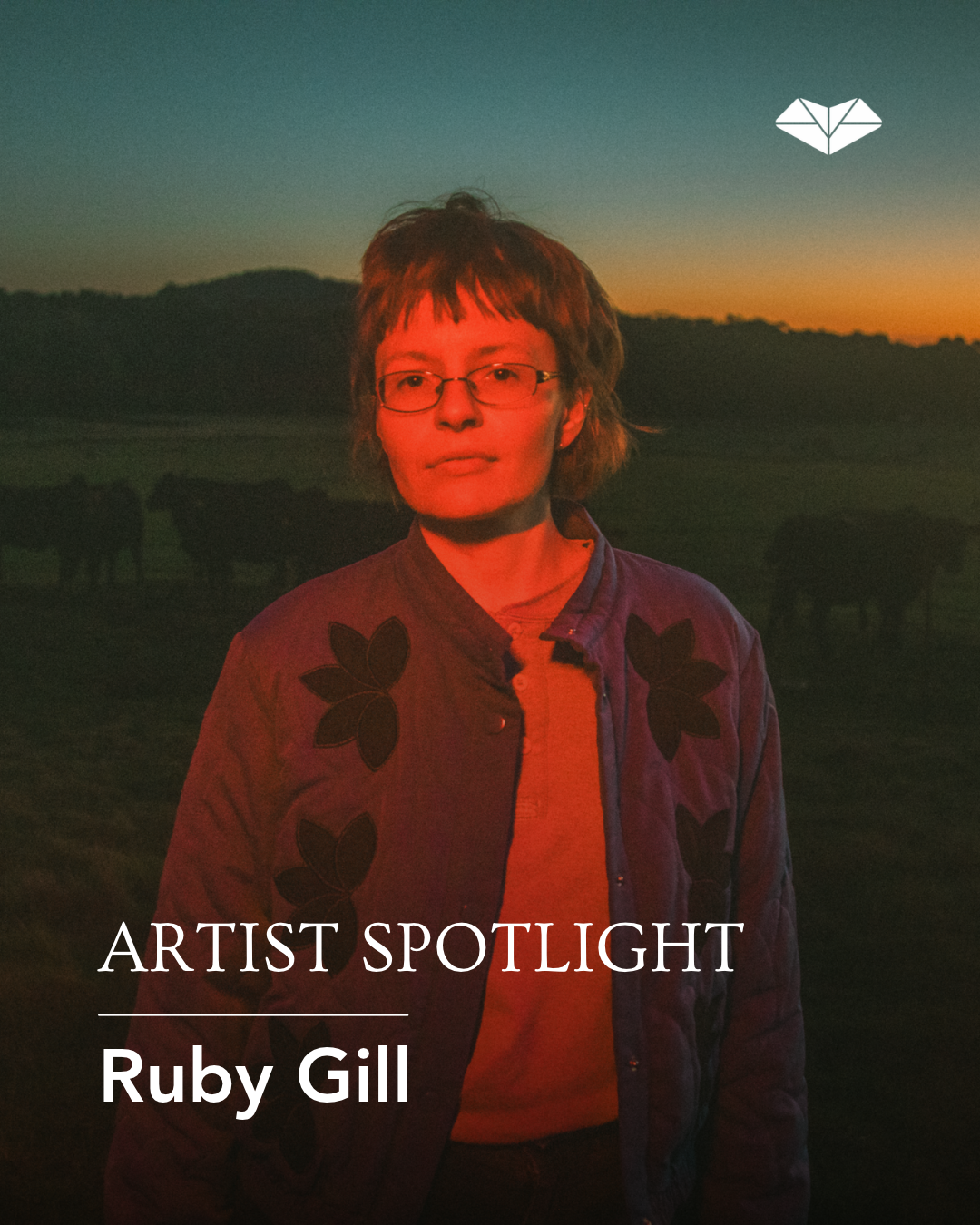
Musician and poet Ruby Gill has earned two Australian Music Prize nominations, won Best Country Album at the Australian Independent Record Awards and sold out shows across Australia, South Africa and the UK/Europe. Her folk songwriting pairs closely observed stories with deadpan humour, drawing praise from The Guardian, Rolling Stone and NME.
Her latest album, Fishing is Not About Fishing, began with a songwriting class led by Laura Marling. Encouraged to work through life’s unresolved questions in song, Gill began writing about childhood, work, sex and natural disasters. Recorded with her lead vocals performed live alongside the band, the album introduces a fuller sound.
Its lead single, ‘Carol / not carol’, was written with her wife after they were first on the scene of a serious car crash. The experience prompted reflections on family, the kindness of strangers and her own struggles with vulnerability.
What’s the story behind your new project, and where did Fishing is not about fishing begin?
I took a songwriting class early last year with Laura Marling. She talked about songs as a way to untie the “philosophical knots” of our life (hot concept) - the unanswerable questions, the big existential ideas, the unspoken.
I wrote Fishing is not about fishing that same day and felt like I’d crossed into a portal where I could truly assign thought and poetry to the most unresolved bits of my childhood, my jobs, natural disasters, sex. After that the rest of the songs came together mysteriously, one knot at a time, and I spent a whole year just defining (like it was my job) all the things fishing could be: love, research, religion, time, food, fathers, violence, peace.
You’ve toured and built an audience across different countries. What have you learned about turning listeners into a real community around your music?
My biggest learning has been that it is actually good to be normal, talk about normal things, and show up as the same complex, undefined, actual person in all parts of my life. That means being chill and rogue and not subscribing to an acted aesthetic.
I think this has helped people properly connect with my music as a whole world, not just a song, and that has waterfalled into them connecting with each other too. It feels like we are all cousins who don’t really know or talk to each other but love the same things and share something blood-like. I’m so glad that this approach has worked, because it’s really easy to be normal, and I am really bad at pretending.
What’s your best advice for an artist who is just starting out and doesn’t know where to begin?
‘Starting’ looks so different for everyone, and it’s not really fair or realistic to assume you must start the same way as someone else. That is like saying you are a salmon and must never deviate from the spawning river. But you are not a salmon, you are a human. It took me 10 years of writing, recording and touring quite rogue music to finally figure out what I wanted to know about myself and speak about and what my ethos and philosophies were.
Other people write their first 9 songs in their 30s and have a career off that record immediately. Maybe my true advice would be don’t try too hard. There is no room in my career or life for embarrassment or shame or feeling worried about being awkward or strange. You can just begin like fear is a myth, and learn from it after.
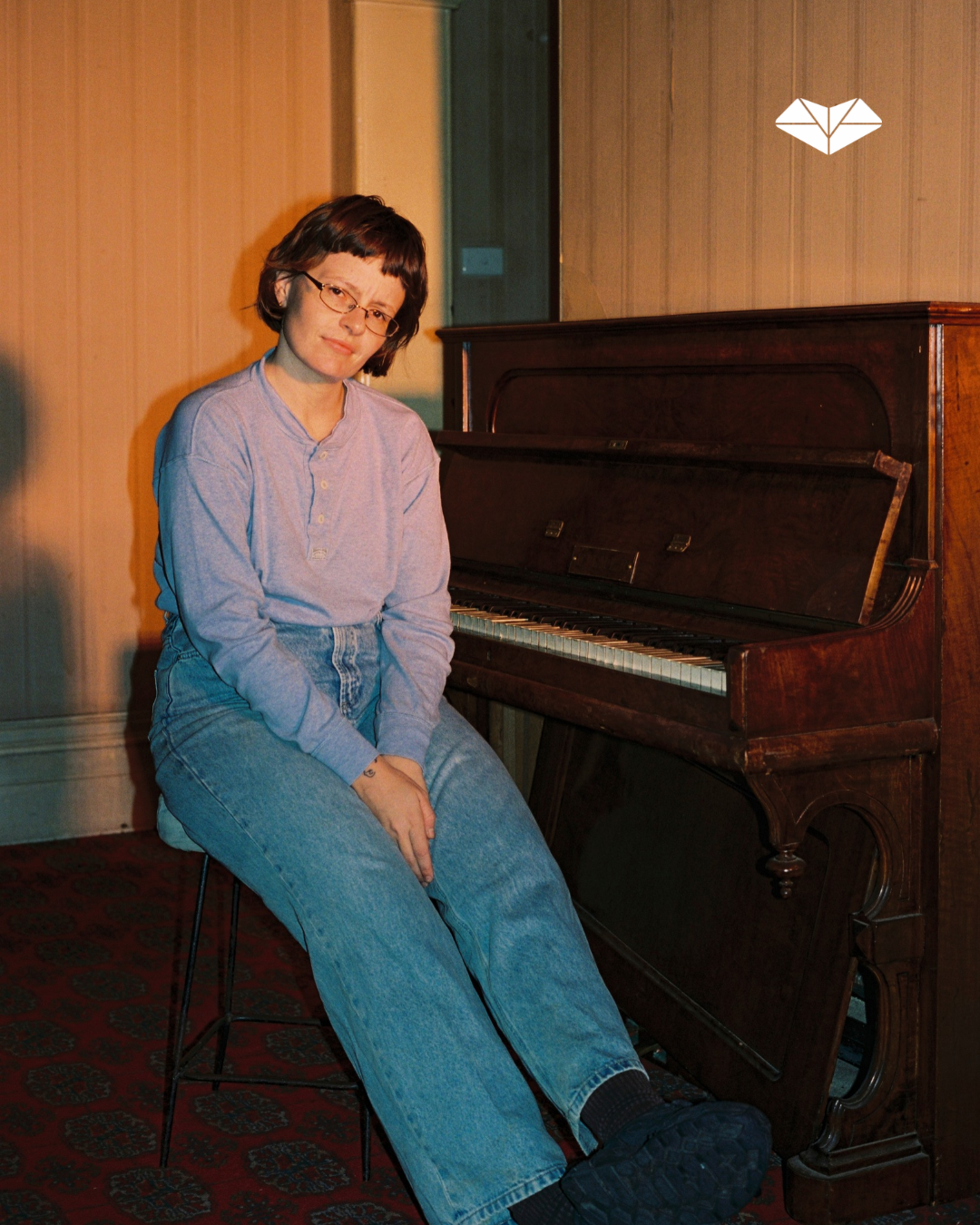
Photo by Bridgette Wint
Networking can feel intimidating or transactional. What’s helped you build genuine relationships in the music industry?
Treating every conversation as a chance to have an interesting conversation, and nothing else. I know this probably means I have a much smaller team than most, but I know every person on my team would be someone I’d have in my life and circle whether or not I was doing this as a career.
I have also experienced the opposite of that, and it truly was not worth it for me. I’d rather have a fun night and hear a wild story than get a manager. Let your gut dictate things, not your business mind.
What do you think emerging artists should focus on before worrying about streams, followers or industry attention?
Your life. Your potatoes, your health, your friends, your sense of wonder. There are lots of ways to be an artist but I believe in living first and writing about it after, or about something completely separate from it. As soon as I make music this separate industrial thing, and not just a sacred ritual part of my life, it becomes like this hot stone in my hands that scalds, instead of sparkles.
What’s your favourite part of making music, and what’s your least favourite part?
My favourite part is hearing an audience sing the words with me to a new song for the first time, unprompted. My least favourite part is constantly feeling like I might get arrested for my incredible chaotic accounting.
Looking back at when you first started making music professionally, what do you wish you’d known about the industry?
That the biggest ‘dream’ versions of a career are actually the least enjoyable. The fanciest, largest shows I’ve played have been my least fulfilling. It’s actually okay to dream of being in the middle.
What are you listening to at the moment?
I am a judge for the Australian Music Prize, which means I have listened to a rotating playlist of around 600 records over the past few months and tried very hard to pay proper attention haha. It’s been a strange experience listening like that, too much intake, with such a specific mindset of “did this stay with me, change me, move me?”
“Would I listen to this again?” over and over - instead of just letting it wash over. But every now and again one has stuck out to me and felt like pure listening, which says a lot about it. Genesis Owusu, Georgia Knight and Hana Stretton are some of my favourites.