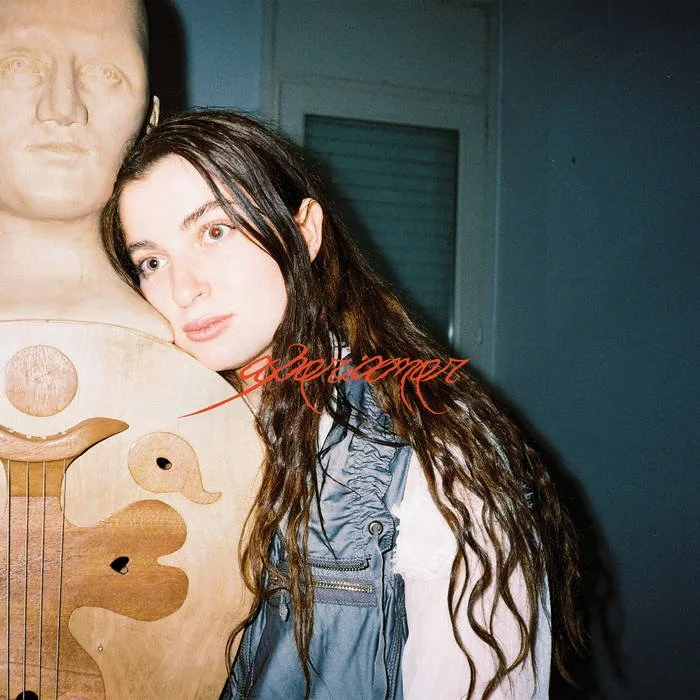
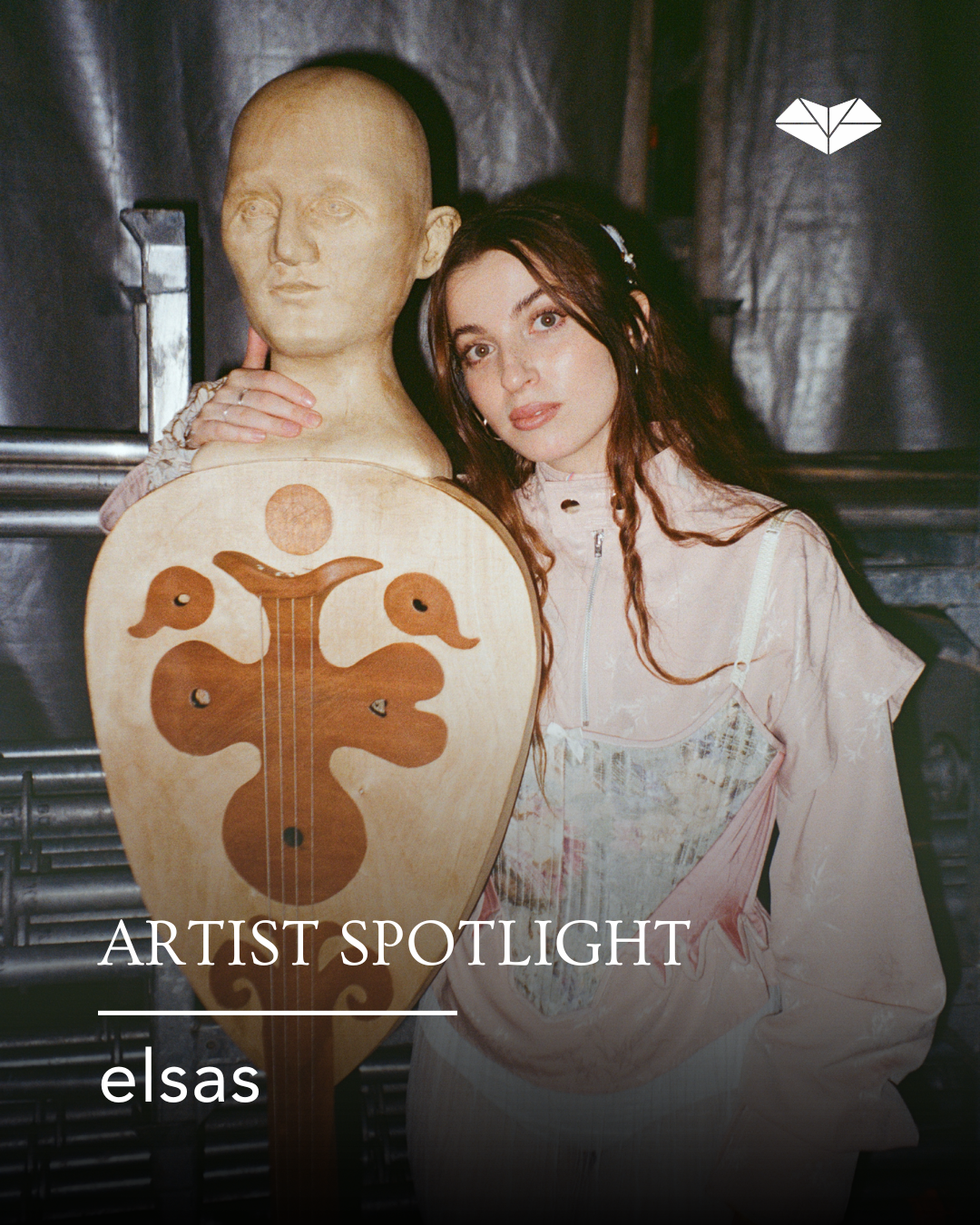
Barcelona-born and now based in London, producer, composer and vocalist elsas has quietly become one of the most distinctive voices operating between the UK’s alternative music landscape and a wider experimental pop continuum. Her work moves fluidly across disciplines and scenes, shaped as much by her classical foundations as by years spent collaborating with artists including Sampha, Florence + the Machine, Little Simz, Jockstrap and Duval Timothy. Those exchanges, particularly her ongoing creative relationship with Sampha over the past three years, have played a formative role in refining her approach to songwriting, production and sonic storytelling.
Her new EP, APORIAMOR (out now) released via Barcelona’s Lapsus Records, marks a decisive moment of artistic consolidation. Largely self-produced over four years and developed across multiple geographies—from her childhood home in the Spanish countryside to stages across the United States while touring—APORIAMOR reflects a more distilled and intentional evolution of her sound. Drawing on both her Mediterranean heritage and the textures of UK alternative music, the record explores love, heartbreak and emotional transformation through a deeply personal lens, building a language that embraces vulnerability rather than closure.
If her debut EP The Art of the Concrete introduced an expansive and exploratory artistic identity, APORIAMOR signals a clearer articulation of that vision. Conceived as both archive and release, the project captures a period of personal and creative becoming, positioning elsas as an artist concerned not only with experimentation, but with legacy, memory and emotional authorship.
APORIAMOR is framed as “the death of love’s contradiction.” At what point did you realise this record needed to exist, and what emotional or conceptual shift set it in motion?
I must’ve come up with this word during a very inventive late night etymological rabbit-hole. I was in romantic turmoil, trying to invision a type of love that would be freed from all contradictions, all logical dysjunctions. I was wondering if pure clear and peaceful love existed, even as a reaching point, an asymptote. Needing to repeatedly process and overcome heartache was the catalyst to creating these songs and grouping them under this project.
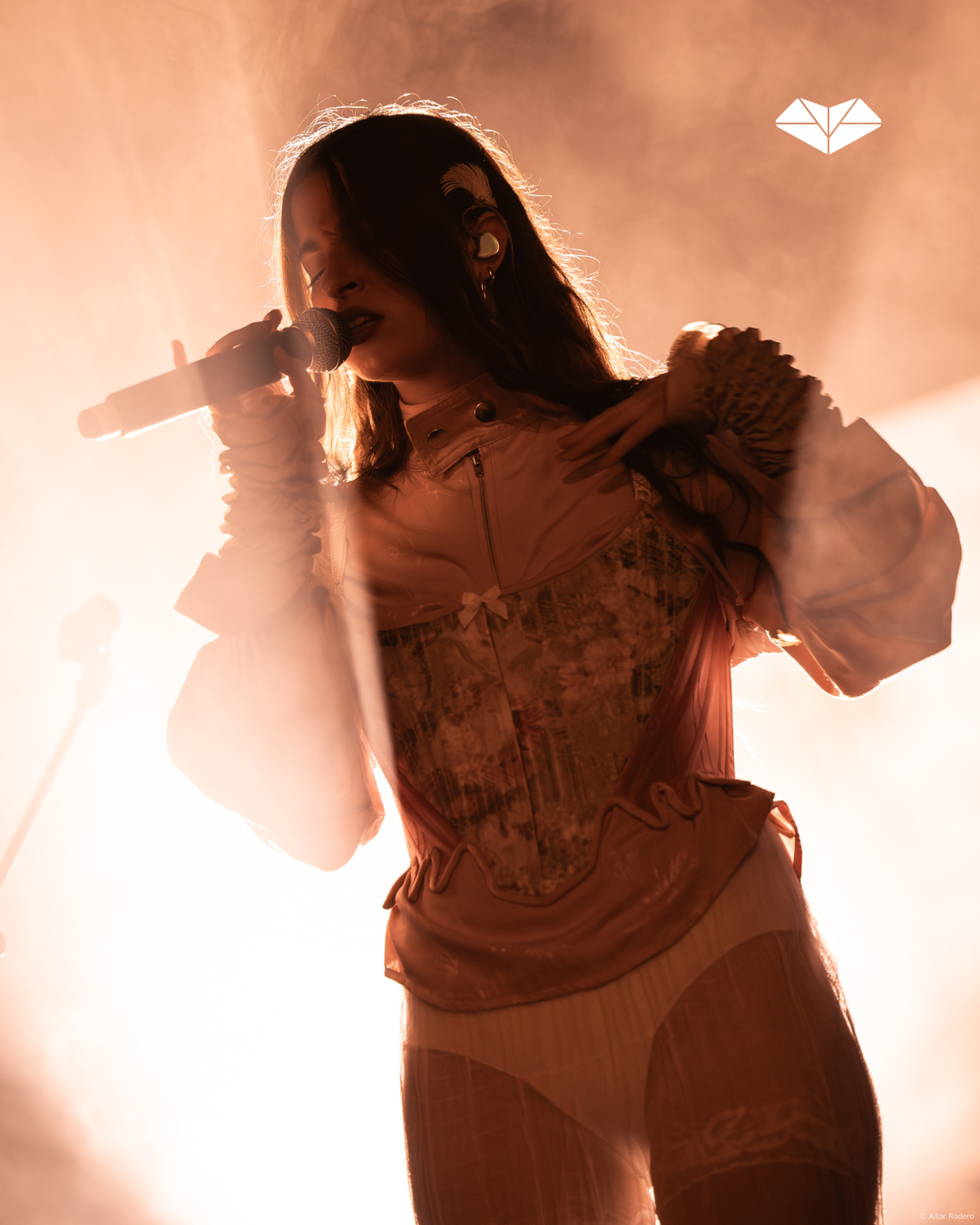
Photo by: Aitor Rodero. Outfit: Bebé Espinosa
Compared to The Art of the Concrete, this EP feels more distilled yet emotionally expansive. What did you consciously decide to leave behind in order to arrive at this new sonic language?
If a record was a stim, that’s what The Art of the Concrete was for me. It was my way of learning how to produce, and in the process I was equally overexcited and overwhelmed by the vastness of possibility (hence the irony of the title).
I had to become some sort of sound hoarder before I could understand how I really wanted to articulate myself musically. It’s an experimental record in the full sense of the word, enveloped in the high-frequency energy of my early twenties, and I love it for that.
Since then, I gave myself the time to be in music, but without the agenda of being an artist to the world - just keeping my input antennae open. I had to reconnect with the heart of it, and deconstruct the trained musician within (call it ‘conservatoire syndrome’). I started listening to my intuition, keeping only the essences, enjoying my own company, and building my world from that place. I also spent time developing my skills as a producer, becoming more intentional in my choices. And, most importantly, I eventually understood my gift, started prioiritizing my voice, and stopped hiding behind my ideas. And there’s still a long way to go!
You’ve described this project as part of building your own archive, a documentation of becoming. When you imagine listening back to these recordings ten years from now, what do you hope they will remind you of?
I hope I still feel proud of the work, and that it reminds me of my commitment to my artistry. I hope it makes me hold my past self tenderly and appreciate the hard work she put in to get me ‘here’. Maybe I’ll have destilled and deconstructed so hard that I’ll be making exclusively drone-based ambient music, smoking a pipe and thinking to myself ‘wow that girl was really working through some s***’.
You often describe songs as organisms that respond to their surroundings. How do different environments (e.g. touring, cities, solitude) practically shape the way a track evolves for you?
They are very much alive and pulsating. I enjoy letting the music breathe in real-time before making it permanent. This EP shape-shifted while I was touring it.
I performed the songs on APORIAMOR while supporting Sampha in the US in early 2024, and it became a kind of testing ground. It helped me see what felt aligned and what didn’t - what needed changing and what needed deepening. Exposing myself in that no-strings-attached way became a real incentive to finish the music.
Going back to the drawing board tends to be easier for me when its prompted by the inercia of external living. Solitude can result either in my thoughts jamming in a loop whilst I drift in a limbo of in-between activities, or I enter a state of hyper-focus and forget I have a body. It is in the latter where the magic tends to happen.
Collaboration seems central to your artistic ecosystem, from long-term work with Sampha to exchanges with artists across very different scenes. What makes a collaboration feel creatively “right” for you?
I’ve been very lucky to have worked with some extraordinary musical minds. I’d say a collaboration is right when everyone is showing up in their truth and working in the service of music (the muse, the craft), and mantaining a sense of mutual respect whilst exercising freedom.
I usually trust that the conspiring forces that lead us to be sharing a room in the first place can be enough to make it worthwhile, or “right”. Of course, like in any collaboration, there’s more or less personal and creative affinity that can unfold. But at the end of the day, making art for a living is a huge privilege.
What is your favourite part of the music-making process and the part you struggle with the most?
My favourite part is the initial spark and the throb of or vision that follows, whether it’s the maturing of a long-time mulling idea or a spontaneous manifestation. The creative infatuation phase. Usually these early ideas arise with energetic bounce and in collaboration.
I just love jamming. I love those moments of lucidity (who doesn’t!). I struggle more with moments of diffuse intention and indecision, when there’s an inner wall that stalls progress and it’s hard to locate and break down. And like most artists, I can find it hard to know when a song is finished, almost to a pathological level.
But so far, more often than not, I’ve proven myself right when I persevere until the end, however torturous it might feel at times…
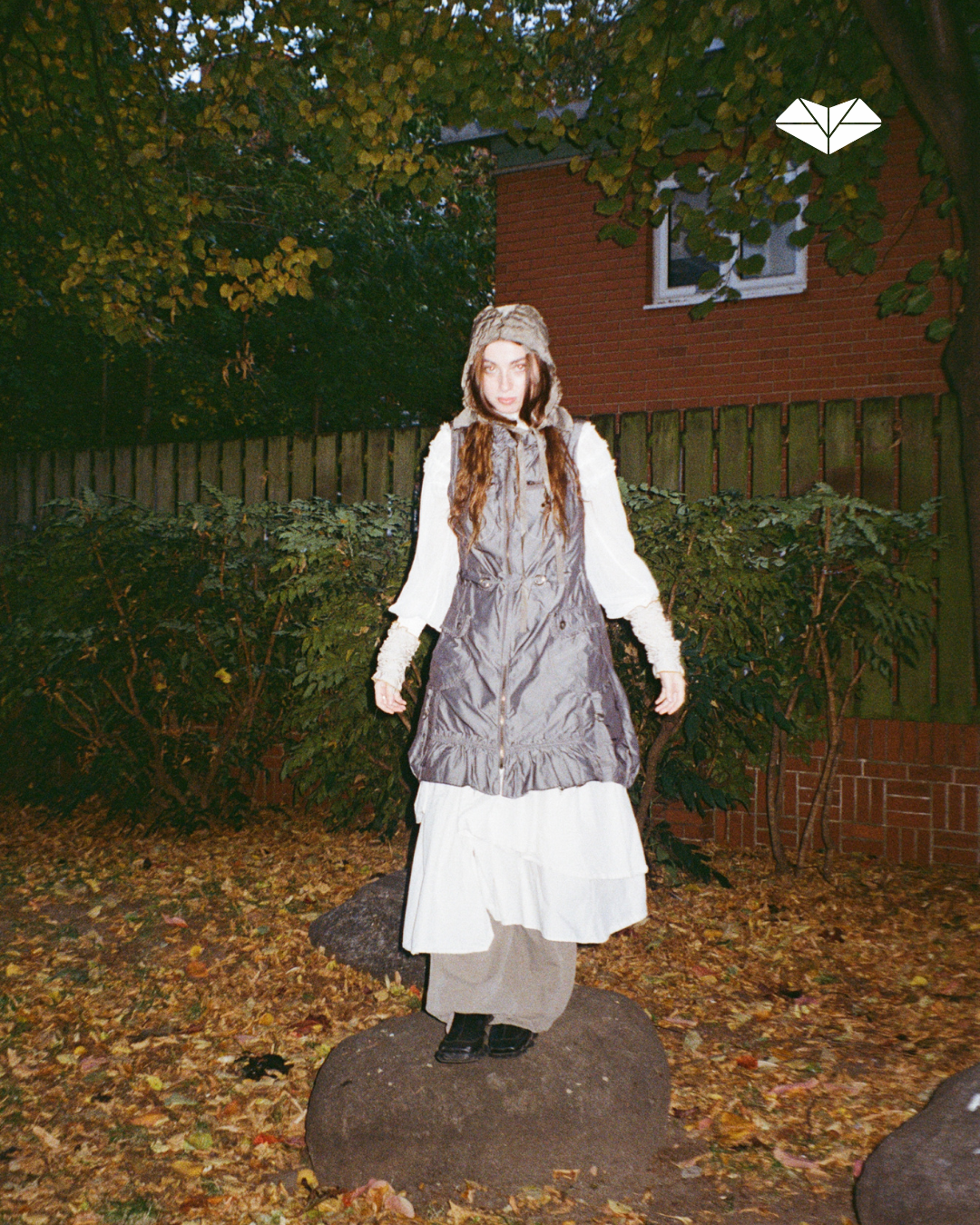
Photo by Connie Keane | Headpiece by: Annika Thiems
For emerging artists trying to build meaningful relationships rather than transactional networks, what has been your most effective way of connecting with the right collaborators and communities?
I think the key is overcoming the fear of reaching out to people whose work moves you, sparks curiosity or familiarity, because you never know what might come from it!
Creative work can be emotionally intense, especially when projects are rooted in personal experience. On difficult days, what helps you step back, reset, and return to the work with clarity?
Honestly, on those days I get really good at replying to all my emails. I get all my admin done, probably clean the house and get on the phone to my close friends for hours. Most of them are musicians or artists, so they understand and share the underknitting of my daily struggles.