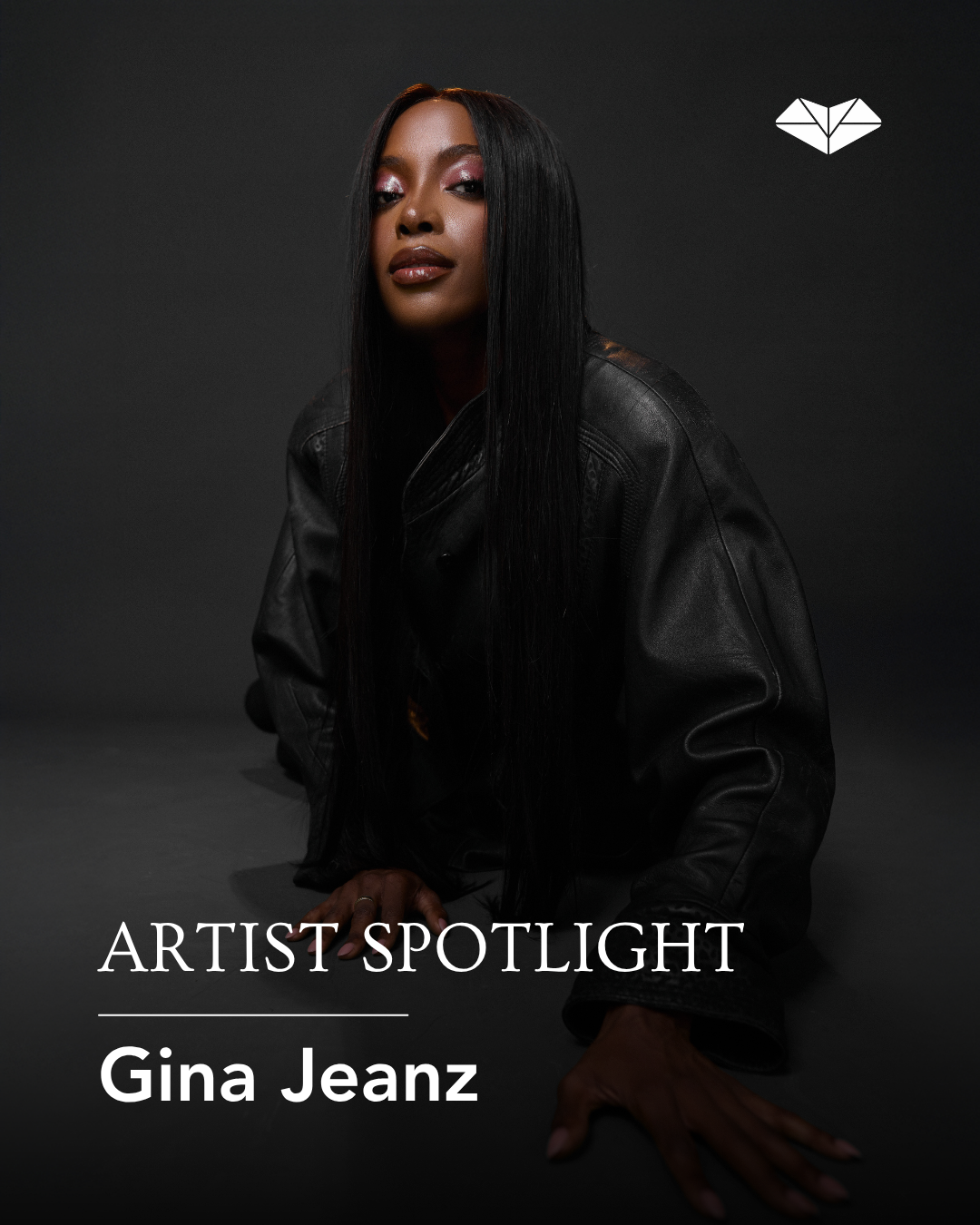
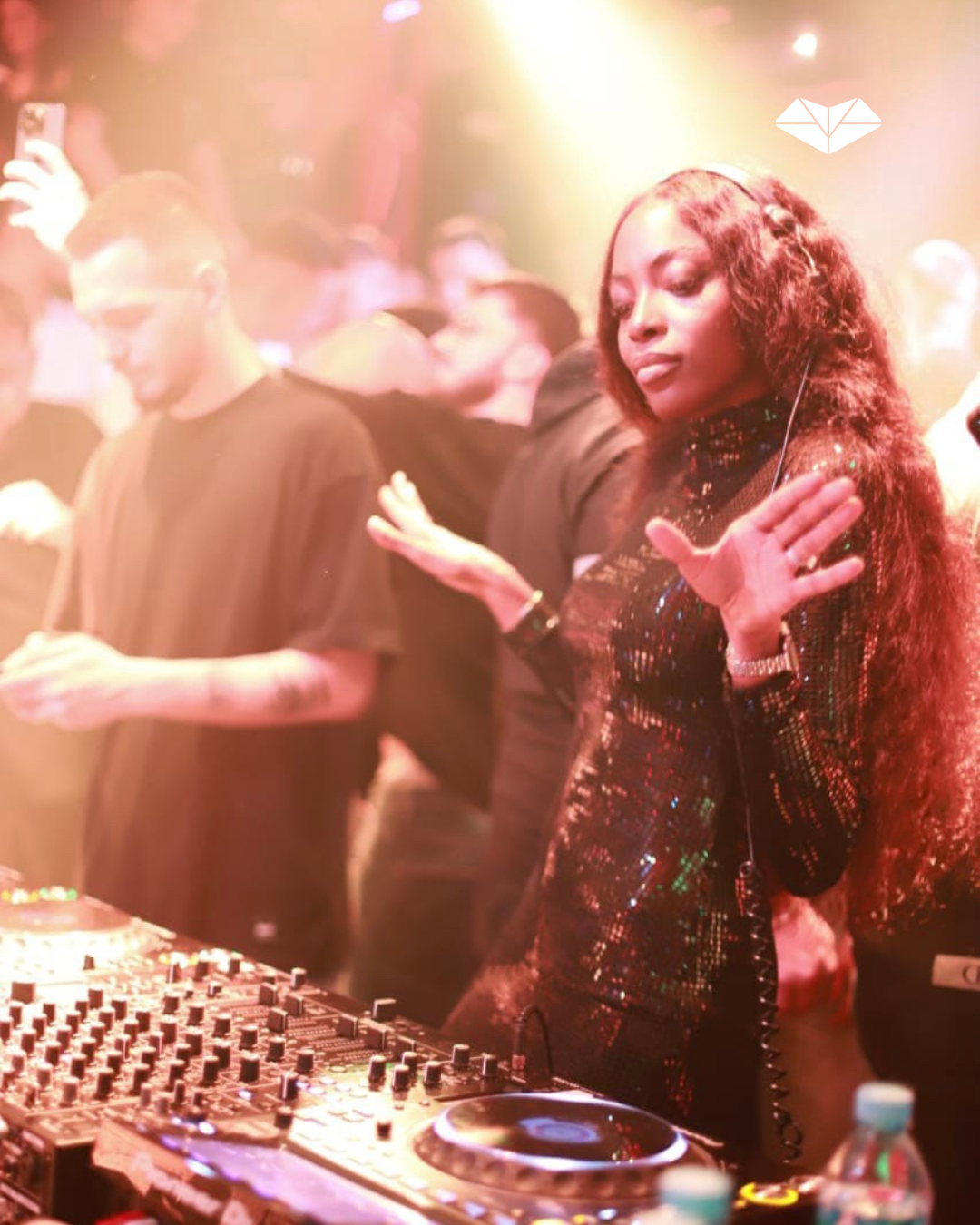
Namibian producer, DJ and songwriter Gina Jeanz has spent the past few years carving out a distinctive place within electronic music, blending Afro House, Afro Tech and organic electronica into a sound rooted in rhythm, movement and storytelling. Originally trained in classical music before immersing herself in Cape Town's electronic scene, she has since taken her music to festivals and venues including Montreux Jazz Festival, Amnesia Ibiza, Caprices Festival and KOKO Electronic, while earning support from Billboard, Beatport, Resident Advisor, DJ Mag and BBC Radio 1Xtra.
Her latest single, Ride, arrives as both a personal and creative milestone. Written in the lead-up to becoming a mother, the track embraces uncertainty, trust and transformation through warm percussion and hypnotic Afro House grooves. It also sits alongside one of Gina's most ambitious projects to date: a DJ set performed from a hot air balloon above the Swiss Alps, bringing to life a dream she'd been working towards for years.
Your DJ set filmed from a hot air balloon over the Swiss landscape is unlike anything we've seen before. What's the story behind the project, and how was playing music in the sky?
This Hot Air Balloon DJ set has been on my bucket list for the longest time. The idea first came to me after seeing a Cercle DJ set years ago. I booked a hot air balloon ride in Namibia to experience it for myself and stayed in touch with the pilot to see if we could make it happen one day.
A few years later, I reached out to him again and found out he'd moved to Europe to fly during the summer season. We didn't end up working together, but he connected me with a friend of his based in Zug. So what started as a dream in Namibia ended up happening in Switzerland, where I live now.
I couldn't have asked for a better outcome because the Swiss landscape is just as breathtaking. With a baby now, doing it here also made much more sense logistically.
I think when you have a dream and actually make it happen, it strengthens your self-belief and builds trust in your own ability to make things happen. This project was proof of that for me.
You've also just released a new single, Ride. Can you tell us a bit about the track?
I started producing Ride a few months before I gave birth. My creative process has shifted a lot since then. I no longer worry about the outcome of a song while I'm making it — I just let the ideas flow.
I've also been trusting myself to sing on my own tracks more, not as a "vocalist" exactly, but leaning into my voice as another instrument in the performance.
At the time, I was feeling a bit anxious about what life would look like with a child, and I didn't want to overwhelm myself with questions I couldn't answer yet. That's really what the lyrics are about.
I had to lean into trusting the journey and letting myself be excited for what's coming instead of fighting the uncertainty of becoming a mum while continuing to be a musician. This song carried me right up until birth, and it feels like the start of a new chapter for me.
You've built an international career while staying connected to your Namibian roots. How has your upbringing influenced the music you make today?
Being a Namibian creative is, in many ways, a radical act. I recently heard this expressed by two Namibian creatives, Betty and Pewa, who collaborated on a recent fashion project together. That really resonated with me because the creative industry back home isn't always built to support artists in the ways it should.
Being able to live from your art is still difficult, particularly for creatives coming from places that are often overlooked, underestimated and lacking in funding and resources.
For me, building an international career is about challenging what people believe is possible and showing others what can be done. I've spent years finding my footing, breaking barriers and learning how to make the most of the resources available to me, so there were a lot of firsts along the way.
There was often a sense that there was a ceiling to what a Namibian artist could achieve internationally. I wanted to push beyond that, not only for myself, but also to challenge those limitations.
My upbringing taught me resilience, adaptability and how to navigate different environments while remaining grounded in who I am. Those qualities have carried me through the many challenges and uncertainties of this industry.
Every step in my journey is connected to where I come from, and I hope that by continuing to build internationally, I can help create more space for the next generation of Namibian creatives to believe there is no limit to what they can achieve.
You've recently become a mum while continuing to tour and perform internationally. What have you learned about balancing motherhood with life on the road, and what advice would you give to other parents working in music who are wondering if it's possible to do both?
Motherhood has taught me to prioritise what's absolutely necessary which sometimes means I don't take every show while I'm still traveling with my little one. I've had to become a lot more mindful of the environment I'm bringing him into and that requires patience and foresight.
For me, logistics come first. I look at each show and ask whether it actually makes sense for both of us. Sometimes I’d have my husband join me and recently bringing a nanny on the road was one of the best decisions I made. I worked it into my budget because I knew I couldn't do this alone and still show up fully for my shows, so having the extra hands makes a huge difference.
Compared to traveling solo, there's just more to consider now like feeding schedules, getting ready, transitions between airports and cities. So most of the work happens before I even leave: planning ahead so that once we're moving, we can flow through it all with a bit more ease instead of scrambling.
It's absolutely possible, but the goal isn't to prove you can do everything exactly like before. It's to find your own version of balance, build in support, and give yourself grace when the old way of doing things doesn't fit anymore.
Many emerging producers struggle with confidence, especially when they're working alone. What helped you trust your instincts in the studio?
Confidence is something you can build and strengthen over time. For me, that starts with believing in myself, trusting my vision and giving my ideas the space and time to develop — the key word being time.
Working alone is often part of the creative journey, and it can teach you a lot about your own instincts. But I've also learned that you don't have to do everything alone. Knowing when to ask for help, seek feedback or collaborate with others is just as important.
Collaboration not only helps you grow creatively, but it also builds meaningful relationships, and this industry is built around working with people. Being part of a community and maintaining relationships matter, at least to me.
I've learned to continuously work on myself, both personally and creatively, so I can show up as my best self. The more I've grown to trust myself, embrace feedback without taking it personally and remain open to learning, the more confident I've become in my own creative voice.
Networking can feel intimidating, especially when you're starting out. What's the best networking advice you've ever received, or the tip that's helped you most throughout your career?
The worst thing that can happen is that someone says no — and even then, I try to see it as redirection rather than failure. A "no" doesn't necessarily mean you're not good enough. Sometimes it simply means the opportunity, timing or connection isn't right, and that there may be something better aligned with where you're going.
Networking has played a huge role in building my career, especially as an independent artist. When you're independent, you don't always have a large team opening doors or creating opportunities for you. You have to be willing to put yourself out there, as scary as it is, introduce yourself, share what you do and actively seek out spaces that can help you grow.
That's why I attend social events, workshops and industry gatherings. You never know who you might meet, what you might learn or which conversation could lead to a meaningful opportunity.
Networking isn't just about approaching people because you need something from them. It's about nurturing genuine relationships and becoming part of a community you're passionate about. The strongest connections are built through mutual support, consistency, trust and showing genuine interest in other people's work as well.
I'm fortunate to have worked with incredible people in my community who believe in what I do, support my vision and advocate for me in rooms that I may not be in. Those relationships exist because I was willing to show up and support them too.
You don't need to walk into a room knowing everyone, and you don't need to have all the answers. Start by being curious, genuine and open to conversation. Put yourself in the rooms where you want to grow, nurture the relationships you build and don't be afraid to ask. Sometimes one conversation can open a door — but you have to be willing to introduce yourself first.
For artists who want to start producing their own music but don't know where to begin, what advice would you give them?
Take the time to actively explore and discover what you genuinely love and what inspires you. The technical side is something you'll continue developing over time, and the tools are more accessible than ever today, so getting started with production is much easier than when I first began.
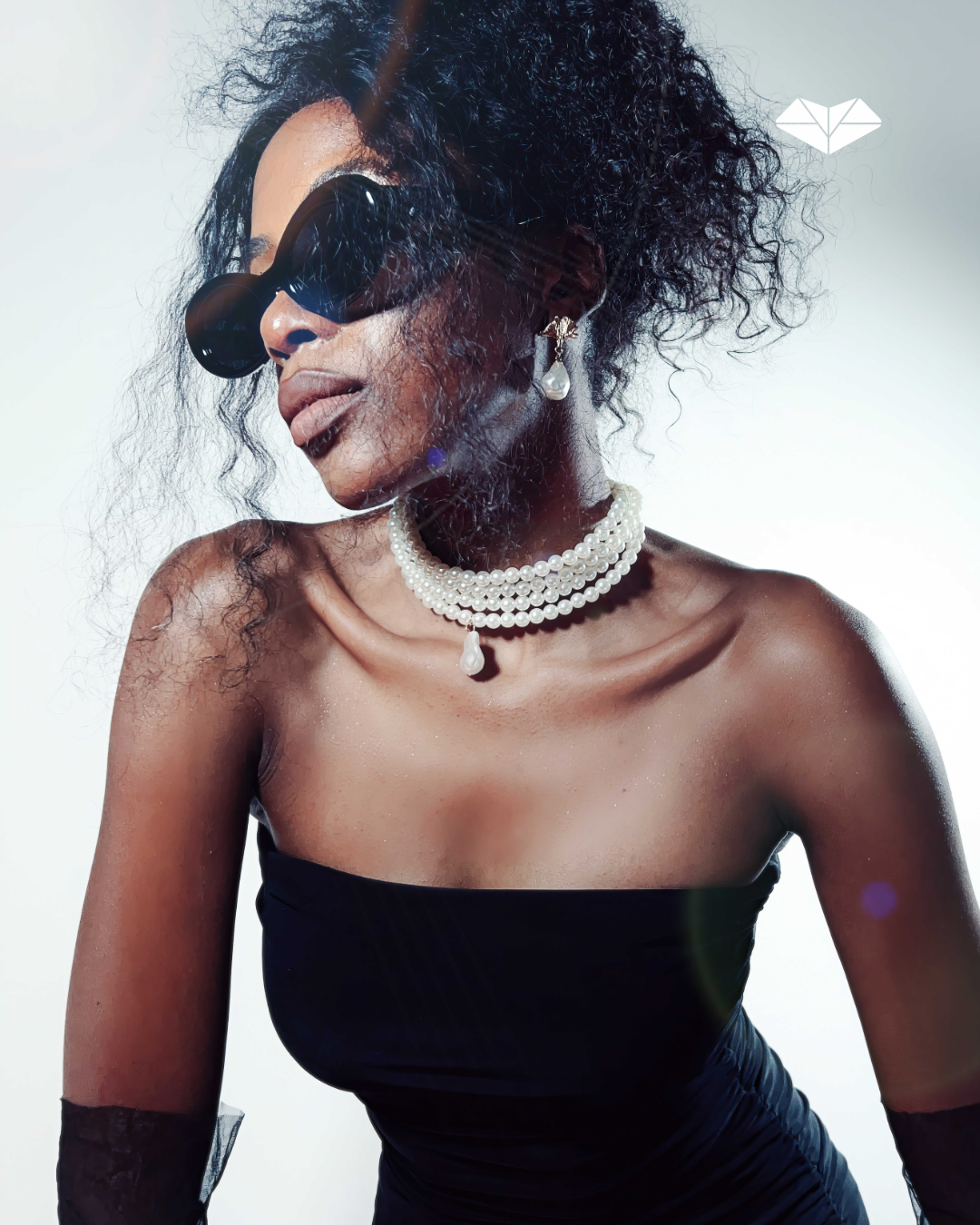
There are so many opportunities to learn and experiment, so take the time to develop your ear and personal taste. It's easy to get caught up in what everyone else is doing, but your uniqueness comes from knowing your own perspective, your influences and the stories you want to tell.
Create habits, routines and practices that become part of how you move through the world creatively. You'd be surprised how much discipline can reveal about yourself, not just as an artist but as a person.
The more you commit to exploring your own ideas, the more you begin to understand your own creative language.
For me, producing music is also about world-building. You're creating a space, a feeling and an experience that comes from your own imagination, and that's really something special.
When you've had a difficult or stressful day, how do you unwind and reset?
I used to unwind mostly by reading books, which is still something I enjoy, but lately I've rediscovered a love for playing chess. I used to play casually for fun when I was younger, and now, as an adult, I appreciate it on a completely different level.
It gives me a chance to disconnect from everything else while still keeping my mind engaged. It's both relaxing and challenging at the same time, which helps me shift my energy away from the stresses of the day.
I also love pampering myself now more than ever as a mum — I need that time to love on myself.
Resetting is really about finding balance: having moments that stimulate my mind, moments that bring me joy and moments where I can simply slow down and take care of myself.