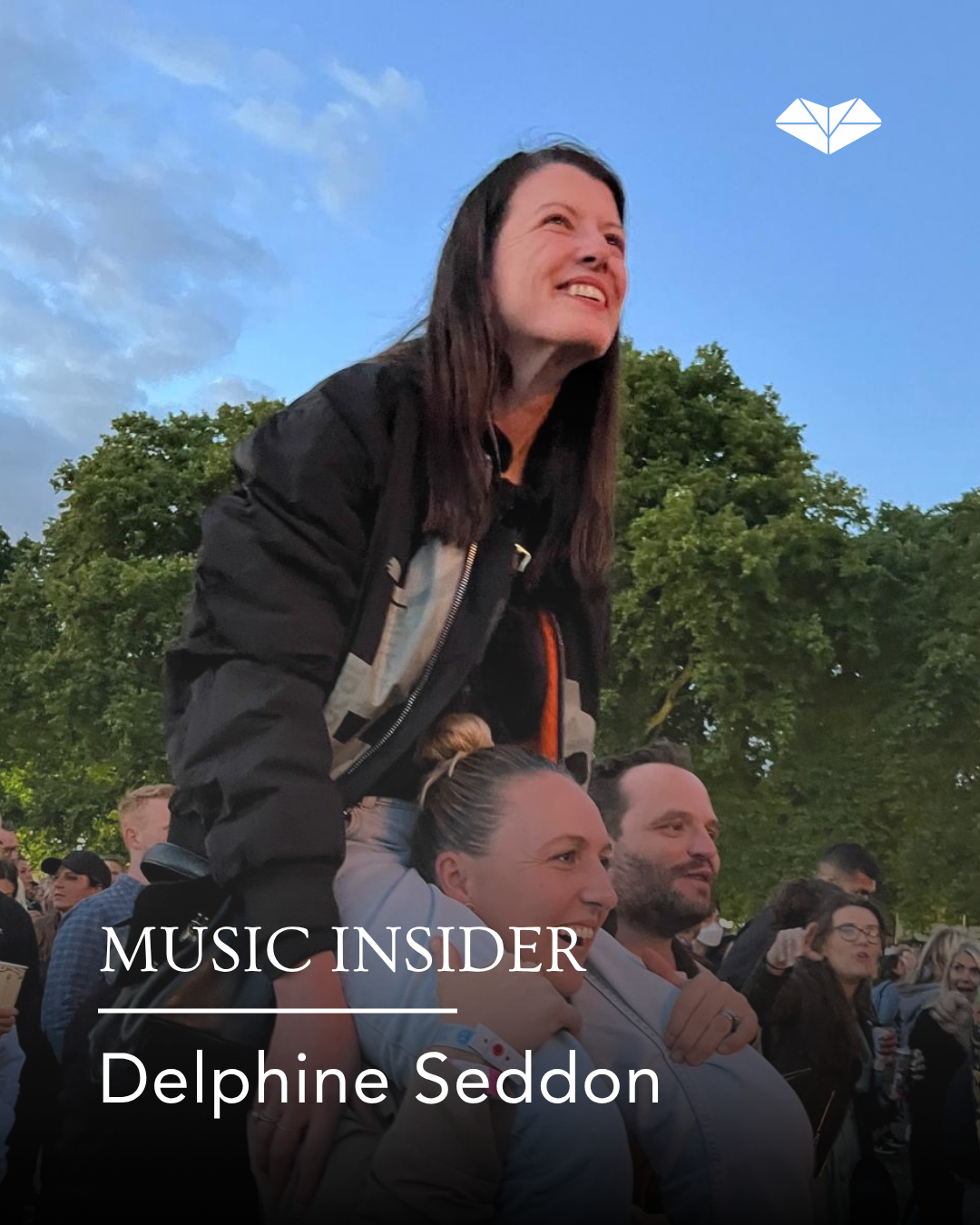
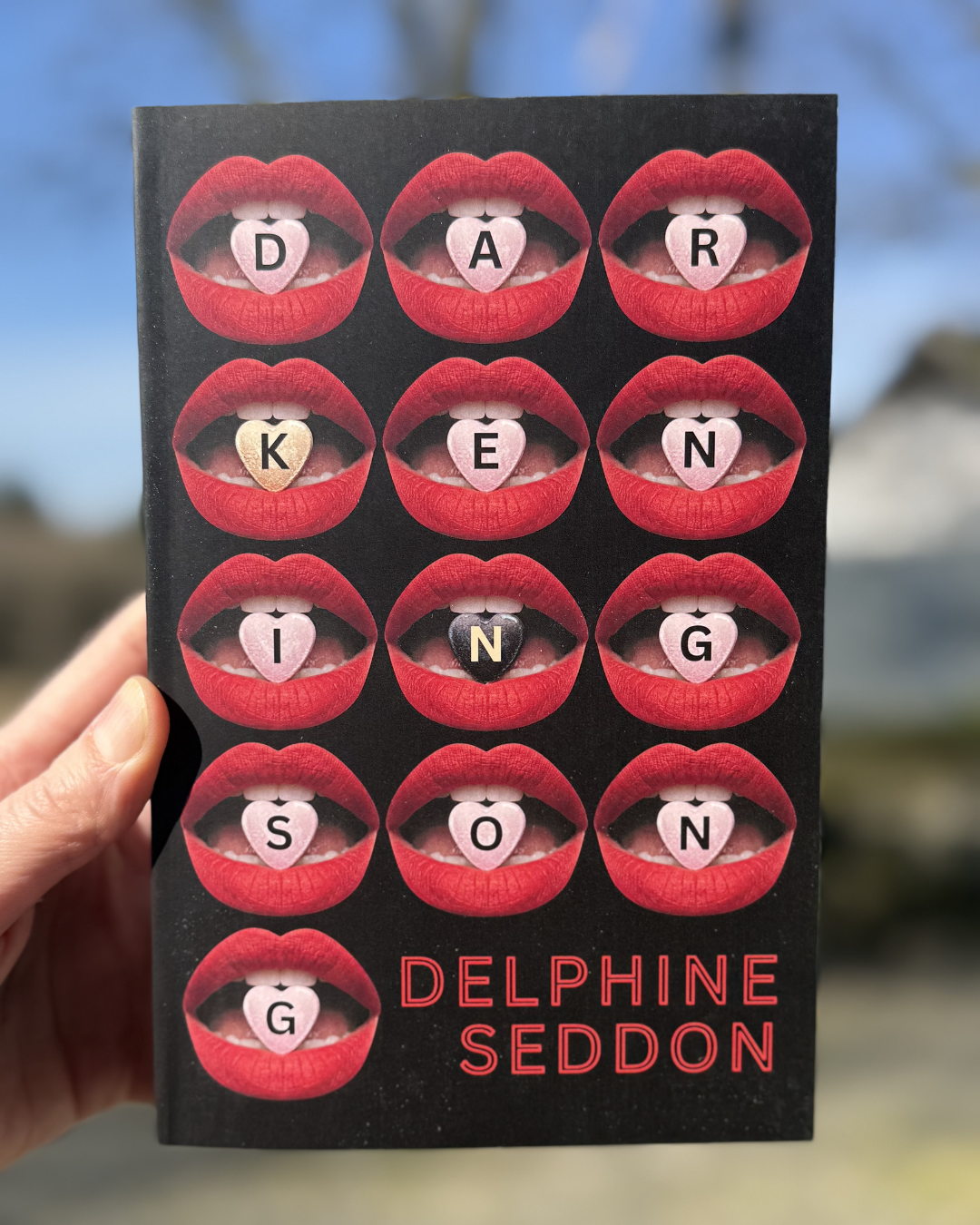
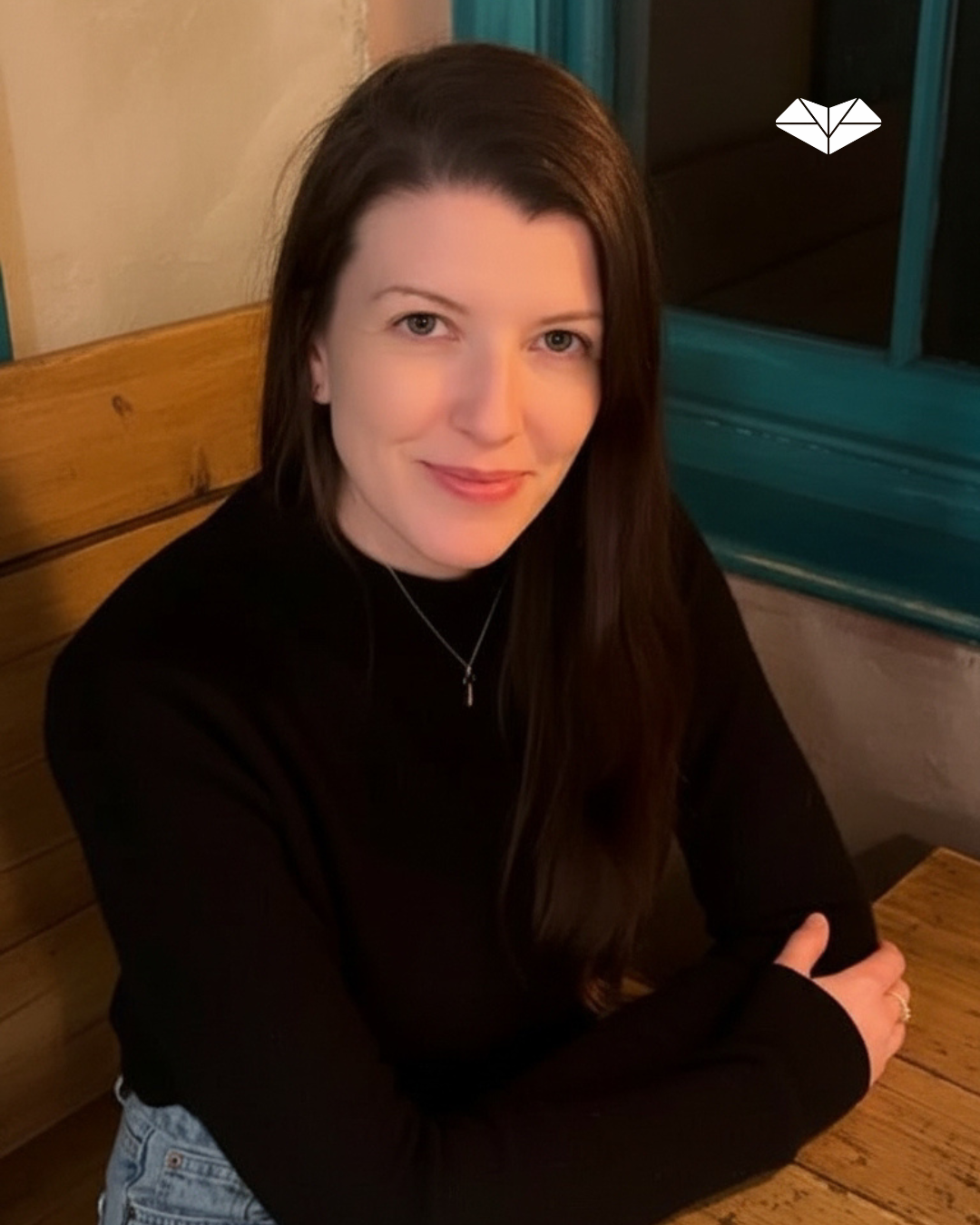
Delphine Seddon is a writer and former music industry executive with more than two decades of experience working behind the scenes with artists and their teams. In her debut novel, Darkening Song, she draws on that experience to explore power, trust and the psychological toll of rising too fast.
Set between record label offices and the disorienting intensity of sudden fame, the novel follows Eva, an 18-year-old intern who discovers a 16-year-old artist, Alora, online. When no one at the label takes notice, Eva steps in and offers to manage her, despite having no experience. What follows is not a conventional rise-to-stardom narrative, but a more unsettling story about what happens when success accelerates faster than either of them can process.
At its centre is the relationship between artist and manager — one built on instinct and belief, but quickly shaped by pressure, expectation and power. As Alora is propelled into the spotlight, the bond between them deepens, then begins to fracture, exposing how easily care can blur into control, and how ambition can cloud judgement at critical moments.
Written with an insider’s perspective, Darkening Song moves beyond the surface of fame to examine its emotional and psychological impact, particularly on young women navigating an industry that does not always protect them. It is as much about friendship and betrayal as it is about responsibility — and the consequences of getting it wrong.
Darkening Song explores the relationship between a teenage artist and her female manager as they navigate fame and power. Why was it important for you to centre the book around the manager–artist relationship, rather than focusing solely on the artist?
I’ve always found the relationship between artist and manager to be fascinating. It’s a business relationship, but the lines often blur into something more personal; a friendship, or in some cases, something akin to a maternal or paternal bond. There’s an enormous amount of trust which has to exist within that relationship, and the manager has a duty to act in the artist’s best interests at all times.
But we’re humans, we all have our own motivations and issues, and sometimes what might be best for the artist isn’t necessarily aligned with what’s best for making money – creativity, mental health and capitalism do not always co-exist in an entirely harmonious relationship, particularly when the forces of power and ego are also at play. I’ve witnessed first-hand in my career how power and success can change a person, and how it can cloud their judgement. I wanted to explore this in Darkening Song, so to just show the artist’s journey and perspective felt like only one side of the coin.
The novel captures how quickly a young artist can be propelled from obscurity into global visibility. What do you think the industry still misunderstands about the emotional and psychological impact of sudden success?
We live in what feels to me like a very pressurised society. The world is imploding around us, we’re constantly ‘on’ and available through mobile phones and email, it’s increasingly difficult to ascertain what information is real and what’s fake, and everyone who has an opinion, however callous and misguided, has a public forum in which to express it, aka the internet. We also live in a world of celebrity culture, where ‘fame’ is aspired to as an actual profession by some people.
But fame takes the pressures of a modern existence and multiplies them by a million, and to go from obscurity into everybody knowing who you are, wanting a piece of you and having an opinion about you is a lot to handle, and can have a very serious impact on mental health.
There’s a paragraph in Darkening Song where Eva (the artist manager) and Alora (the artist) are talking about Alora’s boyfriend. The conversation goes like this:
Without looking up, Eva said, ‘You’ve got yourself a handy little servant there.’ I asked her what she was talking about and she said, ‘Oh come on, don’t tell me you haven’t noticed. He follows you around like a lovesick puppy.’
‘No he doesn’t.’
She rested her phone on her lap and gave me an accusatory stare. ‘A couple of days ago I watched him follow you into the toilet.’
‘Oh, he just does that sometimes.’
‘And what, watches you piss?’
‘He usually just looks at himself in the mirror, actually.’
‘That’s really weird, Alora.’
‘Is it?’ I don’t think by that point in my life I had any bearing on what was or wasn’t weird. Grown men with cameras stalked me everywhere I went. I had no grasp on normality whatsoever.
And yet, the ‘stalking culture’ we – the general public – accept as normal. We seem to think that fame entitles us an AAA pass into every aspect of a famous person’s life, something which Chappell Roan has spoken out about fairly forcefully. Artists by their nature can be extremely sensitive people.
In creating, they aren’t necessarily seeking the notoriety of fame, they simply want to live by their art. And yet, with success comes fame and they have to acclimatise to that level of exposure. When I first started out in the music industry twenty years ago, I don’t remember mental health ever being a talking point.
I do think there’s a much greater understanding of the importance of prioritising mental health and the pressures of fame nowadays, but the industry has learned at the expense of lives. Whether it’s taking sufficient steps to support the artists which, like Alora in the book, sky-rocket into overnight success or equally damagingly, plummet from the dizzy heights of it, is a different question entirely – there’s definitely been a shift and more resource offered, but I would say that there’s much work yet to be done.
Darkening Song is going to be adapted for television, which is incredible as it’s your debut novel. What excites you most about bringing the story to the screen?
Thank you so much! I feel very lucky to be working with such amazing people on the TV side. When we were negotiating the adaptation deal, there was a lot of talk about how much creative input I would be allowed to have over the adaptation. But what was most important to me was to sign with people I felt really understood Darkening Song, and I trusted to make something true to the story and its messaging and not turn it into something which would make me cringe.
When I was first sent the deck with actor and actress ideas for the key characters, it was so brilliant seeing the production company’s interpretation of people who, until that moment, had only existed in my head. So what I’m most excited about is seeing their vision for the book come to life in ways I didn’t necessarily imagine myself.
You’ve seen artists at very different stages of their careers. In your experience, what qualities or decisions often make the biggest difference in sustaining a long-term career?
As much as I hate to say this, I think anybody’s career where creativity is concerned – musician, writer, artist and so on – is never entirely within their own control. A lot depends on market trends, the passion and ability of a marketing team and to a degree, the stars aligning.
All that said, I do believe people can take certain steps to give themselves the best possible chance of success.
Work hard, be kind, polite and appreciative to those around you and those supporting you, try to keep your feet on the ground and listen to the opinions of people who you trust rather than thinking you know best all the time, know who you are creatively, and surround yourself with good people who have your best interests at heart – I think that last one is super important.
What kind of stories—whether in books, film or music—have stayed with you recently?
With a few exceptions (e.g. Garth Greenwell, who I adore) I tend to read books written by women, and I tend to read fiction rather than non-fiction. However, I recently read a non-fiction by Sunday Times best-selling author Emma Gannon called A Year Of Nothing, which is about her recovery from burn-out.
It’s incredibly honest, insightful and inspiring. In this modern world, most of us live in a perpetual state of busy, constantly striving for more, meeting deadlines, checking emails as soon as we wake up, and don’t even get me started on social media…This takes its toll on our health, as Emma Gannon experienced. But A Year Of Nothing isn’t a depressing read – it’s uplifting and wise.
There’s a quote the author takes from Fleishman Is In Trouble: ‘I’m a big fan of the nervous breakdown as a completely rational response.’
This really hit home for me. We need to listen to our bodies. We need to slow down, look around us and appreciate the small things and in particular, nature – a beautiful burning sunset which cracks the sky in two, swimming in the ocean, the first morning light seeping through the trees. The world gives us so many beautiful gifts which are entirely free, we just need to take a deep breath, look up from our phone screens and notice them there.
What advice would you give to someone who feels creatively unfulfilled but is afraid to pursue their own creative work?
I asked a friend for some advice recently and he said, ‘I don’t give advice, I can only tell you about my own experiences,’ and I thought to myself, well, that’s excellent advice in itself! In my humble opinion, creating – whatever form it may take – is one of the reasons we’re on this planet as humans. And yet, relying on creativity to make money can be pretty treacherous, so advising someone to leave their safe secure job and ‘go for it’ when there are so many different factors which may be at play (e.g. mortgages, kids) is not necessarily advice anyone should be giving.
That said, that’s exactly what I did! I signed a publishing deal with an imprint of Macmillan and realised that it was going to be pretty much impossible for me to meet my writing commitments under the contract and continue working in my job as COO for Adele’s manager, operationally running the business across London and LA and the two fairly opposing time-zones which came with that.
So after much deliberation and soul-searching, I resigned from my safe, secure, well-paid job in the music business to become a full time writer. I don’t regret that decision, but what I will say is using creativity as my job puts a pressure on it which I didn’t previously feel. Will any of my books be commercially successful?
Who knows! Maybe I will, at some point, need to start looking for ‘conventional employment’ again. But if I do, it will be with a renewed understanding of the importance of balance – of making sure I still have time and headspace to write. Because for me personally, writing (creating) is what makes me feel truly alive, and it connects me to myself and to other people.
When I receive a message from someone who’s read Darkening Song telling me how the book, or a particular character, really resonated with them, it feels like reaching out into the ether and taking hold of the hand of this other person who I don’t even know and have never met, and I feel somehow seen as the truest version of myself – it’s an amazing feeling.