book launch

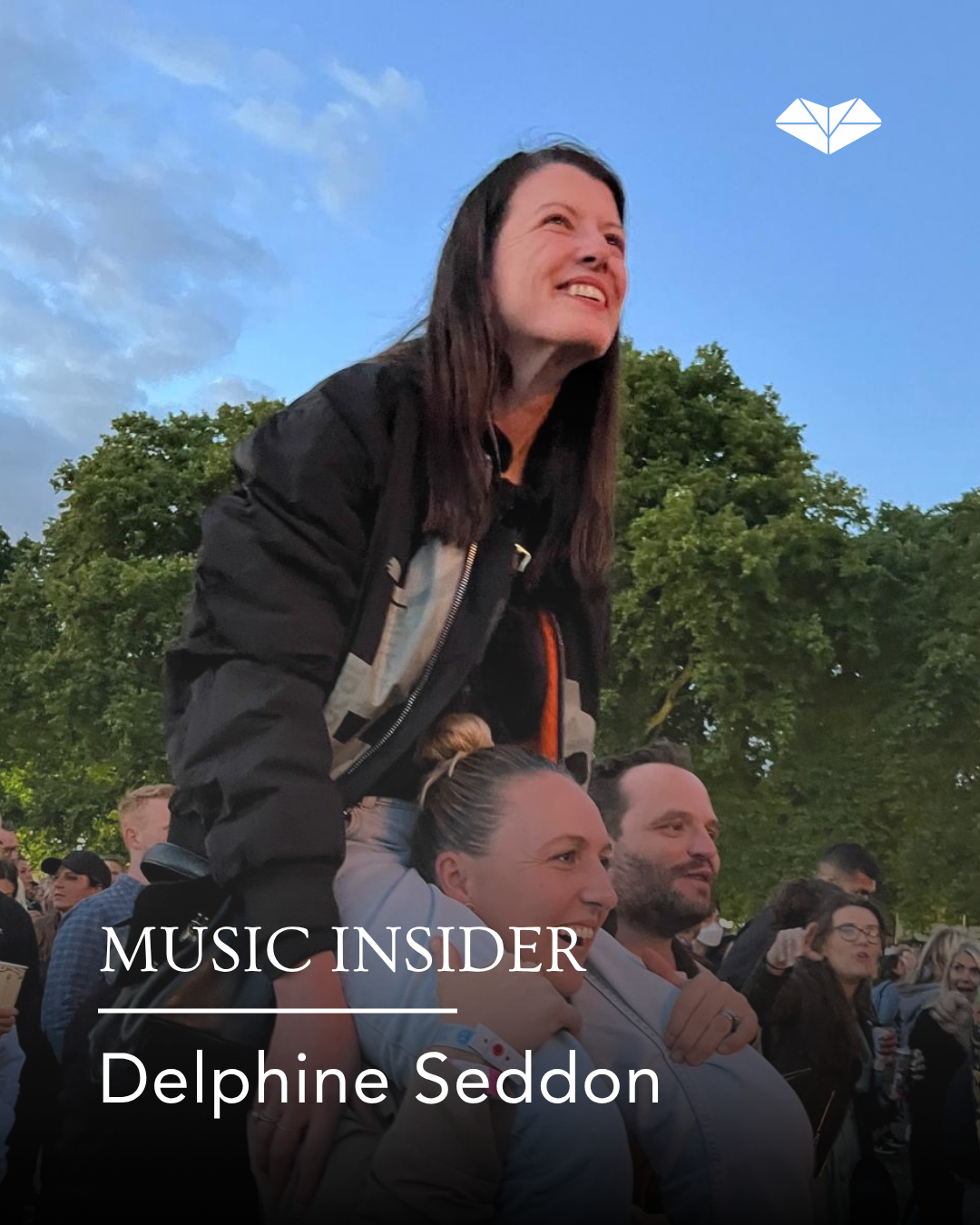
Delphine Seddon on Her Debut Novel Darkening Song and the Psychological Cost of Sudden Fame

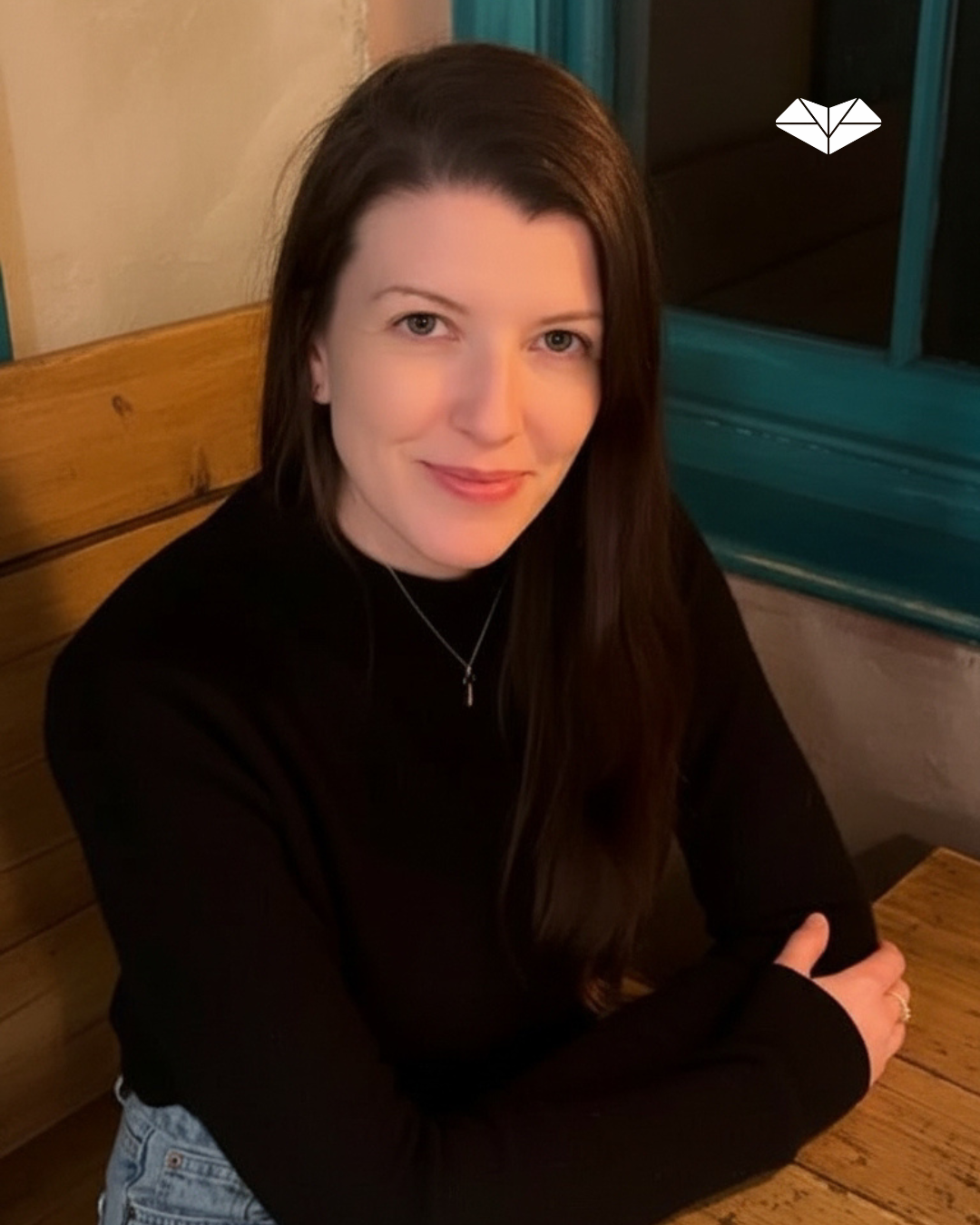
Delphine Seddon is a writer and former music industry executive with more than two decades of experience working behind the scenes with artists and their teams. In her debut novel, Darkening Song, she draws on that experience to explore power, trust and the psychological toll of rising too fast.

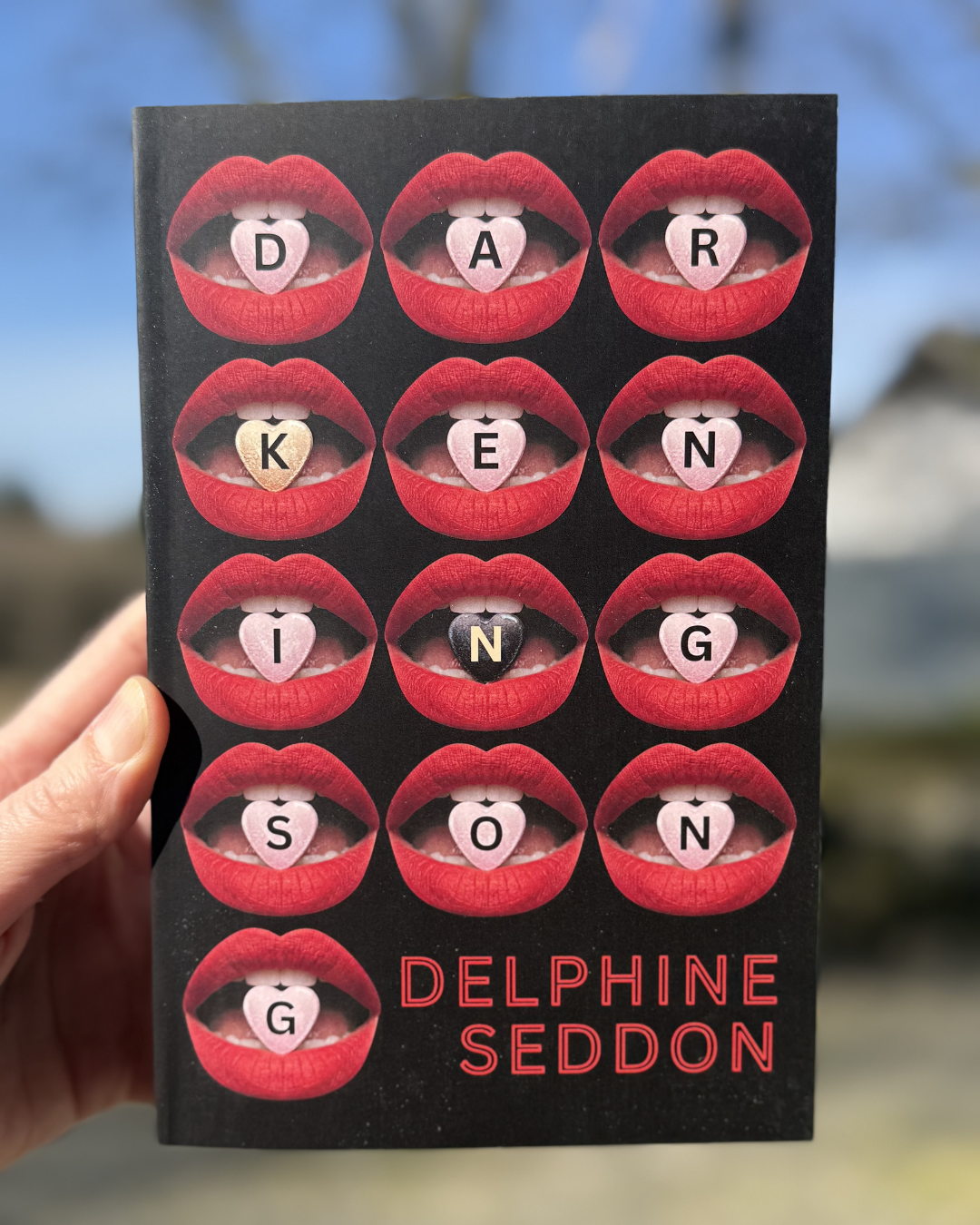
Set between record label offices and the disorienting intensity of sudden fame, the novel follows Eva, an 18-year-old intern who discovers a 16-year-old artist, Alora, online. When no one at the label takes notice, Eva steps in and offers to manage her, despite having no experience. What follows is not a conventional rise-to-stardom narrative, but a more unsettling story about what happens when success accelerates faster than either of them can process.

At its centre is the relationship between artist and manager — one built on instinct and belief, but quickly shaped by pressure, expectation and power. As Alora is propelled into the spotlight, the bond between them deepens, then begins to fracture, exposing how easily care can blur into control, and how ambition can cloud judgement at critical moments.

Written with an insider’s perspective, Darkening Song moves beyond the surface of fame to examine its emotional and psychological impact, particularly on young women navigating an industry that does not always protect them. It is as much about friendship and betrayal as it is about responsibility — and the consequences of getting it wrong.

Darkening Song explores the relationship between a teenage artist and her female manager as they navigate fame and power. Why was it important for you to centre the book around the manager–artist relationship, rather than focusing solely on the artist? 

I’ve always found the relationship between artist and manager to be fascinating. It’s a business relationship, but the lines often blur into something more personal; a friendship, or in some cases, something akin to a maternal or paternal bond. There’s an enormous amount of trust which has to exist within that relationship, and the manager has a duty to act in the artist’s best interests at all times.

But we’re humans, we all have our own motivations and issues, and sometimes what might be best for the artist isn’t necessarily aligned with what’s best for making money – creativity, mental health and capitalism do not always co-exist in an entirely harmonious relationship, particularly when the forces of power and ego are also at play. I’ve witnessed first-hand in my career how power and success can change a person, and how it can cloud their judgement. I wanted to explore this in Darkening Song, so to just show the artist’s journey and perspective felt like only one side of the coin.

The novel captures how quickly a young artist can be propelled from obscurity into global visibility. What do you think the industry still misunderstands about the emotional and psychological impact of sudden success?
We live in what feels to me like a very pressurised society. The world is imploding around us, we’re constantly ‘on’ and available through mobile phones and email, it’s increasingly difficult to ascertain what information is real and what’s fake, and everyone who has an opinion, however callous and misguided, has a public forum in which to express it, aka the internet. We also live in a world of celebrity culture, where ‘fame’ is aspired to as an actual profession by some people.

But fame takes the pressures of a modern existence and multiplies them by a million, and to go from obscurity into everybody knowing who you are, wanting a piece of you and having an opinion about you is a lot to handle, and can have a very serious impact on mental health.

There’s a paragraph in Darkening Song where Eva (the artist manager) and Alora (the artist) are talking about Alora’s boyfriend. The conversation goes like this:

Without looking up, Eva said, ‘You’ve got yourself a handy little servant there.’ I asked her what she was talking about and she said, ‘Oh come on, don’t tell me you haven’t noticed. He follows you around like a lovesick puppy.’

 ‘No he doesn’t.’

 She rested her phone on her lap and gave me an accusatory stare. ‘A couple of days ago I watched him follow you into the toilet.’

‘Oh, he just does that sometimes.’

‘And what, watches you piss?’

‘He usually just looks at himself in the mirror, actually.’

‘That’s really weird, Alora.’

‘Is it?’ I don’t think by that point in my life I had any bearing on what was or wasn’t weird. Grown men with cameras stalked me everywhere I went. I had no grasp on normality whatsoever. 

And yet, the ‘stalking culture’ we – the general public – accept as normal. We seem to think that fame entitles us an AAA pass into every aspect of a famous person’s life, something which Chappell Roan has spoken out about fairly forcefully. Artists by their nature can be extremely sensitive people.

In creating, they aren’t necessarily seeking the notoriety of fame, they simply want to live by their art. And yet, with success comes fame and they have to acclimatise to that level of exposure. When I first started out in the music industry twenty years ago, I don’t remember mental health ever being a talking point.

I do think there’s a much greater understanding of the importance of prioritising mental health and the pressures of fame nowadays, but the industry has learned at the expense of lives. Whether it’s taking sufficient steps to support the artists which, like Alora in the book, sky-rocket into overnight success or equally damagingly, plummet from the dizzy heights of it, is a different question entirely – there’s definitely been a shift and more resource offered, but I would say that there’s much work yet to be done.

Darkening Song is going to be adapted for television, which is incredible as it’s your debut novel. What excites you most about bringing the story to the screen?
Thank you so much! I feel very lucky to be working with such amazing people on the TV side. When we were negotiating the adaptation deal, there was a lot of talk about how much creative input I would be allowed to have over the adaptation. But what was most important to me was to sign with people I felt really understood Darkening Song, and I trusted to make something true to the story and its messaging and not turn it into something which would make me cringe.

When I was first sent the deck with actor and actress ideas for the key characters, it was so brilliant seeing the production company’s interpretation of people who, until that moment, had only existed in my head. So what I’m most excited about is seeing their vision for the book come to life in ways I didn’t necessarily imagine myself. 

You’ve seen artists at very different stages of their careers. In your experience, what qualities or decisions often make the biggest difference in sustaining a long-term career?

As much as I hate to say this, I think anybody’s career where creativity is concerned – musician, writer, artist and so on –  is never entirely within their own control. A lot depends on market trends, the passion and ability of a marketing team and to a degree, the stars aligning.

All that said, I do believe people can take certain steps to give themselves the best possible chance of success.

Work hard, be kind, polite and appreciative to those around you and those supporting you, try to keep your feet on the ground and listen to the opinions of people who you trust rather than thinking you know best all the time, know who you are creatively, and surround yourself with good people who have your best interests at heart – I think that last one is super important. 

What kind of stories—whether in books, film or music—have stayed with you recently?

With a few exceptions (e.g. Garth Greenwell, who I adore) I tend to read books written by women, and I tend to read fiction rather than non-fiction. However, I recently read a non-fiction by Sunday Times best-selling author Emma Gannon called A Year Of Nothing, which is about her recovery from burn-out.

It’s incredibly honest, insightful and inspiring. In this modern world, most of us live in a perpetual state of busy, constantly striving for more, meeting deadlines, checking emails as soon as we wake up, and don’t even get me started on social media…This takes its toll on our health, as Emma Gannon experienced. But A Year Of Nothing isn’t a depressing read – it’s uplifting and wise.

There’s a quote the author takes from Fleishman Is In Trouble: ‘I’m a big fan of the nervous breakdown as a completely rational response.’

This really hit home for me. We need to listen to our bodies. We need to slow down, look around us and appreciate the small things and in particular, nature – a beautiful burning sunset which cracks the sky in two, swimming in the ocean, the first morning light seeping through the trees. The world gives us so many beautiful gifts which are entirely free, we just need to take a deep breath, look up from our phone screens and notice them there.

What advice would you give to someone who feels creatively unfulfilled but is afraid to pursue their own creative work?
I asked a friend for some advice recently and he said, ‘I don’t give advice, I can only tell you about my own experiences,’ and I thought to myself, well, that’s excellent advice in itself! In my humble opinion, creating – whatever form it may take – is one of the reasons we’re on this planet as humans. And yet, relying on creativity to make money can be pretty treacherous, so advising someone to leave their safe secure job and ‘go for it’ when there are so many different factors which may be at play (e.g. mortgages, kids) is not necessarily advice anyone should be giving.

That said, that’s exactly what I did! I signed a publishing deal with an imprint of Macmillan and realised that it was going to be pretty much impossible for me to meet my writing commitments under the contract and continue working in my job as COO for Adele’s manager, operationally running the business across London and LA and the two fairly opposing time-zones which came with that.

So after much deliberation and soul-searching, I resigned from my safe, secure, well-paid job in the music business to become a full time writer. I don’t regret that decision, but what I will say is using creativity as my job puts a pressure on it which I didn’t previously feel. Will any of my books be commercially successful?

Who knows! Maybe I will, at some point, need to start looking for ‘conventional employment’ again. But if I do, it will be with a renewed understanding of the importance of balance – of making sure I still have time and headspace to write. Because for me personally, writing (creating) is what makes me feel truly alive, and it connects me to myself and to other people.

When I receive a message from someone who’s read Darkening Song telling me how the book, or a particular character, really resonated with them, it feels like reaching out into the ether and taking hold of the hand of this other person who I don’t even know and have never met, and I feel somehow seen as the truest version of myself – it’s an amazing feeling.


Delphine Seddon on Instagram

Get your copy of Darkening Song

Interview: DJ Paulette

DJ Paulette

From iconic B2Bs to legendary residencies, DJ Paulette has dominated the dance scene for 30+ years. She's an award-winning DJ and recipient of the DJ Mag Top 100 Lifetime Achievement Award and a force in disco, house, and techno.

DJ Paulette's latest achievement is the release of her book "Welcome to the Club: The Life and Lessons of a Black Woman DJ". The book marks the debut of DJ Paulette as the first Black woman to pen her experiences in EDM and house music.

Within the pages, she shares her journey, recounting personal stories and engaging in conversations with accomplished women in the industry. The book unveils the industry's exclusivity, tackling issues of misogyny, racism, and classism. Endorsed by numerous industry figureheads and celebrated Manchester legends, the book features a foreword by Annie Mac.


Hi, I am DJ Paulette. I'm a DJ by trade. Can you believe it's an actual full time career? I also present radio shows. I work for BBC Radio 6 Music, have a monthly show on Reform Radio and a Global Residency which you can find on Apple Music. I’m Manchester born and bred and my family's all here. I live here. Oh, and I'm a published author. I've got a book out in January 23rd called “Welcome to the Club: The life and lessons of a Black Woman DJ”.

What were your first steps in this industry?

When I was 18 years old, I started working at Piccadilly Radio. I sent in an application for this new show, which was a teen magazine/lifestyle show. I sprayed my application with CK’s Obsession perfume (you have to get noticed in this game) and they liked my application, I was invited to audition and I was chosen. It was a youth programme but I absolutely loved it. I was working with two bright young stars, Chris Evans and Becky Want. The programme taught me how to interview people. It taught me how to go to gigs and write good scripts and reviews for clubs and listings. It introduced me to the celebrity side, because I got to interview people like Martin Fry from ABC.  It really gave me a taste of the music industry. But aside from that, my mum was a singer, she sang jazz and cabaret, so all of the family were really musically trained, we were all into music, buying records, that kind of thing. I'd also been clubbing since I was 15 years old.

Then I sang in bands and got fired a lot. Not because I was rubbish. Whenever I'd be in rehearsals, I'd always be in tracksuits. So when it came to the gigs and I dress up like that, it was like “you're not really a backing singer, you're fired”, which wasn't fair. So when DJing came along, I thought this is a way of performing and a way of delivering my music that is down to me. Nobody could fire me. I could look how I wanted. I could play what I wanted. And I could just entertain people for as many hours as I was put behind the decks.

Years later, a friend of mine called Tommy introduced me to a woman called Adele. She was putting on a party at The Number One Club where I was dancing. Adele had run out of money for a big DJ name and she was looking for someone to play records for the night. Tommy told her that I had lots of records. So we met, we talked about music and for some reason (was she desperate or did she think I'd be good at it, I don't know) she chose me to do it. I was studying for my degree at the time, so I thought, I could earn money doing something that I really love, that I wanted to do. I loved clubs, I loved clubbing. I'd never DJed before. I didn't have my own decks or anything like that, but I just thought it'd be a good idea. She paid me 30 pounds (from 9pm till two in the morning). It was 1992, so that was actually quite decent money (well, it was better than nothing). But then I went out and spent my entire grant money on records. The rest is history.

From there, I met Paul and Lucy (A Bit Ginger Productions), they were putting on a new party at the Hacienda called Flesh, and they needed somebody to host their second room. I was suddenly thrown into the deep end and DJed once a month at the Hacienda downstairs.

It was a big gay night in Manchester and attitudes to anything gay in the 90s weren’t that cool, so I hid it. I didn't tell anyone at Uni. I was the boring, married, mature student, so if anyone from my class ever turned up at Flesh, I hid from them.

Then it - and I -  became more public as time went on, because I was good at what I did. And I became a face in Manchester. So it's like, well, you can hide but not for long. I became successful and I started DJing in Nottingham, at Venus in Leeds at Vague and started moving around. And then the next thing I knew I was being picked to DJ at Heaven in London, at the ZAP Club in Brighton. When I graduated, I intended to become a teacher, a professor, you know, do an MA, go the full academic route, but DJing came along and that was the end of that.

Your book “Welcome to the Club” is the first self-penned book by a black female DJ, can you share with us the inspiration behind writing this book?

My inspiration for writing “Welcome to the Club” came from many places. First of all, lots of people asked me why, if I've been doing this for 30 years, why has it taken me so long to get any kind of flowers for the work that I've been doing over the years? I needed to explain certain challenging aspects of my career that were hidden and also put my history out there because it wasn't out there. People couldn't really understand anything about me because if you Googled me, there wasn't really that much information. 16 years in Europe had created a bit of a blind spot. So I thought, either I could wait for somebody to write a book about me or I could do it myself. And I'm very much a self-starter. 

I didn't pitch this book to anybody. The publishers came to me with the idea during the second lockdown. I've been really mercenary about saying ‘yes’ to this publisher, because I knew that this book was going to go into the libraries. So then history is set. It's not just an ordinary book. It is an academic book, which means it goes into every university library from here (UK) to the United States to France, to wherever. I'm making a point of creating a history for this particular subject. And it's never been done before.

I also became aware that it wasn't just me that had the hidden histories. There were a lot of other women around me that had hidden histories that weren't counted into the development or the evolution of the culture and I wanted to tackle that subject as well. When people say, “oh, we've never heard of you”, it’s because you're not included in the story. It was important to me to put a story there to create some kind of balance or be a counterbalance to all the other books that didn't mention and all the other books that didn't talk about this particular thing.

Another key factor was writing and working through the pandemic. Nobody is talking about the pandemic because it has only just happened. I wanted to talk about how we, as people and as creatives, dealt with the pandemic. As the events and hospitality and as the industry had to deal with the pandemic; the rules, the regulations, the financial implications, all of that. There are two chapters that really talk about what happened and how we came out of it. It's a really strong Manchester story because we were kind of the guinea pigs for the government with all of the rules and regulations. It also talks about the limitations, not earning any money, not getting any support and it talks about mental health.

In the book, you have spoken to a few very influential women from the industry.

A lot of the time women work for companies where it's like “maybe they'll do it one day” or “maybe one day I'll get the award”. This is why my book is really throwing a brick through that window. We as women have to stop accepting that being written out, not getting our flowers is okay. It’s not okay.

I decided to talk to a big group of my peers (Jamz Supernova, Jaguar, Caroline Prothero, Lakuti, Marcia Carr, Gladys Pizarro, Judy Griffith from fabric, DJ Colleen Cosmo Murphy, Sophie Bee, the creative director of the Warehouse Project, Eruica McKoy, NIKS (from Black Artists Database) a lot of very successful women. I found out about what their experiences and challenges have been (working in the music industry) and lots of things became apparent. There are ways that women are treated in the industry that just don't happen for men. Men never have to think about certain issues; about how they are promoted through the industry or how they are always going to have to knock the door down.

I wanted the reader to hear other voices and not just have the words pouring out of my mouth.  It's not just my experience that you get to read in the book, you get to read lots of other people's experiences. We sat together and discussed the frequently asked questions that we always get when we're interviewed; is it difficult being a woman, a female DJ, you know, the gendering of the job?

Why is DJing even gendered? We all do the same things. We use the same USB sticks. We use exactly the same equipment. There is no reason why this job should be separated into male and female DJs. We are all DJs but we are not paid on the same level. We're not given the same billing. We're not given the same breaks, even when it comes down to branding and sponsorship. We're not given the same opportunities or deals.

There's the other side of it where biological and physical things can happen for women that can signal the end of their career. Pregnancy, breakups, menopause, ageing. For some reason, 40 seems to be the cutoff where women start suddenly not getting any work anymore, whereas guys can work for their entire life without really having to think “Am I over the hill?” You know?

It views that aspect, through a lot of other women's eyes. And one of the things that became clear is that ageism is a really annoying factor. People just don't like successful older women. I mean, Madonna has it, (you know, she's in her 60s and people are still trying to say she is too old, should stop and isn't relevant). It's like hold on a second. Why isn’t Madonna relevant? Because Piers Morgan says so? A white cis middle aged straight man? How many column inches are wasted on trying to say that this woman is not relevant after 40 years smashing practically every glass ceiling and leaving a legacy that every newcomer somehow uses as a blueprint. She has spent years in the music industry breaking barriers, waving the flag for LGBTQ+ rights before anybody else did it. What is wrong with people?

Amelie Lens has had a very public pregnancy whilst simultaneously deejaying. And yet, the initial blowback on social media was misogynistic and disgusting. It's like, where does anyone think they came from? How can seeing a pregnant woman in front of the decks be disgusting? How do any of us even get here? Do you think you came from a spaceship? Then there's the other side of it. Are people just going to consider her a mom now. Is she different? Is she going to be treated differently? Of course you are going to be treated differently by your fans because it does suddenly change your status. A lot of your male fans might suddenly find you unattractive because you've had a child. Now you're a mature woman not a party girl.

It was important to have this conversation with Jamz Supernova. It was important to have that conversation with Marcia Carr, Kath McDermott and Colleen Cosmo Murphy. They can tell you the truth about how sickness overtook them or how agents wouldn't book them.

It's really interesting to talk about Jamz’ case because it gives us hope that there is a way through it. It's easier now than it was for Colleen Cosmo Murphy and Marcia Carr when they literally had to stop work for three, four years while they reared their children, whereas Jamz has gone straight back to work. It's interesting hearing them discuss what that journey is. The book talks about all of those things and the psychological impact of going through that and the push to come out on the other side.

How do you feel about the support and recognition you've received?

In my 30 year career I have managed to get two gold records and four awards. There's loads of people that have got way more than me, but then there's loads of people that haven't got one. So I should enjoy and celebrate winning those awards and gold records. In the first DJ magazine top 100 poll in 1993 (which wasn't voted before by the public, it was voted for by the editorial team), I was in the top 100. I totally forgot that until Carl Loben reminded me. People asked me why I became the DJ that I am. And that was actually part of it, suddenly my career as a local DJ from Manchester went national then international.

Then in 2022, getting a lifetime achievement award was massive. No woman has ever won it before. No Black woman has won this  before. All the other people that have won the Lifetime Achievement Award are male.

And this year (2023), the winner was Carl Cox. So I'm kind of up there with a lot of people who I really look up to in the industry. In France, I won two awards and was nominated as the best DJ in the country and I won alongside David Guetta and Avicii. I've won a lot of awards for doing what I do. Consequently, it's another reason why I have continued to do this job that I have been publicly and professionally recognised at every step of the way for the work that I do. And for how I've inspired people and how I educated people through music. 

In your three decade long career, you've navigated through the highs and the lows of the music industry. How did these experiences shape your perspective on the industry, especially concerning issues like exclusion, misogyny, racism, and classism, which you confront in your book?

I've managed over 30 years to forge a career with the help of a lot of amazing people - Giles Peterson, Dave Piccioni, Caroline Prothero, Defected Records, Simon Dunmore - I've had a lot of people backing me overseas like Radio FG, Nervous records and BBCM in Montreal.  I've never talked about that. In 2018 I did an exhibition at the Lowry art gallery in Manchester and it was fantastic -they had 6000 people through the doors. It was one of the most successful gallery interruptions, and I talked about some of these issues. The racism, the sexism, but it was in a very soft form, and I didn't have the hashtag, BLM (Black Lives Matter). I was really not able to be fully open about the bad experiences I've had in the music industry until 2020, when George Floyd was murdered. 

I didn't have the voice to say, “Hey, you know, we're being passed over. We're being left out. Promoters aren’t booking us. Advertisers aren't using us, TV and radio isn’t using us”. I didn't have the vocabulary for it. But then as we hit 2020, and everything happened with George Floyd, all of a sudden there was an openness, because we were in lockdown. People were a lot more focused and a lot more open about listening to what had been going on. And people were thinking, how can we come back from this? How can we make this right?

I think my experiences in the music industry suddenly snapped into a sharper focus. I was able to articulate what had happened for me in a clearer way. Suddenly, the bad experiences became learning experiences that I could put down the well.

I did an interview a couple of days ago and they said they felt that I'm really angry in the book. I'm like, I'm not really angry. But actually I'm allowed to be. Wouldn't you be, if this had happened to you? Wouldn't you be if you realised that you weren't getting any work and neither were your sisters or brothers? We were all being left off / dropped from (artist) rosters. We were all being left off the lineups and we couldn't say anything. So it addresses all of those issues.

Even though those things happened, I don't come away with the ‘oh my god, everything's so bad and I detest the industry’ bitter complex. I'm not that kind of person. I take those experiences and think “how can I fix this” or “how can I work within this industry”. How can I navigate it in a way that I'm not just sidestepping it, or stepping over it or going around it? I'm saying, this is here. And this is how I'm going to deal with it. I'm going to make sure that people know how to remove those barriers, because I can't do that alone. Somebody on the inside has to help. This is the problem with systemic issues. It's the structure we need to change, not the people.

How did you find the resilience and passion to overcome challenges, and what kept you motivated during the toughest moments of your career?

I've talked a lot about what the challenges were, but don't get me wrong. I have had an incredible journey. I've enjoyed every second of it. I think that's probably also the reason why I've been doing it for 30 years; it is because I absolutely love it. I've always said to myself I will stop when I have no enthusiasm. I will stop when I don't like it. That's why I don't work in PR anymore. I hated that job in the end, so I stopped doing it. I'm good at it, but it really wasn't for me, I didn't enjoy the culture.

But music, DJing, performing, doing radio, sharing new music with people. I absolutely buzz off that every day when I get to play music, whether it's on the radio or in front of a crowd, one person 10 people 10,000 people. I love playing and sharing music. If I'm in a room with two people and we're exchanging “Oh, have you heard this? Have you heard that? What about this?”

Music is my absolute life. It's my lifeblood. It's coursing through my veins, it's in the DNA, it has everything to do with who I am.

And that in itself makes the experience just incredible. I've played music all over the world. I've been to Africa, America, South America, Asia, Bangkok, Kuala Lumpur, India. I have played music to 1000s of people in Paris on the Champs Des Mars overlooking the Eiffel Tower. I’ve had some mad experiences. I've had people queuing for gigs for me like Beatlemania, when I was in Paris (nobody knows about those years but I was absolutely at the top of the game, playing alongside all the heavy hitters). I've met and worked with some phenomenal people. I started off working at the Hacienda and last year I played a B2B with The Blessed Madonna at Homobloc and I still absolutely love it. For people to pay for me to go and play music in front of crowds who pay to come and see me?. I mean, that’s the maddest, most beautiful job.

I am doing something I absolutely love, so you can imagine when we hit lockdown, the impact of that on anybody's head. And the thought of losing that was just like, You know what? No way. Absolutely no way that's happening. So then the streams came; Boiler Room, Glitterbox, DJ Mag, He She They, United We Stream, Hacienda. I didn't do any “|little in my bedroom streams” for a reason. I did the streams for big organisations that were doing it properly, that were paying the artists, that were paying PRS (Foundation), that were raising money for charities or benevolent / harship funds. I worked for the people who were trying to keep the industry together and not just trying to keep themselves going.

Even though I was going through a really bad time in my life, it was also having a really good time. The memories coming through lockdown, specifically of those streams, were really good and they helped to lift me up. I still get stopped in the street by people who are still watching my Glitterbox streams, or repeatedly watching the Stream GM livestreams and say “You don't realise how that impacted me". You don't realise how that helped me”.

The message through the lockdown was how music heals. Playing music is one of the key things for community and for mental health.

It’s eight years since I've come back to Manchester (I got here in 2015): in the beginning I didn't know anybody at all. And in seven years, I’ve got to meet a wonderful community, meet people like Neil (Clampdown Records), Sophie Bee, LUKE UNA, Chris Massey, Amy Wainwright, Gina Breeze, Kamila Rymajdo, Sno, Mr Scruff. I've met such a phenomenal community of people who every day are trying to get music and their creative ideas out into the masses and keep it there.

What message do you hope it sends to aspiring DJs? Especially those who may face similar challenges as you did?

First of all, I say that I forgot that I was in the top 100. I really did forget it and I didn't take it as seriously as maybe I should have. Or I didn't take it as seriously then as people take it now, because, I didn't know what I was doing when I started this. I didn't even have my own decks. Now, it is more of a business.

So the advice I would give to people is take it as seriously as you need to take it. If you want to make a career out of it, make a career out of it, but be very focused about it. You can be giddy and you can enjoy it certainly, but have a plan and ask for help, which I didn't do. Always ask for help. Find your tribe. Build your team.

I've learned that everyone that's in the top 10 of the DJ Top 100, really wanted that #1 slot. They said “I want to be the number one” and started out with that in mind. They had a goal. I say, maybe you don't want to be number one, but definitely have a goal, have a point where you can hit that mark. Get people on your side who can help you to get there and who will talk about you. Even if you haven't got an agent and you haven't got a manager, you need people around you that are going to support you and help you to ascend through the ranks. That is the difference between people who don't get in the charts and the people who do. Build a team around you that supports you and helps you to realise your dreams. Find those people.

What are your best tips for any person that wants to enter this industry?

The most important thing, and I get asked this question all the time, even in 2023 I get stopped by women men or non-binary people. How do we do it? How did you do it? And the most important thing more than anything, is just do it. I didn't know how to DJ when I first picked up a record. I didn't have the equipment. But it didn't stop me. It really didn't stop me going to a club and putting a record on in front of people.

And don't be afraid of making a mistake. Everybody makes mistakes. That's how we learn. I've learned how to DJ by making mistakes.

I learned how to present on radio by making mistakes and even last night I made a tonne of mistakes (I learned that I shouldn’t mention brands on the BBC). You should always be prepared to make mistakes and be prepared to learn. Never stop learning. If you want to produce, there's a tonne of tutorials on YouTube. And if you need to throw away the instruction booklet, I believe DJ Pierre never read the instruction booklet which is why he could make the machine do what it had never done before. J Dilla as well. He threw away the instruction booklet and just figured out his way into it himself and created a sound for himself.

Find your own way into it. There are a tonne of courses, a tonne of academies, physical and online. Those colleges will educate you to work within the music industry so book a course, go to college if you can afford it. If you really can't afford it, there are enough free tutorials for you to follow. Get that information in your head and then just go out and do it. Push yourself forward.

What so you want people to take away from your book?

It's not a dark story. It's a very positive, uplifting story. It's a celebration of what it has taken to go through life with the evolution of the electronic dance music industry, with the evolution from vinyl to USB, with the evolution from there being no female DJs to being more female DJs, with the evolution from having no internet to (the industry being) really internet led. The changes and the evolution of the industry and the positive developments of it.

What I want people to take away from it more than anything is that they should get involved, be as involved and engaged with it as I have been for the last 30 years and thus help it to continue. I want people to realise there are no rules and it is never too late. If nobody new (young or old) comes along, it stagnates and then we are in trouble. So I want people to join in. I want people to go “yeah, but I want to do it this way”. Or “what if we do it that way”. If they can think of a new way to do it, do it that way, be the new breed, you know, be the new blood. I want to encourage and inspire people to take what I know and run with it. Go harder, better and faster.

  • Interview by ninakeh for shesaid.so