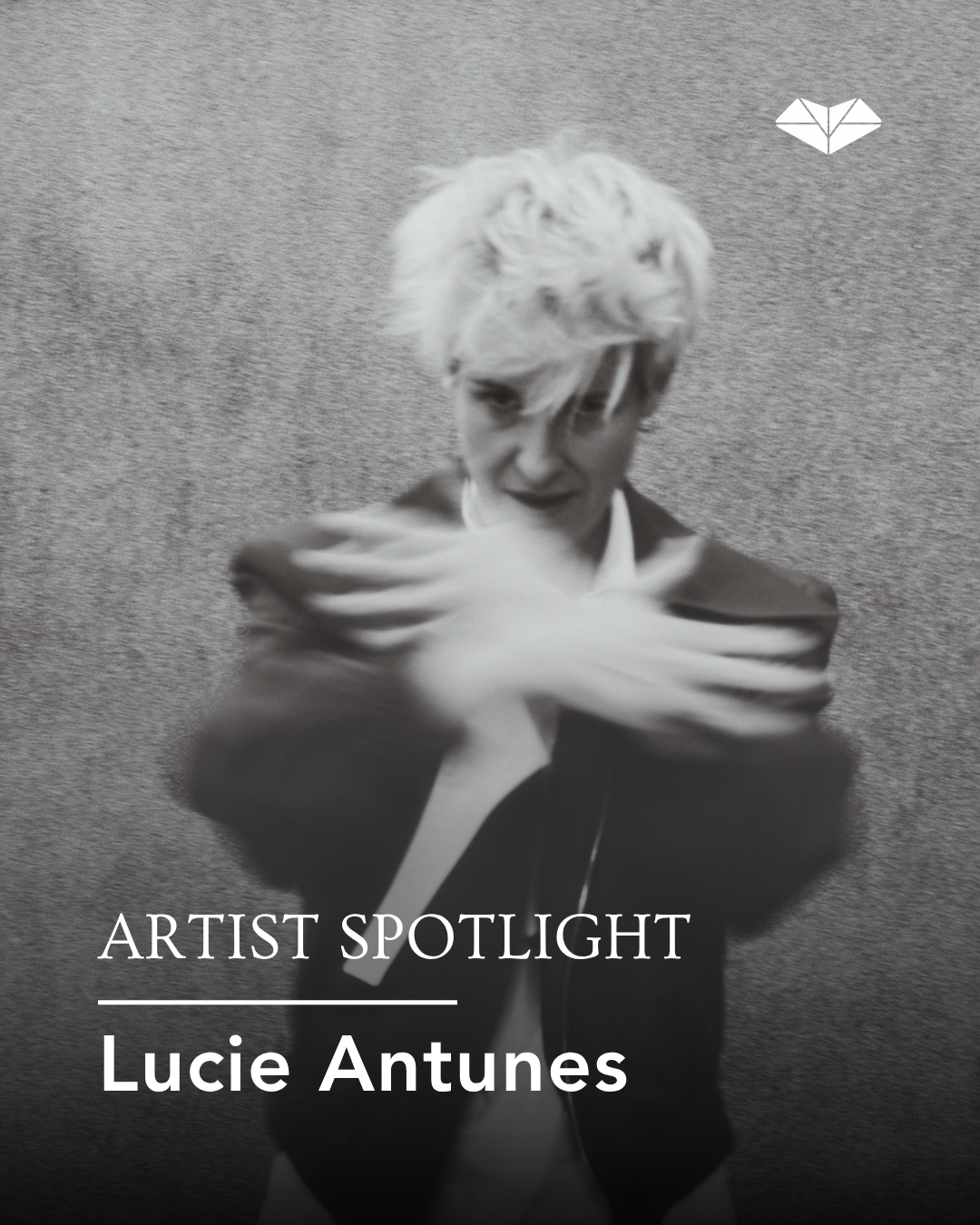
Lucie Antunes © Marco Dos Santos
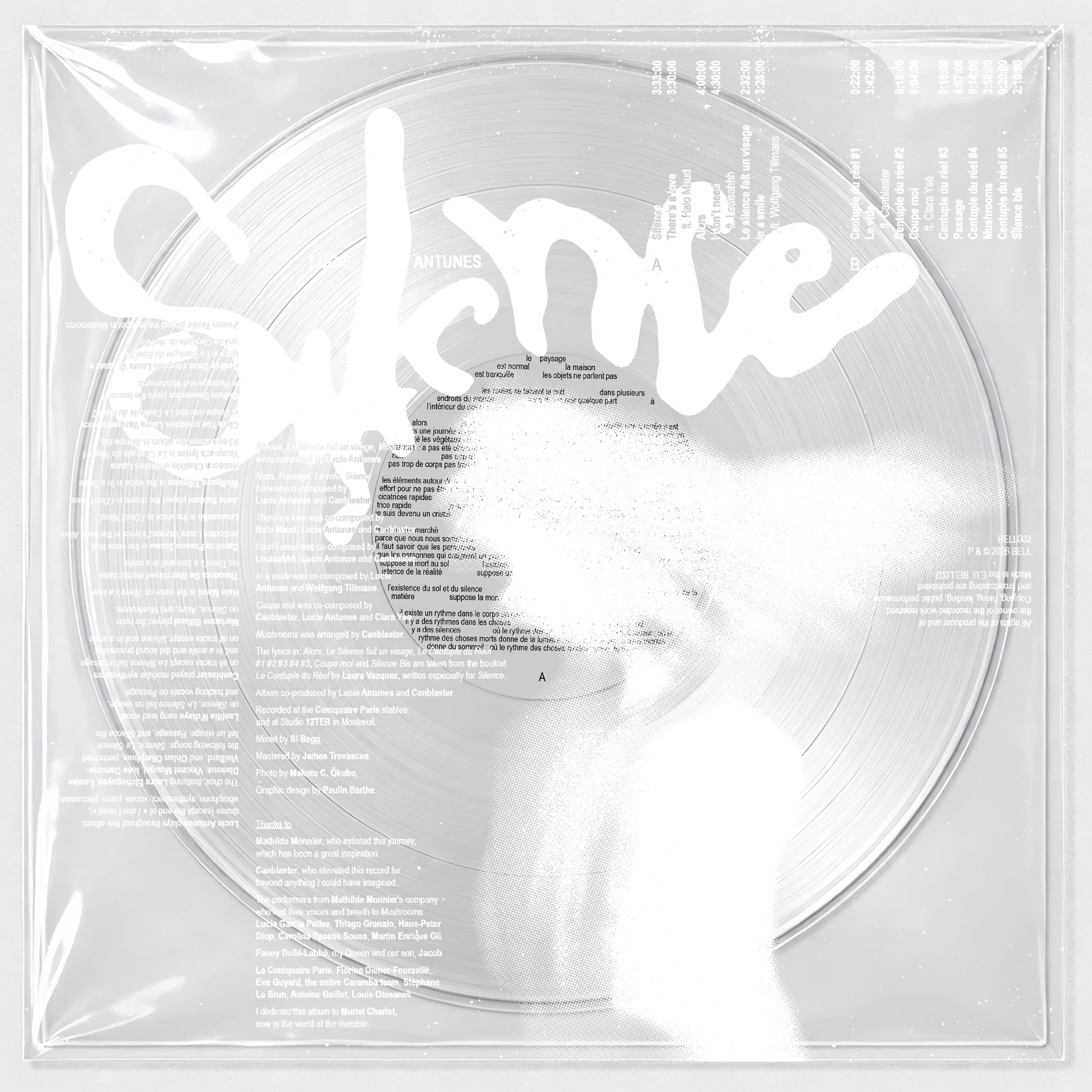
Lucie Antunes is a French composer, percussionist and producer originally trained in classical and contemporary music. Her work spans concerts, performances, club contexts and interdisciplinary projects, sitting at the intersection of experimental, pop and contemporary music, and shaped by close collaborations with musicians, choreographers and visual artists. Following her acclaimed albums Sergeï (2019) and Carnaval (2023), Antunes returns with Silence, a new LP that strips away excess in search of something more instinctive and essential.
Created in collaboration with choreographer Mathilde Monnier, Silence exists as both an album and a large-scale choreographed performance. Bringing together musicians, dancers and voices, the project explores altered states of consciousness through rhythm, repetition and movement, dissolving the boundaries between audience and performers.
Silence feels less like a conventional album and more like an environment or state of mind. At what point did you realise this project needed to exist simultaneously as music, choreography and spatial experience?
When Mathilde reached out to me, I was at a professional turning point, marking both the end of one cycle and the beginning of another. There are encounters that profoundly transform you; this one felt almost salvific. It was not only the encounter itself, but also the moment at which it arrived. I deeply believe that there are no saviors, only specific moments when we find greater courage—precise points along our life path when different elements align and create an impact, whatever form that impact may take.
This particularly dizzying moment in my life, combined with the appearance of Mathilde—someone with an immensely generous soul, a reassuring force—sparked in me a desire, even an urgency, to create a cathartic work. Mathilde had already envisioned the entire project and wanted me to be on stage. I turned it into an album, while she transformed it into a choreographed concert, brought to life by human beings of a kind one rarely encounters: people with remarkable mystical strength and very little ego.
As for me, in building this album, I invited artists—some of them close friends, others people whose artistic worlds I deeply admire—and it became a highly inspiring collective creation. The spatial dimension you mention is extremely important, as the album is a vast journey that highlights our condition as transient human beings seeking to communicate with the invisible world. This is expressed through spatialized sound and the real-time vocal processing that Canblaster executed with great mastery, as though he were the pilot navigating between here and elsewhere.
Every work I create is a path of transformation. Silence took me far—toward freedom, joy, creative strength, and above all, a deeper trust in my instincts, leading me toward a more experimental body of work.
Capture d’écran
The project began from a drone recorded in the stables at CENTQUATRE in Paris. What was it about that sound that sparked the direction of the entire album?
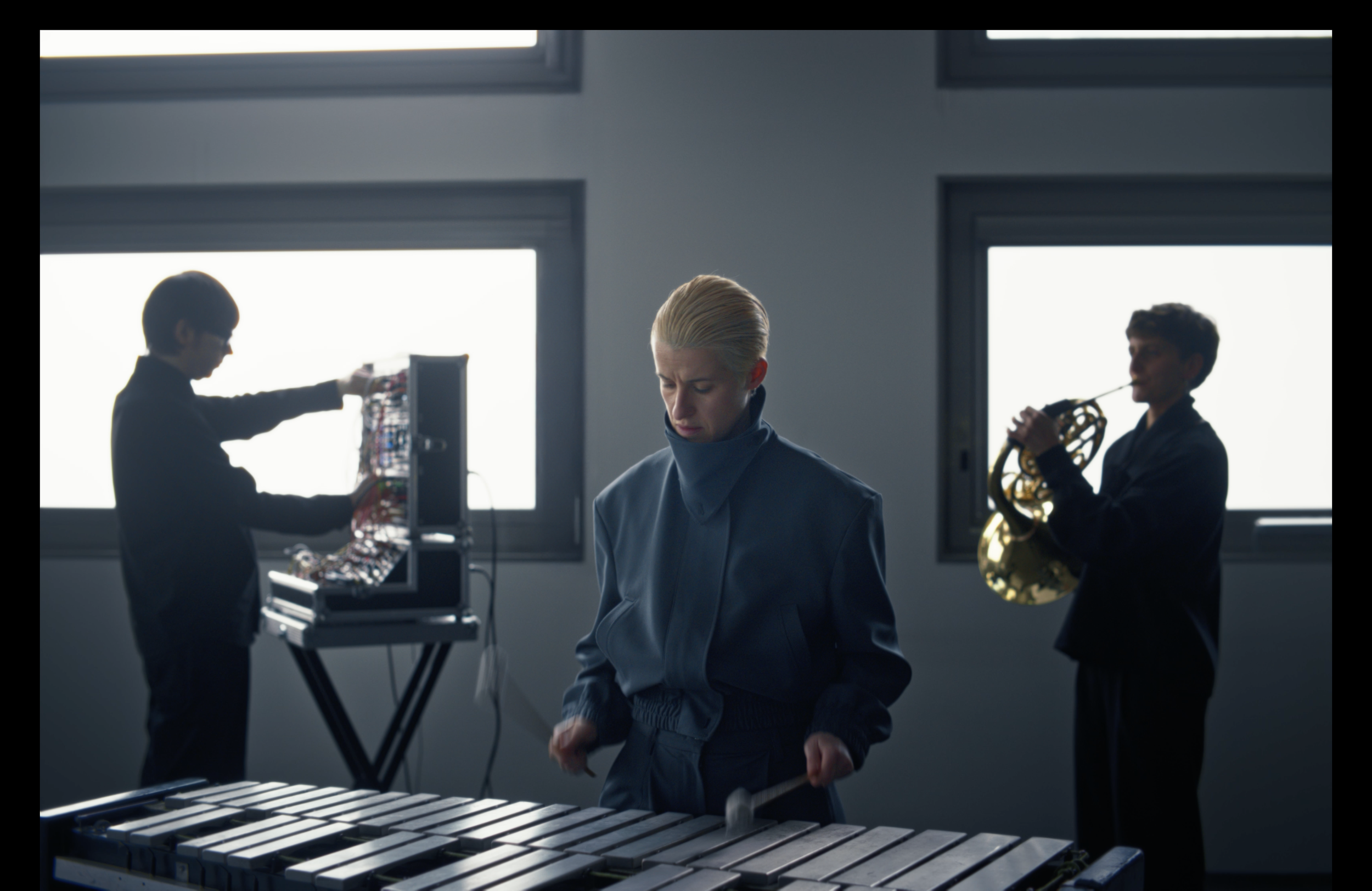
Yes, in a way, I lost control of the console, of the machine itself, and I simply let it happen. I listened to what resonated within that extraordinary space—the stables of Le Centquatre, formerly a vast funeral center. I sat down at the piano and was carried by this D drone as I wrote the first track, Silence.
For the first time, a rather dark theme emerged for me. These are some of the most beautiful moments of my life. It has happened to me for as long as I can remember, often when sitting at a piano. It's as though the music comes to me, and it feels completely self-evident. From there, I enter a kind of vortex—quite cerebral at first—then I drift into explorations of rhythmic equivalences.
At that moment, I visualized the dancers for whom I was composing this album, and a rhythm in 5 naturally imposed itself as the skeleton of the piece.
For the rest of the album, the collaborations played a major role in shaping the music. With Halo Maud and Louisahhh, for example, I really wanted to build a shared vision while ensuring that each of our artistic identities remained clearly recognizable. It also allows me to venture beyond my comfort zone and travel toward new creative territories.
There’s a strong sense of tension between organic textures and modular electronics throughout the album. Was preserving the physicality of sound important to you during the recording process?
Real-time sound processing was at the very heart of the writing process, at the heart of this entire story. In many ways, this album was truly a four-handed creation with Canblaster, because I brought him the organic raw materials and shared my desires extensively. He knew how to listen deeply, and I think that, for everyone involved in this project, it was also an immense pleasure because there was both great freedom and a sense of urgency that often made the very first take the right one.
We ran everything through his modular systems, like a machine capable of carrying you through time. Halo Maud began singing with her extraordinary voice, and he transformed it into something like a saxophone driven by an arpeggiator. Suddenly, tears were streaming down our faces. We knew instantly—it was the take.
We processed Louisahhh’s breaths in a single take, and it pierced straight through us. The moment we heard it, we said, “We’re keeping that.” And that’s how texture became an obsession.
I had the feeling that we could expand sonic spaces and alter our sometimes linear perception of what an album can be.
How did your collaboration with Mathilde Monnier shape the project?
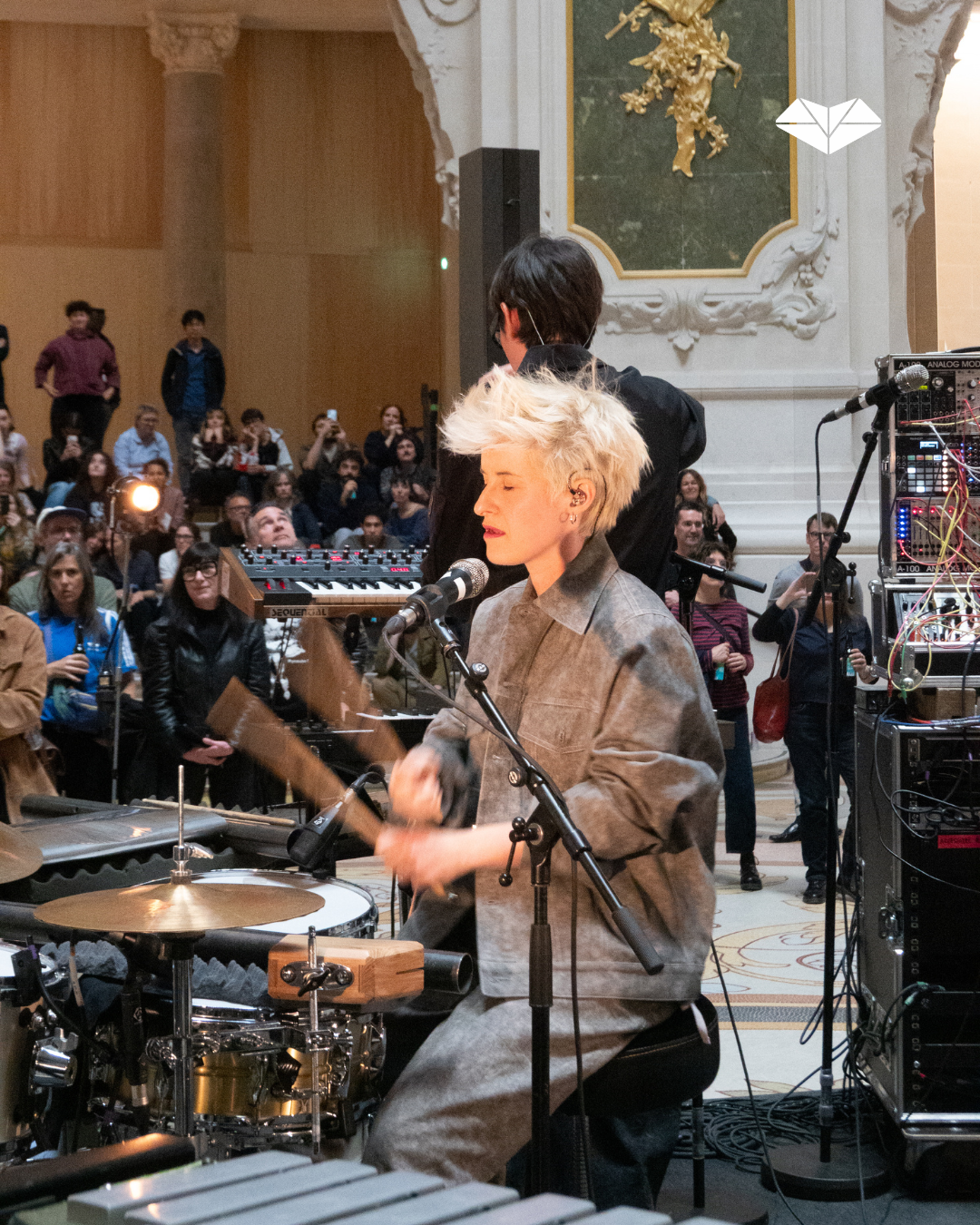
Here too, we wanted to break away from convention. I no longer really believe in the traditional frontal performance, where people sit down, enjoy themselves, and then leave. Perhaps it’s just a phase, and it will pass. But right now, I’m drawn to artists who are trying to invent new forms. Even when they fail, I find it compelling that they are willing to try—to engage the audience differently, to involve them in ways that go beyond passive spectatorship and simply having a pleasant experience.
Mathilde and I spent a lot of time questioning the place of music within this project. In this case, the theme was altered states of consciousness—a subject that may be fashionable today, but one that Mathilde has been exploring for a long time, as have I. She wanted music to be at the very center of the experience, and I wanted there to be no boundaries whatsoever between the dance performers and the musicians. We needed to find dancers who could also embody the music itself; in fact, I met them before I had written a single note.
As with everything we captured on this album, the idea of the collective is deeply embedded in this creation. And when I speak of new forms that have the power to move us, I mean works that resonate with the world we live in. For me, there was a profound necessity to become one with others in the face of the apocalyptic challenges we will soon be confronting.
Trance is, in many ways, a pretext. I use it as a form of healing for myself—though I make no claim to heal anyone else. What I do know is the power of sound. Intuitively, each from our own perspective, Mathilde and I brought together people of extraordinary sensitivity. And when we are all together, something happens that radiates throughout the entire space we inhabit.
It is the strength of the collective: a space where ego is set aside. No soloists. Just us, here, together, now.
You’ve worked with musicians, choreographers and visual artists from very different worlds. What usually tells you someone is the right creative fit?
I don’t really ask myself that question. Let’s just say that when I meet someone, I make it clear quite quickly that I wouldn’t be able to create something I’m not in complete agreement with. As a result, things tend to sort themselves out naturally.
More often than not, I’m a fan of the people I work with, and every collaboration becomes an intense adventure. But on this album, that feeling was stronger than ever before. And I’m not only talking about the people who contributed musically.
There was also Paulin, the graphic designer who conceived the artwork and had to immerse himself in this journey. Or Giorgio, who directed the videos and approached the project with the same intensity and passion that drove me. And Sibegg, the mixing engineer, whose involvement went far beyond simply mixing the record. We exchanged ideas constantly in order to arrive at this final result.
What I love about collaboration is when people bring something deeply personal to the process. Otherwise, I might as well work with robots.
After an intense project or performance cycle, what helps you switch off and reconnect with everyday life outside music?
My family life with my wife and our four-year-old son. My friends, my neighbors, the life of the neighborhood where I live. I really try to stay connected to the present moment, to the place I inhabit, to reality itself. Otherwise, I can go through long periods of loneliness, with the feeling that I’m always somehow on the sidelines—as if I’m never quite where I’m supposed to be.
The only place where I truly feel I am exactly where I belong is when I’m creating, when I’m writing, or when I’m performing. So outside of those creative spaces, I often repeat to myself: “I am here, now, in this moment.”
What's something that’s been inspiring you lately?
Breath. Instruments such as the organ, which depend on air to function. The voice. And my Spanish roots, which call to me with great intensity.