
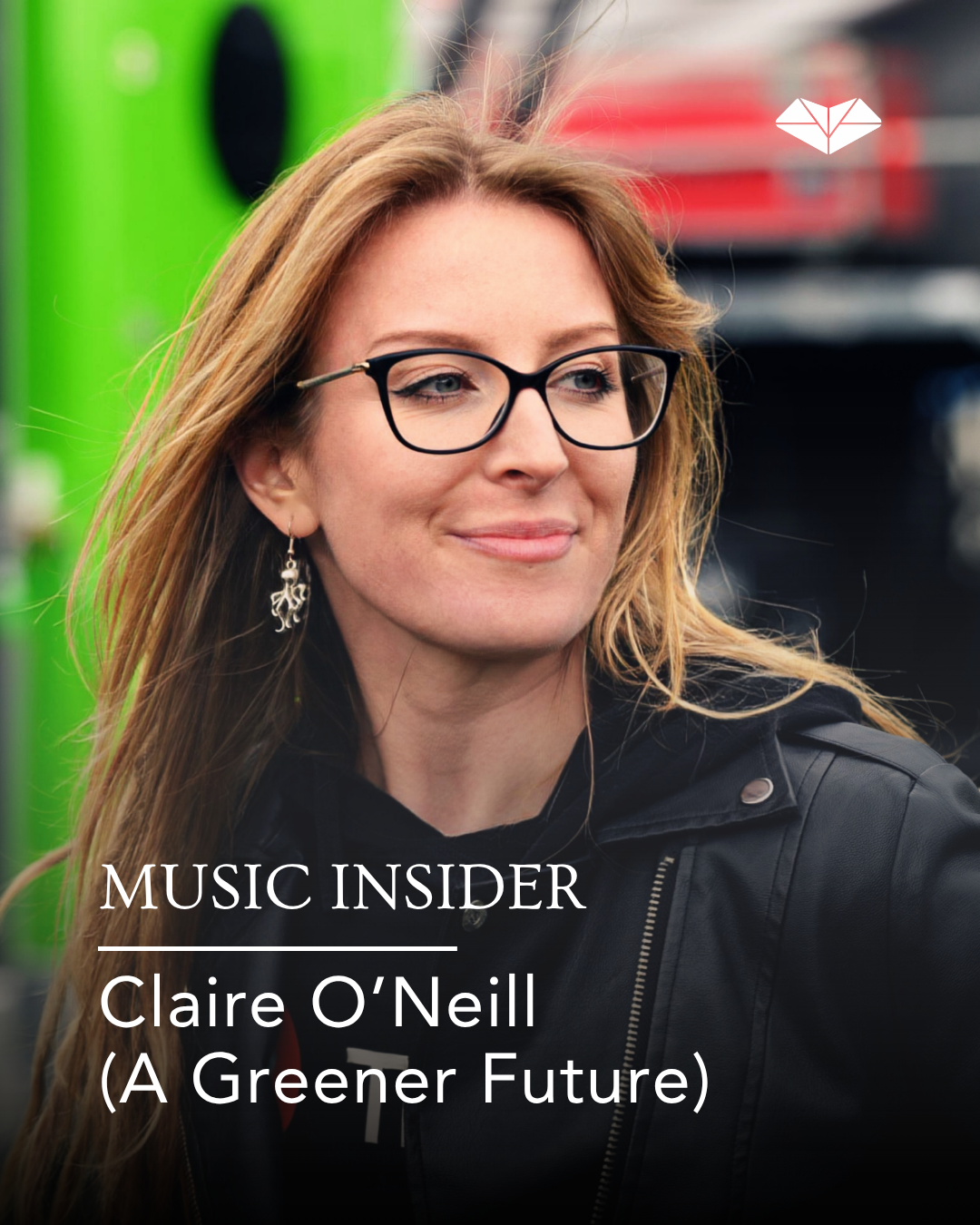
Claire O’Neill has spent the past two decades helping shape how the live music industry approaches environmental impact. As CEO and co-founder of A Greener Future and green energy specialists Grid Faeries, her work sits across infrastructure, policy, and on-the-ground implementation — supporting festivals, venues, and tours to adopt more sustainable practices.
Founded in 2005, A Greener Future (AGF) was one of the early organisations to formalise what “green events” mean in practice. The not-for-profit works globally with festivals, venues, and live organisations to reduce environmental impact through certification, carbon measurement, and net zero strategy, while also building shared knowledge through training, research, and industry exchange.
From developing the world’s first green festival standards to initiatives like the Green Artist Rider with **Wasserman Agency and the Greener Arena Certification, AGF has played a key role in embedding sustainability into live event operations.
O’Neill’s work spans grassroots festivals to major global organisations, including AEG, UNFCCC, The O2, RHS and ASM Global. Through Grid Faeries, she has also supported the development of low-carbon energy solutions for live events — including powering stages with renewable energy, notably on Massive Attack’s Act 1.5 Climate Action Accelerator in partnership with Ecotricity.
A Greener Future (AGF) has been working in sustainability since long before it became an industry talking point. What has actually changed structurally, in how festivals and live events approach environmental impact today?
When we began, sustainability was not a consideration or language in the live music industry. It was however the way that many grassroots festivals had always operated, and their way of life. For instance, Big Green Gathering and Green Futures at Glastonbury, for decades had been examples of sustainable living, and as such examples of greener festivals.
20 years later there is industry wide understanding and minimum requirements for sustainability, which reflects the wider governmental and societal adoption of the same. It is now commonplace for festivals and live sector organisations to have a sustainability manager, policy, action plan and to report on their impacts.
Waste Management Plans are more sophisticated with joined up approaches from purchasing to segregation to processing, with single us plastic bans being commonplace. Alternative power sources such as battery, renewables and grid are more widely adopted.
There are thousands of temporary compost toilets available for commercial hire in many European countries, and grey water recycling and urine nutrient capture systems are emerging in more places. Plant based menus and food salvage schemes are quite normal. Of course, everyone is conscious of the impact of audience travel and this year has seen the first electric truck tours and electrification of audience travel companies such as Big Green Coach. Sustainability criteria are commonplace in tenders, land-use agreements, and we expect soon for licensing conditions too.
We often see a surge in messaging around Earth Day, but less clarity on action. From your perspective, what does meaningful commitment look like beyond the campaign moment?
Campaigning is important to raise awareness but without taking action it’s just talk. There are so many easy steps that can be taken by anyone in the live sector. Go plant based. Reduce high carbon travel and choose low emission alternatives. Switch to a renewable energy supplier.
There are so many actions that can be taken and a plethora of sign posts and guidance. All that is needed is the willingness to get on with it. The best way to lead is by example.
The Green Artist Rider and Green Touring Rider have become widely adopted. What have you learned about how artists can influence systemic change and where that influence has limits?
When artists require even small changes in their riders and contracts it starts to become the norm in the way that venues and festivals operate. We began the Green Artist Rider so that the green aspirations of artists, festivals and venues joined up and pushed in the same direction, with all of the necessary pieces of the puzzle.
Of course, some artists have greater influence to affect change in the industry than others. But all artists have the ability to reach and communicate with people. At one end of the scale, we’ve had the great pleasure to work closely with Massive Attack who are unwavering in their convictions.
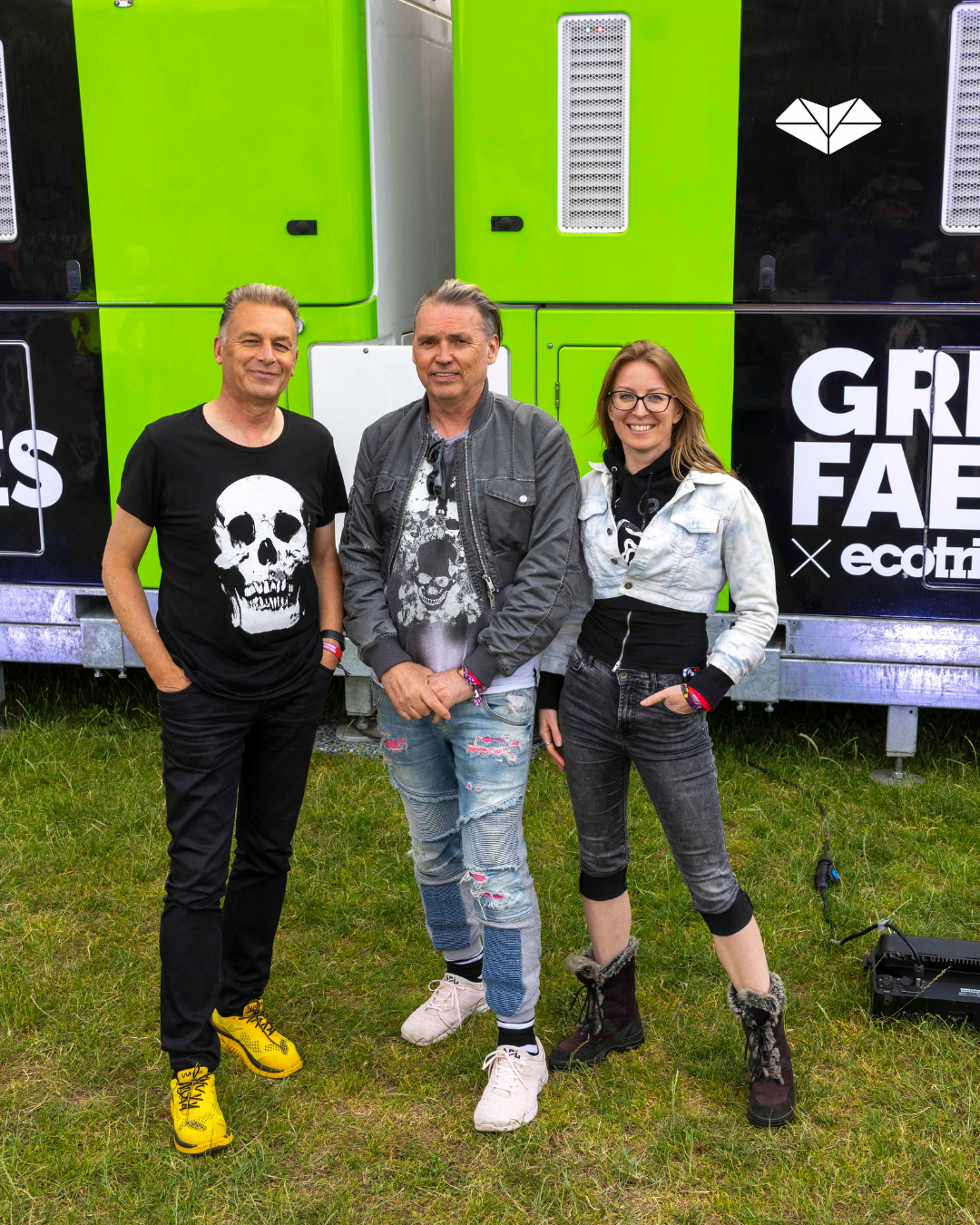
For their Act 1.5 Climate Action Accelerator we were able to power their main stage entirely with our Grid Faeries x Ecotricity battery charged by the wind and the sun, with 100% plant based food, there was no car parking, extra trains and 100% electric shuttle buses.
Beyond the headliners, the trust and connection between artists and their fans, and the ability of music to convey meaning so directly and impactfully, is a vital tool to influence culture and to reach hearts and minds.
AGF’s work often involves analysing existing operations and translating that into actionable change. What are the most common blind spots you still see when organisations assess their own impact?
Food continues to be one of the most under-reported areas, alongside materials. These are some of the most impactful areas due to their production and embodied emissions. At AGF we work closely with caterers, traders, suppliers and concessions to gather robust data that can inform action.
Audience travel remains one of the largest impact areas and events often struggle to gather reliable data. We provide templates to help ask the right questions, and Øya festival in Norway have recently developed a similar model and are keen to align with others.
Sustainability is often framed as a cost, especially in a financially strained live sector. How should the industry be thinking about the balance between environmental responsibility and economic survival right now?
Ecological and economic sustainability go hand in hand. It is a false economy to deplete our natural resources, our health and ecosystems for temporary gain. Too many human and environmental costs have been externalised for too long.
The good news is that even in our current economic system the greener way is the economic way. Less waste. Renewable energy. Plant based food. Burning fewer fossil fuels. Local trade. The tide is turning, and the laws of physics have caught up with our fallible man-made extractive economic models of the past.
For artists, promoters or teams who are just starting to engage with this space, what are the three most important things to have in place from day one?
Have an open mind to explore, make mistakes, and understand that you don’t need to be perfect to do something.
A super quick win and big impact is reducing or eliminating meat consumption, especially red meat, which doesn’t cost a thing but is major for emissions, land use, water use and biodiversity.
Make a plan for what you want to tackle and how you’re going to achieve it together. Where do you have influence and what are you passionate about?
** As of March 2026, the international sports, music, and entertainment agency Wasserman has rebranded to THE·TEAM