How Boxout.fm Built One of India’s Most Distinct Independent Music Communities

Founded in New Delhi in 2016, Boxout.fm has grown from an independent online radio station into one of India’s most respected community-driven music platforms. At a time when music discovery increasingly shifted towards algorithms and passive consumption, Boxout.fm carved out a different path — one rooted in human curation, local scenes and cultural exchange.

Through 24/7 programming led by DJs, selectors and radio hosts, the platform became a home for India’s non-mainstream music communities while documenting the country’s evolving underground music landscape in real time. Beyond radio, Boxout.fm expanded into physical spaces through projects like Boxout Wednesdays — now India’s longest-running midweek club night — alongside festivals including Jazz Weekender and Boxout Weekender, helping foster new communities around independent music and alternative culture.

Over the years, the platform has also developed international collaborations with organisations and platforms including Boiler Room, Worldwide FM, British Council and Goethe-Institut, connecting local artists and scenes in India with wider global audiences.

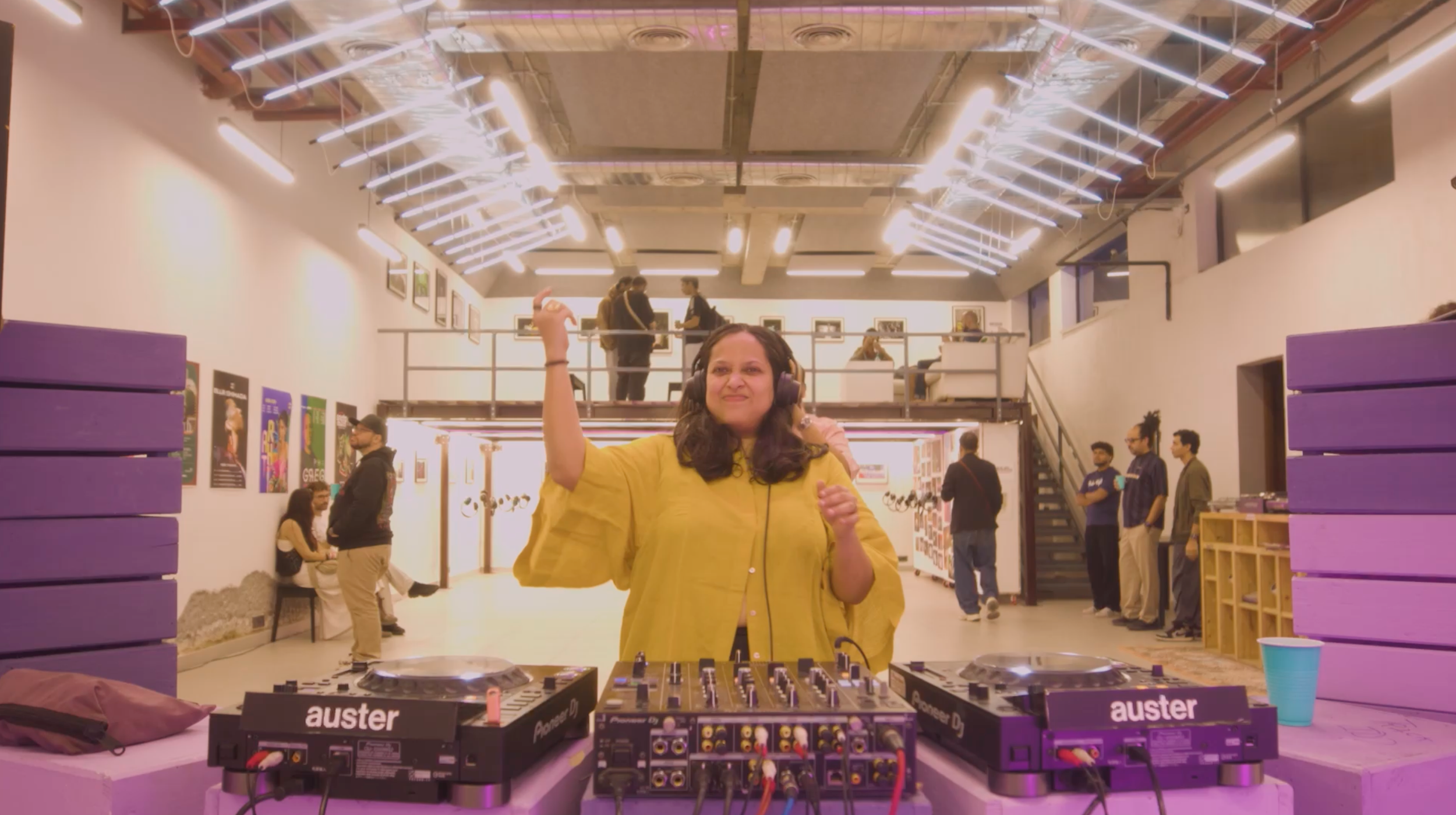
In 2025, Boxout.fm was selected as one of the recipients of the Ballantine’s True Music Fund powered by shesaid.so — an initiative supporting music communities, collectives and independent cultural projects through funding and mentorship. The support has contributed to the revival of Boxout.fm’s physical radio space, the development of new digital programming formats and the expansion of its long-term vision for community-driven storytelling and independent music culture in India.

In this conversation, Boxout.fm reflects on community-building, international collaboration, the evolving role of independent radio, and how platforms can continue creating meaningful cultural spaces in an increasingly fragmented digital landscape.

From Boxout Wednesdays to larger-scale projects like Jazz Weekender and Boxout Weekender, how have your events contributed to building a sustainable music community in India?

Mohammed Abood (Founder, Boxout.fm): Everything we've built at Boxout.fm has followed the same logic: the radio creates the community, the events give it a physical home.

Boxout Wednesdays became the cauldron through which a new and active music and art community was born. It was never conceived as a club night in the traditional sense — it was a weekly commitment, a proof of concept that there was an audience in India hungry for something more intentional than what commercial venues were offering. It became the longest-running midweek nightclub residency in the country. That kind of consistency over years is what builds real community — not one big moment, but hundreds of smaller ones stacked on top of each other.

Jazz Weekender grew out of the same instinct, but with a different ambition. The inaugural edition in 2022 was organised to celebrate International Jazz Day, showcasing some of the genre's most exciting Indian and international artists. What we wanted to prove with Jazz Weekender was that India had an audience not just for electronic music, but for the full spectrum of improvised, genre-crossing music — jazz, neo-soul, R&B, funk, fusion, Latin. The festival firmly established itself as a cornerstone of New Delhi's cultural calendar, attracting over 4,000 attendees across its editions. By its fourth edition in 2025, we had international headliners from across Europe, Latin America, and the Middle East sharing the stage under that banyan tree at 1AQ with some of India's most compelling live acts.

What makes these events meaningful beyond the numbers is the model. Boxout Weekender, unusually for a festival in India, always had an all-local lineup comprising a selection of our show hosts. That was a deliberate choice. We weren't just programming a festival — we were giving our community a stage and saying: you are the main act. The people who built their craft through Boxout.fm's radio are the same people who headline our events. That's what a sustainable ecosystem looks like. It's circular, not extractive.

The community doesn't just attend these events — it builds them, performs at them, and grows through them. That's the difference between a platform and a scene.
Boxout.fm has developed strong international partnerships over the years. How have these collaborations influenced your programming and expanded your reach beyond India?

MA: From the beginning, we were clear that being India-based didn't mean being India-only. The question we kept asking ourselves was: how do we make sure the music being made in this country reaches the rest of the world — and how do we bring the world back here in a way that enriches the community rather than just importing a brand?

As a forerunner in the space of collaboration, Boxout.fm expanded its reach across geographies with partnerships with longstanding institutions such as Institut Français' Fête de la Musique, Goethe Institut and the German Embassy, The British Council, Pro Helvetia - Swiss Arts Council, as well as younger cultural juggernauts like Boiler Room, Rinse France and Worldwide FM. Each of those partnerships had a distinct character. Working with Boiler Room in 2017 meant that the Indian underground was being seen by a global electronic music audience on the world's biggest broadcast platform for the culture. Working with the British Council meant we could fund genuine artistic exchange — not just a stream, but artists physically travelling, performing, recording and learning from each other.

The Delhi to Derry project was probably the clearest expression of what international collaboration means to us at its best. Six Indian artists from the Boxout.fm community were able to perform live sets to a new audience in the UK — some for the first time. The live-streamed showcase featured 18 live and DJ performances from New Delhi and just as many from Derry. That's reciprocity. It's not India being spotlighted as exotic — it's two electronic music communities recognising each other as peers and creating something together.

The Boxout In Transit series extended that logic geographically across Asia, taking the radio format to cities like Colombo, Karachi, Amman, Hanoi, Dubai, Kathmandu, Bangkok, and eventually Berlin — marking the first time the series ventured into Europe, in collaboration with Club Gretchen. Every stop was a chance to introduce a new city to what Indian independent music sounds like in 2024, and to bring that city's energy back into our programming.

The influence flows both ways. Artists from the Boxout.fm community have gone on to enjoy careers across Europe and Asia — Suchi, for example, gaining acclaim from Boiler Room and BBC Radio 1 Dance for her percussive grooves and dreamy breaks. That's what good international partnership produces: not just a one-off exchange, but actual career trajectories that wouldn't have been possible without the platform.

In 2026, as we rebuild and refocus, these global relationships remain our most valuable equity. They signal that Boxout.fm isn't simply an Indian story — it's a model for how a community radio built with integrity can carry the culture of its home city to the world.

You were selected for the True Music Fund in 2025. What were your expectations going into the programme, and how did the experience compare in reality?

Ayesha Dikshit (Associate Director, Boxout.fm):

Going into the programme, we initially saw the True Music Fund as a means to support a specific idea we had been developing around reactivating the Boxout.fm radio space. We expected it to help us execute that vision, both financially and in terms of visibility, and to provide a platform to bring the radio back into focus.

In reality, the experience expanded beyond that initial scope. While the financial support was important, the process gave us the room to adapt the idea as it unfolded, rather than feeling locked into a fixed outcome.

What stood out most was how the programme enabled a shift in perspective. Instead of thinking in terms of rebuilding something as it once existed, it encouraged us to move forward with a format that feels more responsive and open-ended. It also reinforced the value of creating work that can exist across multiple touch-points, rather than being tied to a single space or structure.

In that sense, the experience was not just about delivering a defined end result, and more about setting a direction for how Boxout.fm can continue to grow, now and into the future.
How did the True Music Fund support your development—whether financially, strategically, or through network access—and what impact has that had on your work since?

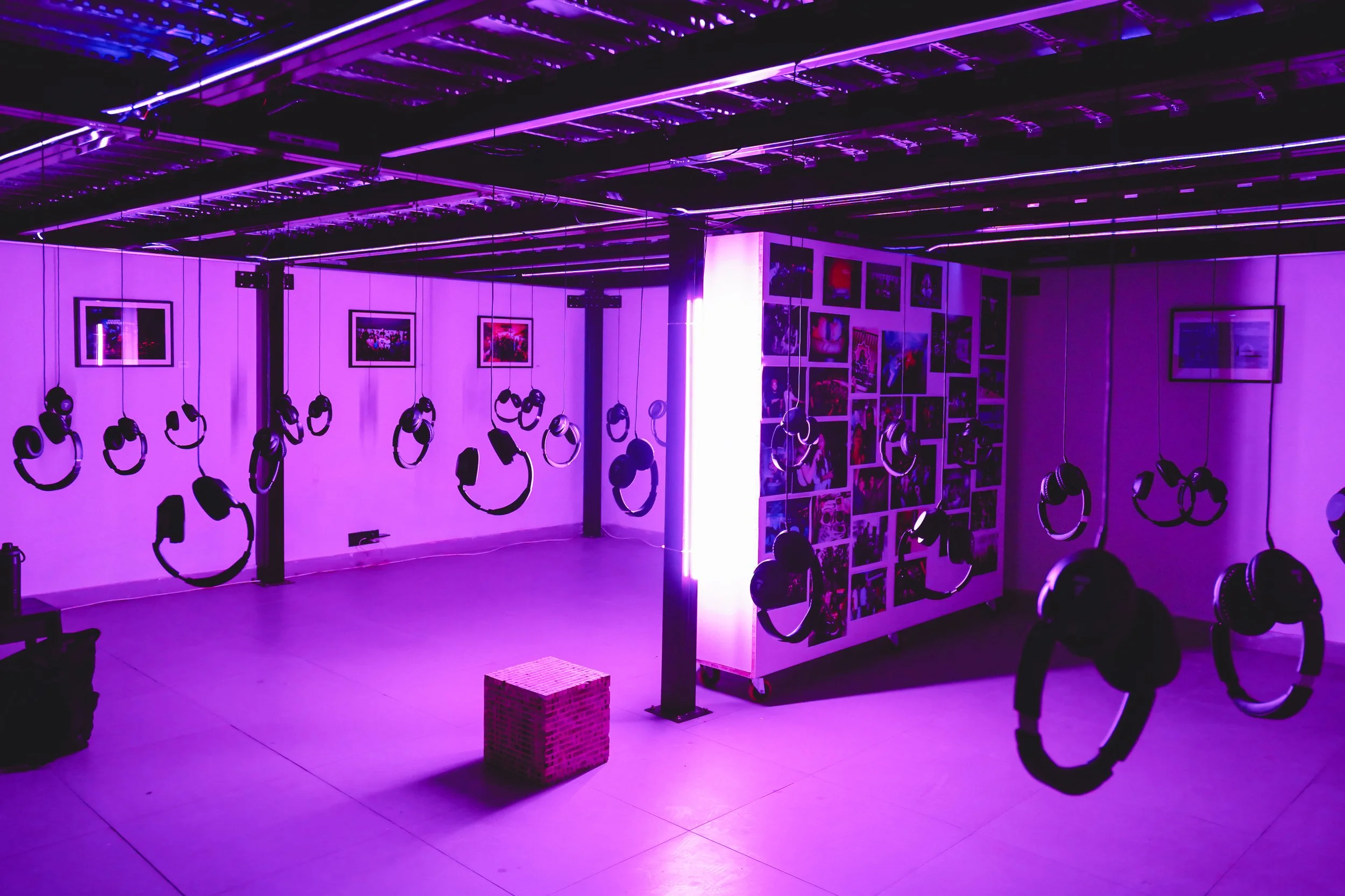
AD: The True Music Fund played a really important role in helping us bring Boxout.fm back in a way that actually makes sense for how people engage with music today. We didn’t end up building a permanent physical radio space, but we were able to bring back the spirit of radio through digital formats unfolding in unconventional spaces.

We hosted a series of radio pop-ups, including a collaboration at Method Delhi (A contemporary art gallery in New Delhi) as part of our Nine Lives exhibition. We hosted over 15 artists across a wide spectrum of sounds and practices, reflecting the diversity and inclusivity that sits at the core of Boxout.fm. And started putting out content on YouTube, using video as the main format to reimagine what radio can look like today which enabled us to transform the project in a way that feels aligned with how music is now consumed across various digital platforms. 

Beyond the immediate programming, the fund has helped us lay the groundwork for the next phase of Boxout.fm. We’re now working towards bringing the radio player back onto our website, which will further strengthen the connection between our broadcast roots and our evolving digital format.

This process has allowed us to explore radio in a more fluid way, not tied to a single format or space, but something that can evolve across platforms while still staying rooted in independent music.
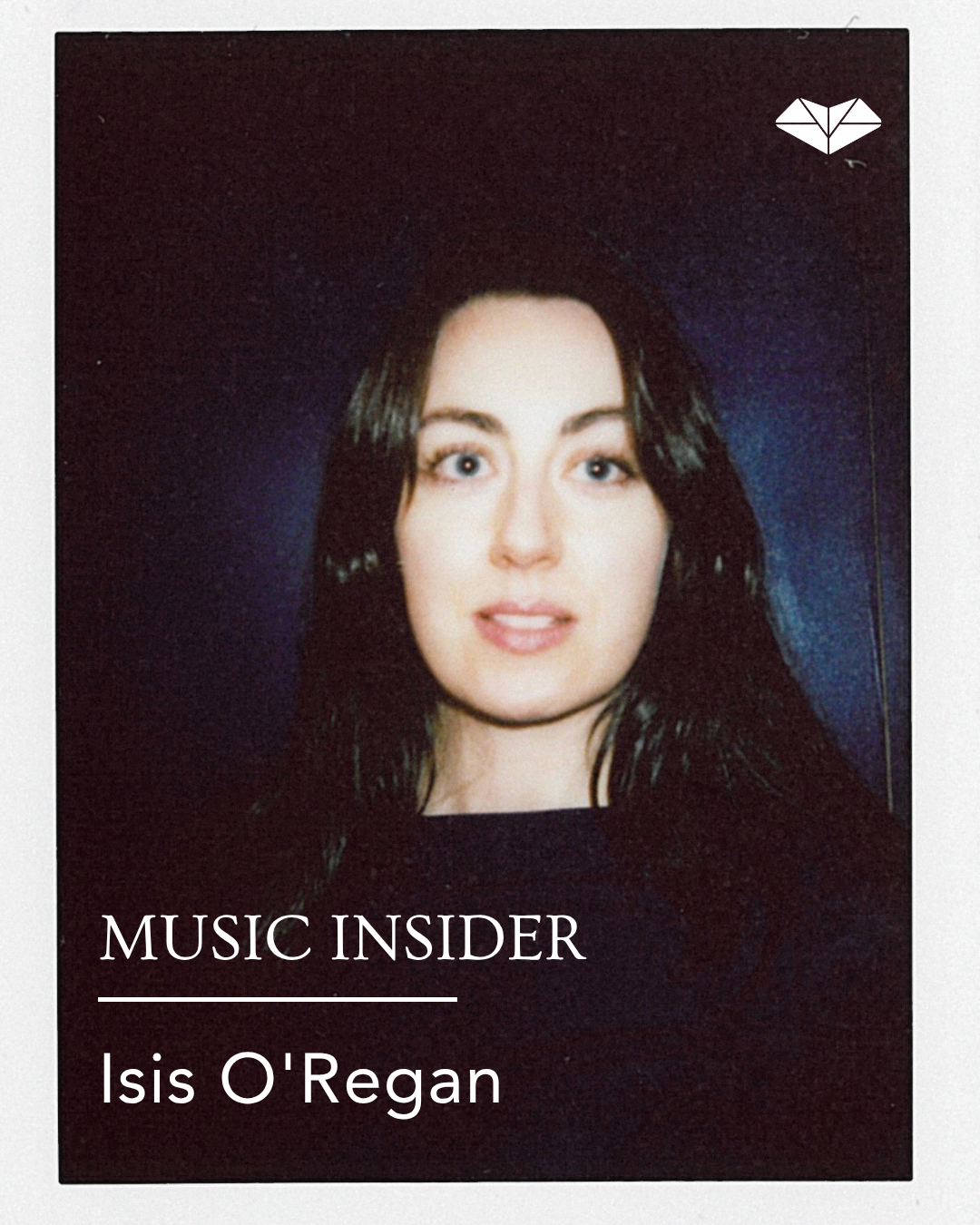
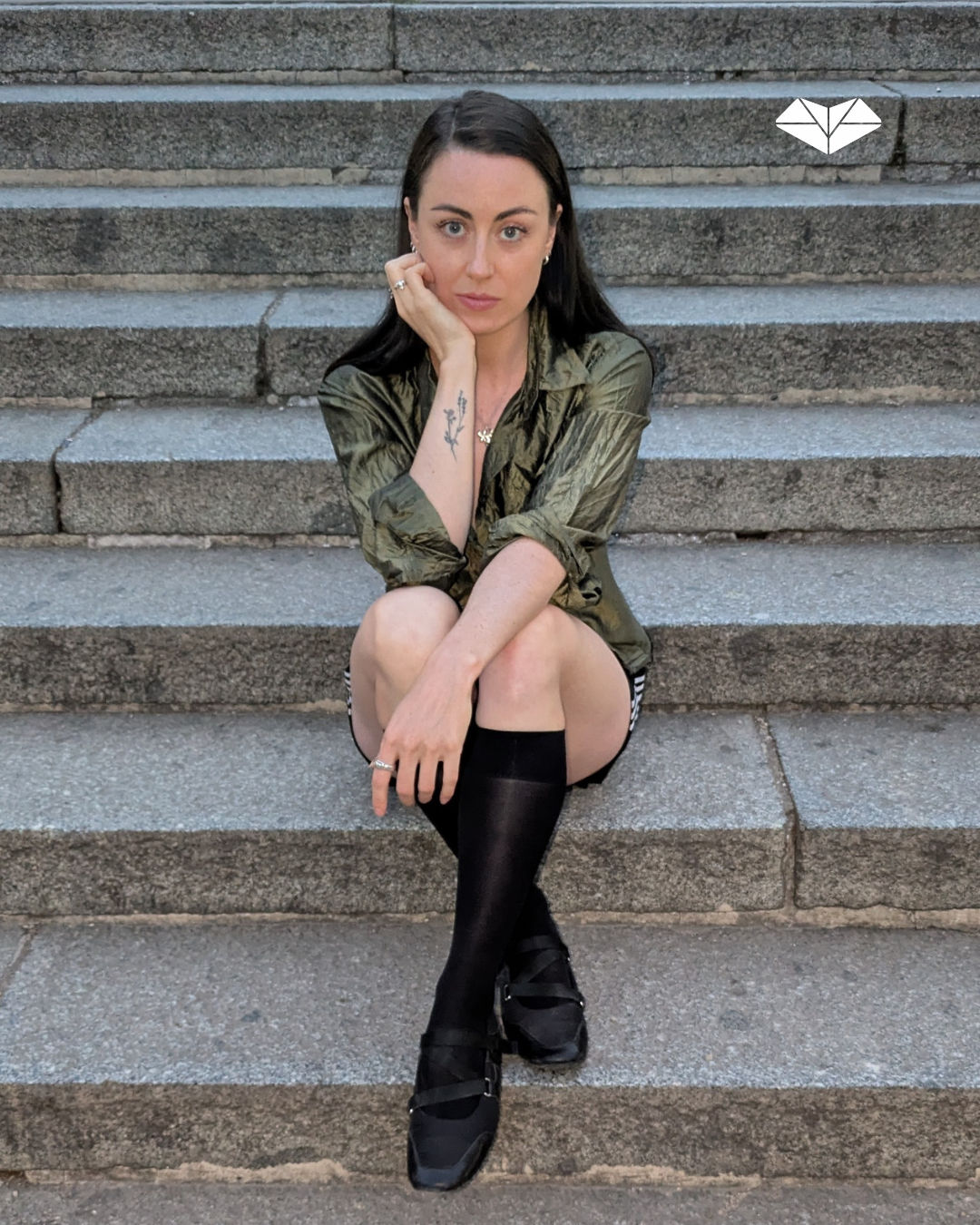
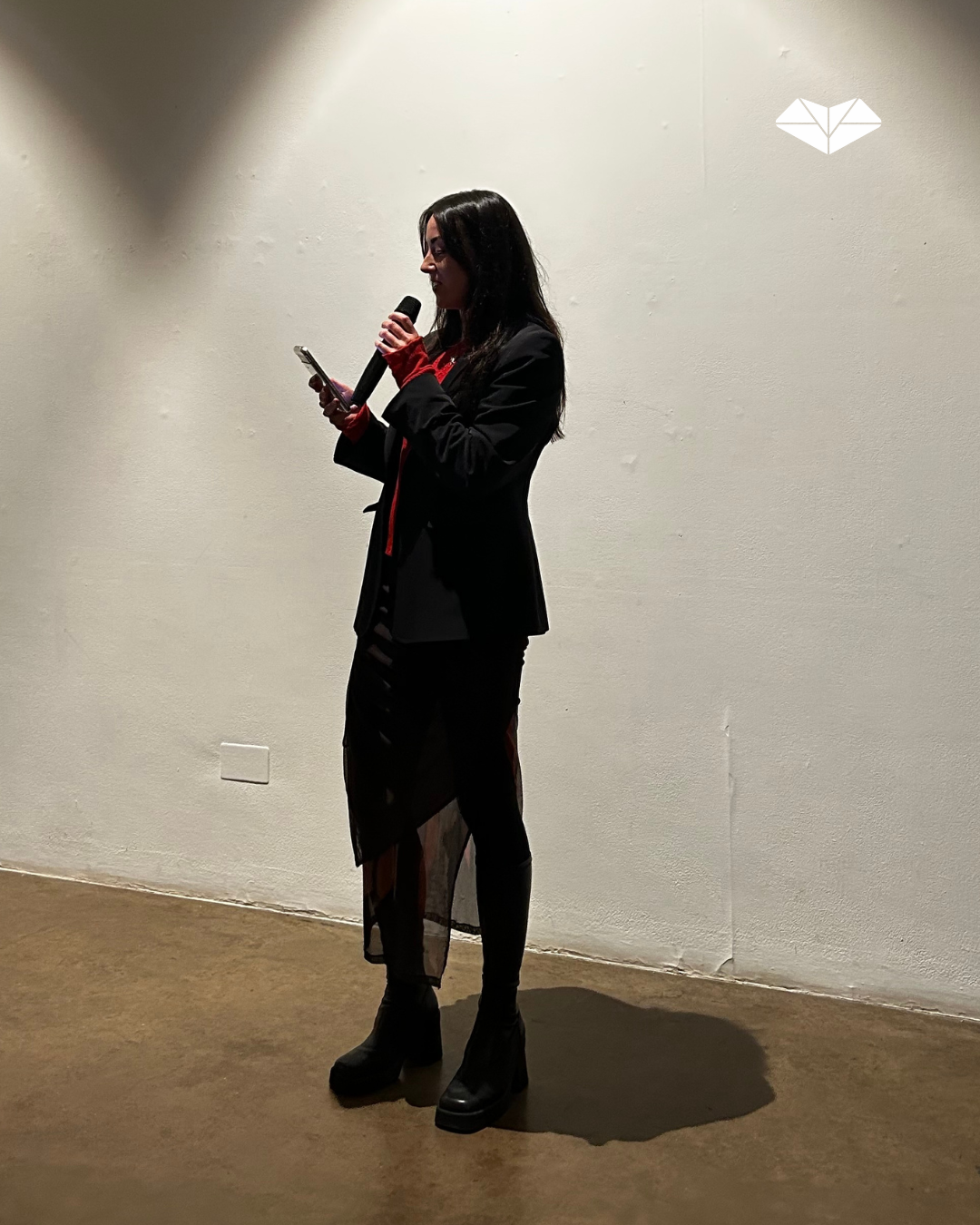
Isis O’Regan on Music PR, Cultural Strategy and Building The Sugar Factory

Isis O’Regan is the founder of The Sugar Factory, a creative communications and strategy agency working across music, art, film and technology. Since its inception five years ago, the agency has worked with clients including Tate Modern, Somerset House Studios, Warp Records, Erased Tapes, One Little Independent, AD 93, ICA London, London Short Film Festival and Scottish Queer Film Festival.

Founded with a focus on bespoke strategy and culturally engaged storytelling, The Sugar Factory operates across digital, print and broadcast PR, brand development, strategic consultancy, partnerships, crisis communications and cultural advocacy. Embedded within independent and experimental creative scenes, the agency is known for supporting artists, institutions and projects working across contemporary culture.

What is the role of the publicist? What’s a day like working at TSF?  

The role of the publicist in the creative sectors is essentially to be the guardian and amplifier of artistic expression. We are storytellers, and it’s our job to connect our clients' work and ideas with a variety of audiences and with as much exposure as possible. There isn’t really a one-size-fits-all approach as we work with record labels, cultural institutions, film festivals, brands, start-ups, and independent artists. Our idiosyncratic thread is quite simple; we support bold ideas that challenge convention. Pushing for positive change in the arts is a key pillar of The Sugar Factory’s work. Otherwise, what is the point? 

The landscape is ever-changing, so we have a Swiss army knife of skills, which mirrors the type of people we work with, too. We offer traditional media campaigns across digital, print, broadcast and social media.

As well as other essential elements to PR: identity development, crisis communications, partnerships, strategic consultancy, ambassador and influencer collaborations, plus content ideation and creation and editorial direction. We can help bring out key messaging and the visual and ideation that accompany any idea or project. I also host guest lectures and mentoring now and again, and have appeared on panel discussions for my insights.

Every day can be different depending on campaign cycles, but Lily and Jo, my fantastic colleagues, and I will always start the week by dissecting news and trends and forecasting for what we think is around the corner. A big bulk is the actual pitching to the media, and the pipeline for it to be published. It’s a very meeting-heavy and social career in general. A big perk of course is attending as much culture highlights as possible to stay in the know. It’s a dream job for some.

How did you decide when it was time to carve your own path and start The Sugar Factory?

I had been at a couple of great agencies before and carved out a particular niche representing boundary pushing artists, events and venues before I started The Sugar Factory in 2021.

I’m going to shout out Elspeth Merry, who runs The Artists’ Way Agency, for being instrumental in encouraging me to begin my own company. Having someone I looked up to giving me that nudge was needed. I wanted to keep growing in this area of multi-hyphate everything.

While I was on the phone with her, talking about dreams for my next steps, walking through London Fields, I coincidentally bumped into an instrumental player in the arts who I had worked with briefly years before. So, of course, I had to say I’m starting something exciting, and it led to them becoming one of my first clients at The Sugar Factory. It was a huge opportunity that solidified what I do and offer. Serendipity, in my opinion, can’t be ignored. 

There are clients I have been working with since my career in PR began, and they came along for the ride. They include Somerset House Studios (whom I love and are turning 10 this year!) and the iconic Warp Records.

I champion those who are steadfast in their craft and making a difference in the arts, whether in a particular genre or through new technologies. Is it trite to mention the zeitgeist? I don’t care, our clients are really shaping it. It’s special, and we take it seriously.

Our current projects include the Tate Modern’s 2026 Infinities Commission, Jenkin Van Zyl’s new exhibition Enclosure, james K on AD 93, Laura Misch on One Little Independent, a fun art discovery app called gowithYamo, plus some exciting projects to be announced soon. 

The name of the company comes from a beet factory that once stood in my hometown of Tuam, Co. Galway. I always loved the grittiness of something so industrial, making a saccharine product; I love dualities and contradictions. Apparently, when you’re standing near a sugar factory, and you stick your tongue out, you can taste the sugar on your tongue. Mysterious, omnipresent - like PR!

After an intense or difficult day, how do you properly switch off or reset?

I was actually diagnosed with an autoimmune disease recently, so downtime is a non-negotiable. I know I’m meant to say yoga, fresh air and the like, which is true! But a glass of red, a cig and chatting shite with a loved one has its own particular healing properties. Having my own artistic practice is probably the main thing that keeps me sane outside of any work stresses.

I write a bit, and I make soundscapes compositions, a mix of field recordings and synths. I am in love with a synth called the Motor Synth MKII - the inner mechanics are so noisy the wheels scream, creating these odd harmonics. It’s mental.

I’ve been hogging it at the Glasgow Library of Synthesised Sounds. I’m a proud member! I adore radio as an outlet, and have a homophonic travelling series called Éisteacht Aisteach, which means “weird listen” in Irish. Resident Advisor said it’s sometimes eerie, sometimes sensual, and that’d be spot on. It’s R&D for my own soundscapes; it might be based around a specific theme or a text.

What’s something you wish someone had told you earlier about sustaining a long-term career in music and culture?

Get a good accountant, be financially literate, set your rates and boundaries, and don’t let anyone take the piss.

What are you listening or reading (or both) to at the moment?

Reading: Cronenberg on Cronenberg by Chris Rodley. I’m a big fan. Also constantly dipping in and out of Clarise Lispector's Aqua Viva - one of the most incredible books I’ve been gifted. It’s a sliver of a book, but it’s taking me a while to get through it; it causes me to hardcore daydream. Not in a bad way, it’s just that hypnotising with all its lust and lunacy. Audio book: Revelations: a warts and all mammoth of an autobiographical account of Francis Bacon’s life. Salacious, too. 

Listening:  Streaming on repeat: Magnetism by Drew McDowell and Kali Malone, Lotto by They are Gutting a Body of Water and Neight Riegn by Arooj Aftab.

Physical: have a gorgeous compilation on Somewhere Press titled The Black Hill, The Glass Sky. I love a tape.


Isis O'Regan on Instagram | The Sugar Factory Website

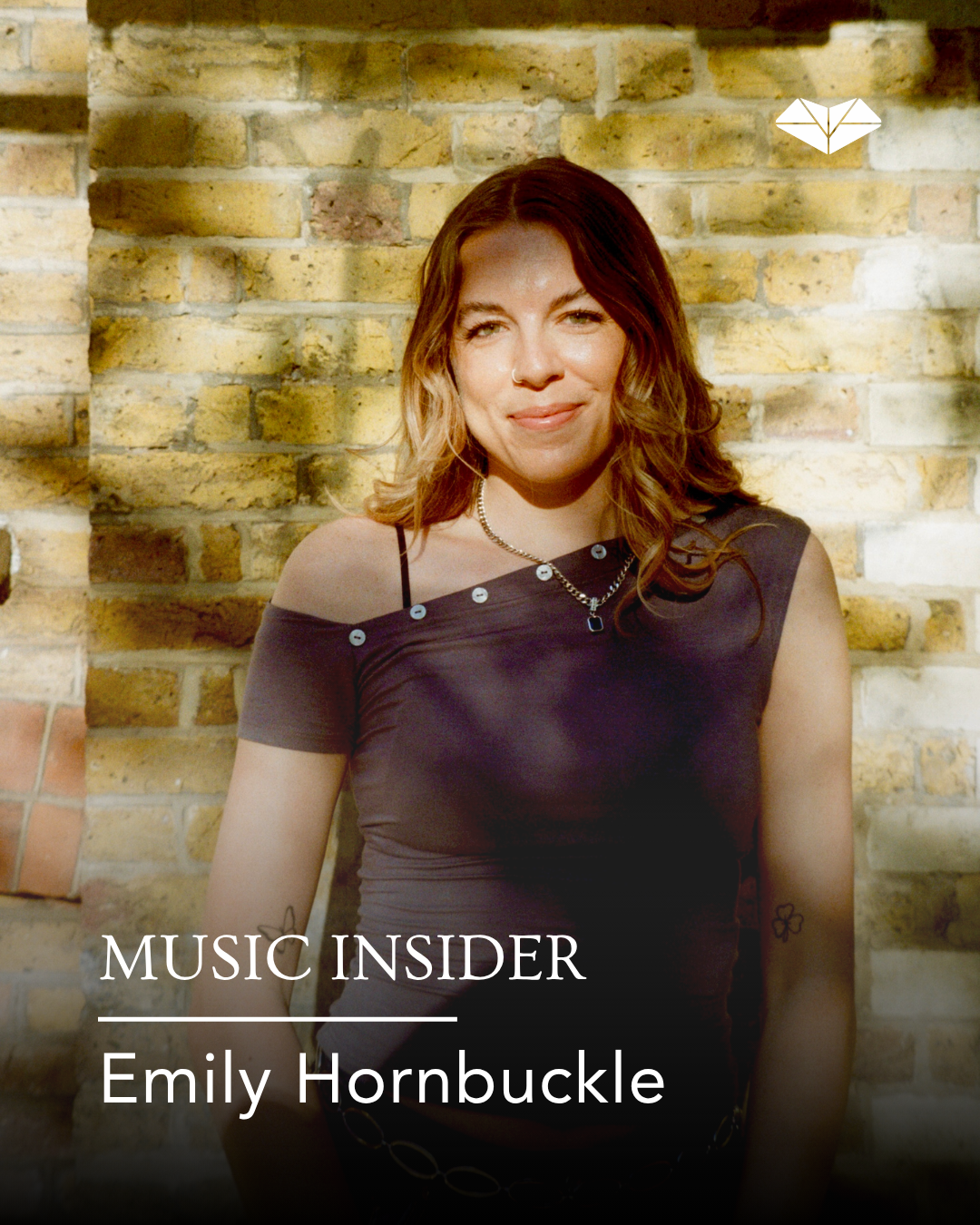
Artist Manager Emily Hornbuckle on Artist Development and Long-Term Careers in Electronic Music

For Emily Hornbuckle, artist management came after years spent working across live music, festivals and grassroots shows. Before launching Charm alongside Cali McKinney in January 2025, Emily worked as Senior Events Coordinator at Vision Nine, contributing to major UK events including Boardmasters, NASS and BBC Introducing Live, while also programming independent gig nights across London featuring artists including Olivia Dean and Goat Girl.

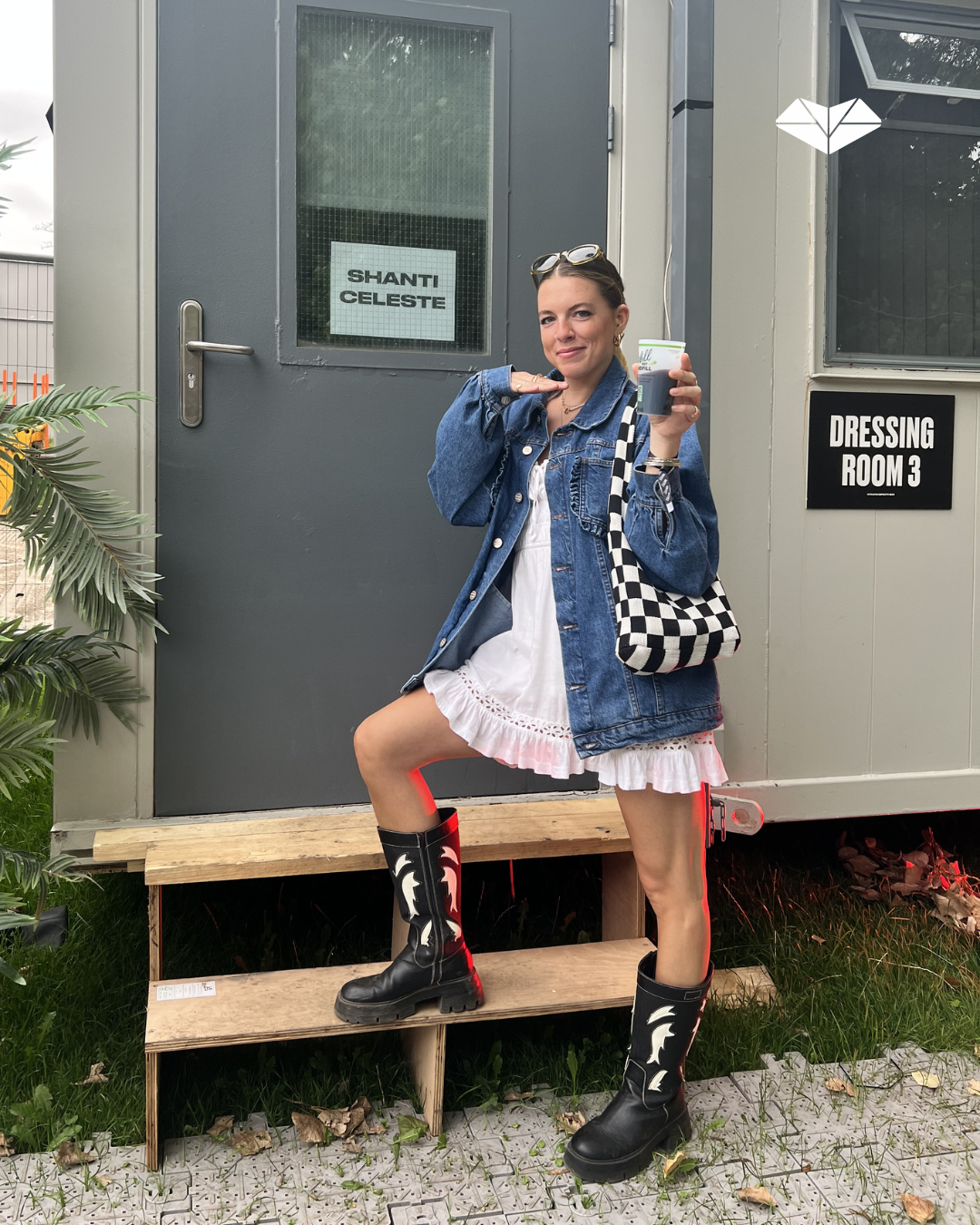
After moving into artist management at One House in 2022, Emily went on to co-found Charm, an artist management company rooted in electronic and underground music culture. Today, the agency works with artists including Shanti Celeste, Call Super, Surusinghe, Lulah Francs and James Rand, while also representing CCL and studio20. Alongside day-to-day management and long-term artist strategy, Charm has expanded into events through its Seave series, which launched at Next Door Records Two with Leeds band HONESTY and support from studio20.

This year also sees the launch of Charm’s new mix series, featuring artists Emily and Cali admire, including Sarkawt Hamad and T90s, alongside longer-term plans to develop the company further through future label projects and continued events programming.

How did you get your start in music?

My very first job in the music industry was working as a production & artist liaison assistant for SC Productions based out of Cardiff in 2018 between my second and third year at university. I moved there on my own, all my friends were working in hospitality back in Cornwall but I knew the world I wanted to get into I needed to get some experience before leaving uni so took the gamble and made the move to Cardiff for the summer to work on a bunch of shows.

My first show was working on a Stereophonics show at Cardiff City Stadium as a site office assistant where I literally learnt everything there was to know about building a temporary site from Heras fencing to track mats. After that I worked at Cardiff Castle (Pete Tong + the heritage orchestra, Catfish and the Bottlemen), Parc Areas with Paloma Faith. The second half of the summer working on the artist liaison team and advancing Bloodstock festival which gave me my first real insight into being across a project from a more planning & delivery perspective (as well as a free tattoo from the tattoo artist we’d booked for the artists!)

My final show with SC was working as the artist liaison office manager at Creamfields, I would greet every artist, take them to green rooms, organise transfers to and from stages. I was already interested in electronic music from living in Bristol for uni and would regularly go to Motion, The Love Inn, Crofters rights and so this show really cemented the fact I wanted to work in electronic music. A friend of mine was the logistics manager at Motion and knew I’d been working over the summer and offered me a day or 2 a week to support him advancing shows at the club every week during its in:Motion club series which I loved.
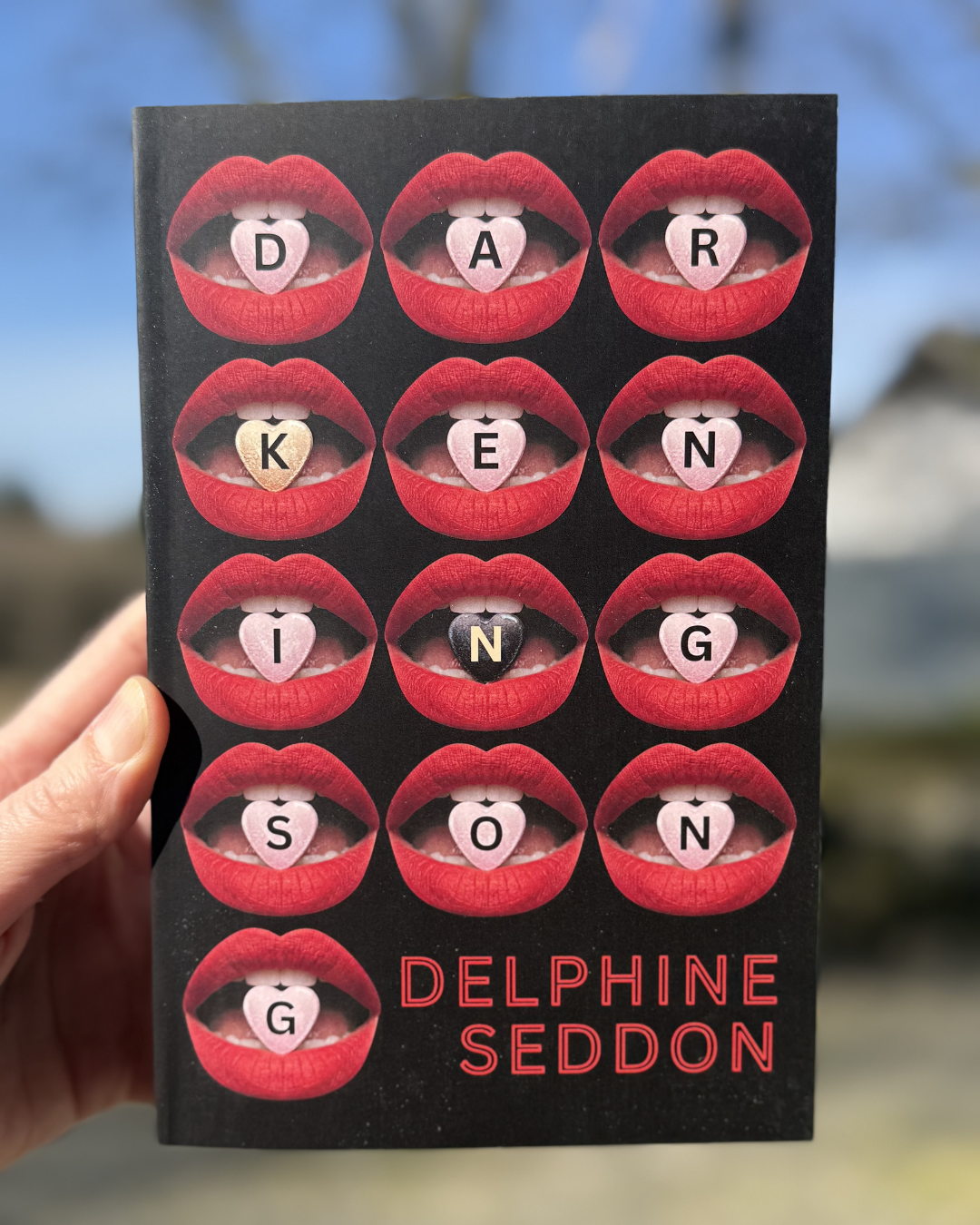
At Boardmasters + NASS (RIP) I also started as the Events Management intern and progressed over the 3 years to be working alongside the festival director to produce Boardmasters, a 60,000-cap festival as well as navigating it through covid… probably one of the hardest jobs I’ve experienced to date but the pay-off when a show like that comes to life is unreal — you see all the hours you’ve put in all year, then it’s over and you go again! This job taught resilience on another level which I took with me onwards to my next venture in management.

I made the move into artist management at One House in 2022, through which I assisted Sandy Marris his roster, and fast forward to today, we’re still working together on a couple of artist projects. At the time One House was a 360 agency with bookings, management and a record label in house, I learnt so much from my time there across all the divisions and the first few years were full of learning and absorbing what was going on around me both at the office and outside at gigs.

One House is where I also met my now business partner Cali McKinney, very quickly Cali, Suze Surusinghe (an artist we now manage full-time, but who was a manager at One House at the time) and I became close friends. My first week at One House was also Suze’s first week being managed by  One House, so I happily became part of that team from day one.

I was fortunate enough to start my career in management working with artists across different points of their careers, with Suze everything was a first together - first EP released, first press coverage, first radio plays etc which is the best feeling to see achievements roll in like this.

With more established artists like Shanti Celeste, the focus is on continuing to build and develop projects like with Club Celeste London, we are producing the 4th edition this year at The Cause and are so proud of the space we’ve created with the team. We have over 3000 people attending and over 50% of the audience is female identifying, it’s a key date in the calendar we all look forward to working on.

charm was born in January 2024 with Cali McKinney, it began because we wanted to run gigs together and then it U-turned into us starting our own company together. I had never envisioned going freelance, I’d been employed since my first job at 14 but just felt like the right time to go out there and start something of our own.

We signed some new artists to the roster and our first year was a whirlwind but so motivating and liberating, into our second year we are focussing on what we want to charm to be and begin to develop our brand through our charm curates series - watch / listen / read / visit recommendations from us and guest DJs who provide a 1 hr mix as well for us. Secondly, the focus is launching the label, autumn 2026 watch this space.

Fast forward a few months I met Sophie Bradley who was the A&R at VG at the time, she’s now one of my best friends & couldn’t be more thankful that our paths crossed during this time.

We worked together to produce the VOCAL GIRLS launch show at Moth Club in October 2021, we booked Olivia Dean who I’d been a huge fan of since finding her in late 2019 and was the first person we’d suggested to book.

She was the last gig I went to before lockdown Off the Cuff in Herne Hill for an EP release she did and now on the other side of covid we had booked her for our own show. The show sold out with double the venue capacity on the waiting list which was only a sign of what became and now she’s sold out 6  O2 Arenas in London!

After that we continued to do various gigs across the year Molly Payton at Shacklewell Arms, Pixy at Windmill Brixton, and curated a stage at The Great Escape. I loved every moment of it and the fact I was doing this outside of my current job showed me a new side to working with artists more closely. The feeling of being a tiny stepping stone in someone’s career was the best feeling and the first time I felt that I could do this as a job not as a side hustle.

You’ve worked closely with artists at very early stages. What do you look for beyond the music when deciding who to support long-term?

I feel very fortunate that the majority of my roster that I’m working with now is who I began my journey with in management (Call Super, Shanti Celeste & Surusinghe).

When we started charm I started working with James Rand & Lulah Francs too.

The majority of my roster are touring DJs & producers, and what’s exciting is that the creativity doesn't stop there; Call Super is also an artist, in 2023 alongside Call Super’s album we announced an an art exhibition called ‘Tell Me I Didn’t Choose This’ at St.Marys Church on Bourne Street, London where we held a week long exhibition with paintings it was part of a wider project with the album around self reflection and other themes of the album. 

With Surusinghe we launched ‘Drifting’ a music blog & community online as well as starting her own events. On the community side one thing we do is a monthly Zoom call we call a music ‘book’ club where we talk about an album once a month with people from the community. So far we’ve done, Nick Leon’s, Erika Decasier, YWH Nailgun and more! It’s so fun to connect with people who love music in that way. 

With Lulah Francs, what was inspiring about our early chats together was that first and foremost she’s a singer, and feels most comfortable writing lyrics and singing and has the ambition to be in a live band one day. Something we have been working together for over a year now so watch this space!

Overall, what draws me in is the wider creative world an artist wants to build, the projects beyond the music, and the ambition behind them. What's most exciting to me is where I can add value in these other projects, and creatively they're some of the most rewarding.

On a personal level there needs to be a level of compatibility between us working together, it's an equal partnership between manager and artist. You'll talk to each other most days so there's a level of personal relationship needed, and being able to align on communication style. It's not a one size fits all so being able to adapt with every artist is key. Equally, it's not an easy industry to be in, as managers we can only provide as much value to your career as the artist is willing to put in alongside us.

For artists trying to build sustainable careers right now, what’s genuinely worth focusing on and what’s just noise?

There is a lot of noise out there, especially online where people are projecting what you should and shouldn’t be doing as an artist which I can imagine it’s very overwhelming for not just emerging artists but all artists.

The scene is constantly changing, trends are shifting, and social media has a big influence on these and how quick things can move. I don’t think social media is all that bad though, it’s part of our everyday lives within this industry. The era of the influencer content seems to be fizzling out and people are craving authenticity and community online more than ever. Keeping true to what your own creative interests and passions are is what will cut through all the noise. 

Being aware of current trends is important but you don't need to change who you are as an artist to fit the moment in time. If you can find a way to utilise what's trending in your own voice as an artist then go for it, but don't force it. There's plenty of artists out there who are 'breaking through' but have been grafting, touring, producing records for years and have stuck true to what they believe in. It's easy to look at someone having a moment and assume they came out of nowhere, but there's almost always years of work behind it that just isn't visible online.

Through Charm, you’re building something that goes beyond management — events, a mix series, and potentially a label. Why was it important to create a wider ecosystem rather than just a roster?

Genuinely being able to build something outside the roster is so we can work with artists we are fans of in a different capacity to management. With the charm curated mix series for example this is purely a space to showcase artists we are fans of. Some we may know already, some will be completely new relationships, and if we are opening doors for artists to showcase their talent to more people it’s only a positive thing.

We’d love one day to be able to become a platform that has influence like so many others like Illian Tape or Dekmantel podcast and others!

For the label, similar to the mix series the aim is to be able to work with artists within a different capacity as well as across other genres. Cali & I originally wanted to run live gigs together because we both love bands as well as club music and would often go to gigs and say why don’t we do this.

That’s how ‘Seave’ began which was our first gig night where we had HONESTY headline & studio20 support, caveat to my previous point on us working with artists in a different capacity to management, Cali now manages studio20. I think it’s an amazing opportunity to work with someone because you’re a fan of them and you never know where it might lead. We hope the label can not only showcase club music we love but bands too, naturally the label will have an electronic overarching genre to it as it’s what we love and know best. We have already started plans for our first few releases, autumn 2026 watch this space!

Overall, it’s important to us not only from a passion and creativity point of view but we want charm to grow into an established company within the industry.  Would love to start bringing people into our ecosystem and collaborate together to make it grow beyond management.

What’s been inspiring you creatively lately, both inside and outside of music?

My semi new years resolution was to go see more band gigs, I can often get swept up with work shows that there’s less space for me to go to see new music / artists. I find this super inspiring, whether it’s supporting friends bands or recommendations from friends, there’s no better feeling than watching an amazing gig and walking away like you’ve witnessed something special. Also, knowing the other side of promoting shows and how much work goes into them no matter the size of the room it’s always the best feeling seeing it come to life, from 300 cap rooms at MOTH Club to 3500 people at The Cause.

I’ve always loved taking photos on film cameras / digital cameras from a young age, every year I have a new camera on go. The majority of the time they’re photos at festivals, gigs of my friends, artists just a nice way to create memories that feel more real with a film camera. I definitely prefer being behind the camera than in front of it! 

With charm we have recently started a ‘charm curates’ series where Cali & I give monthly recommendations of what we’ve read/ watched/ listened and recommend to visit. It’s fun being able to share that side of us through charm that’s not just through music but our personal tastes. 

Women doing great things in and outside of the industry I work in is inspiring whether it’s amongst my friends, family, artists etc. Sophie Bradley, who I mentioned is a close friend, is juggling a new life in motherhood as well as booking your favourite artists at Lost Village festival.

My Dad is one of my biggest inspirations in the work I do, he’s got the best work ethic of everyone I know, and he’s definitely instilled that in me. He’s travelled the world in the work he does and showed me at a young age there’s a whole world out there you can explore when it comes to your work. I’m inspired by my friends, family and creatives I see and work with every day to remind myself what I’m doing is having an impact.

Shoutout to everyone I work with everyday, Sandy Marris who I wouldn’t be in this job if he didn’t take a chance on me! He gives me perspective on everything I work on, not just with the artists we still work with now but other projects I’m working on.

This industry can be intense. What’s your way of resetting or unwinding when things get overwhelming?

As much as I can do leaving the job at the door when I get home, it doesn’t always happen of course. Now that I’m working for myself I can have more flexible working hours.

I’m most productive at the start of the day and the end of the day and try to get home when my partner does so my brain switches off for a bit. I may check back in after this but try not to unless urgent or an especially busy period.

I’m still learning everyday how to manage my emotions in and out of work, especially if I’m feeling overwhelmed or when imposter syndrome starts to creep in and then the anxiety I get about feeling all of those things, and then the classic case of questioning yourself!

It’s a personable job, you talk to people all day everyday which can be exhausting especially if you have other things going on in your life outside of work. My work consists of late nights on the weekends so my weekdays are so precious, Monday to Wednesday / Thursday I’m pretty strict on keeping those evenings free of plans to just be at home, rest & regain the social battery. Trying to eat well, not drink too much, going to the sauna all helps me keep a clear head entering the work week.

Taking time off! Time flies in this job and it will be months before you think wow I’ve not had any days off that haven’t been for work / travelling. I always try to get a week back home in Cornwall before summer kicks in and usually the same afterwards in September / October time. You are your best self when you can take a rest and switch off.


Emily Hornbuckle on Instagram | LinkedIn

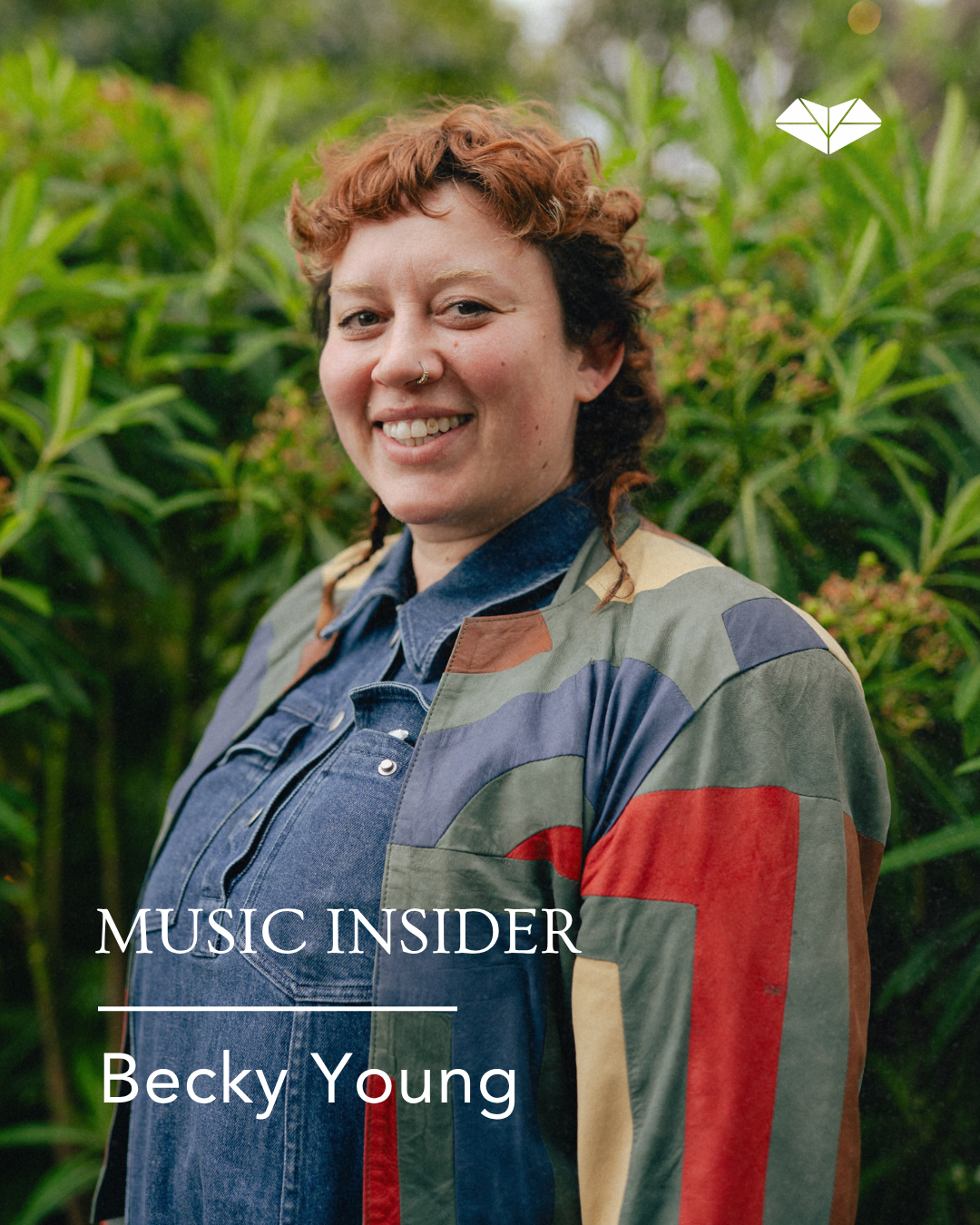
Cultural Strategist Becky Young on Building Artist Programmes, Community and Work at EarthPercent

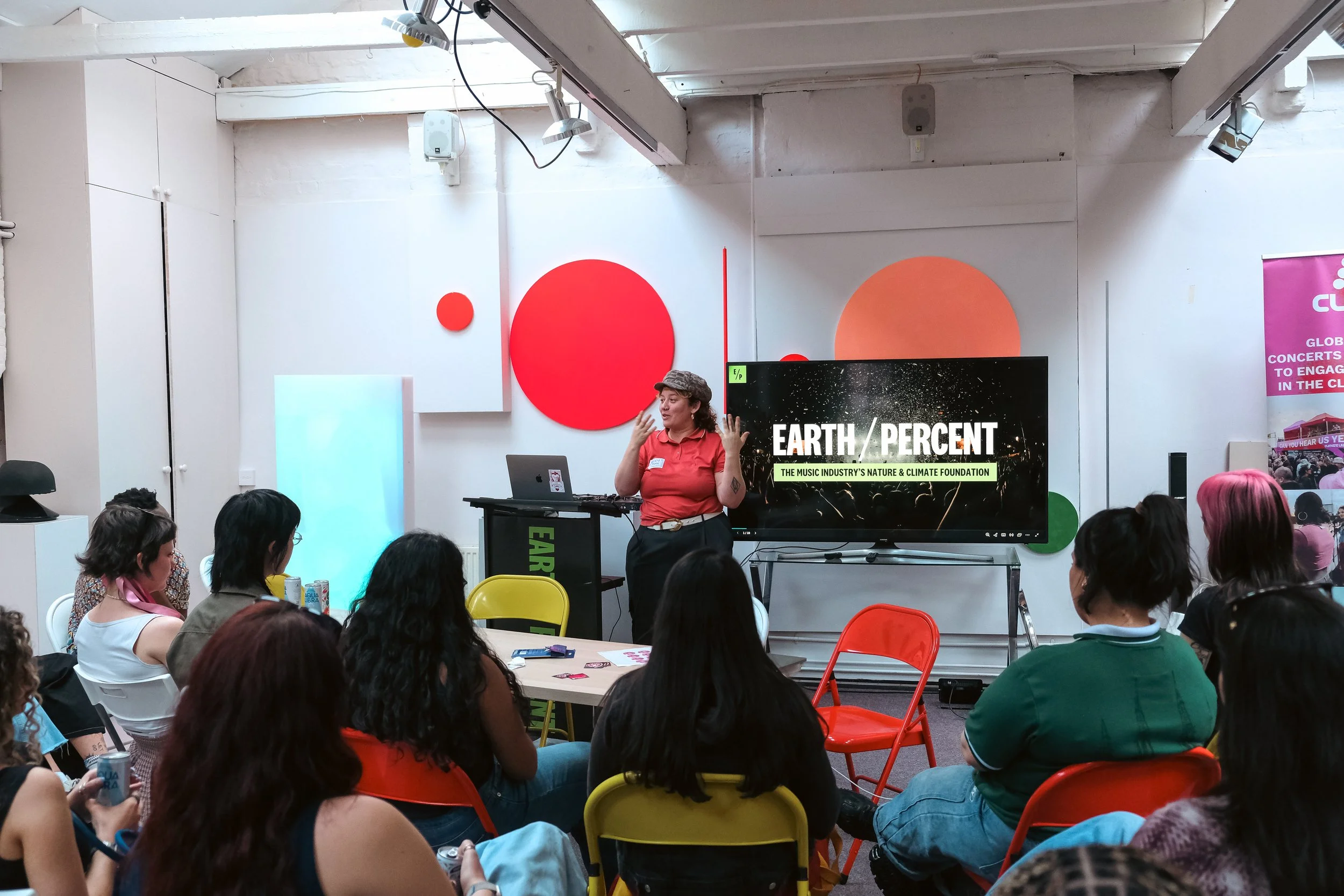
Becky Young is a cultural strategist, community builder and producer working across music, culture and social impact. She is currently a Programmes & Strategy Consultant at EarthPercent, the environmental charity co-founded by Brian Eno, having previously served as its Head of Operations & Community.

At EarthPercent, Young works across programme development, strategy and artist community-building. Her role has recently shifted as the organisation enters a new phase, with Young helping to pilot a new artist development programme and support the growth of its artist community. As part of a small team, her work also stretches across operations, partnerships and communications, moving between long-term planning and the practical work required to deliver projects.

Her wider career spans grassroots music, festivals, nightlife and community organising. She has produced events for the Association of Independent Festivals, Bootstrap Charity and Mothership Group, and previously founded Anti Diet Riot Club, a body-positive community project that organised workshops, meet-ups and the UK’s first anti-diet festival.

Young’s connection to music also extends beyond her professional work. Growing up in a creative family alongside her younger sisters, singer Lola Young and theatre actor Meimei Young, she was surrounded by music and performance from an early age. She also DJs as Sloppy Spice, playing music rooted in London rave sounds and influenced by underground scenes and queer-led spaces.

Across her work, Becky is particularly interested in supporting women and marginalised people in music to build sustainable careers, stronger communities and greater influence within the industry.

What does a typical day at EarthPercent look like?

My role has just shifted from working as Head of Operations & Community to working part time as a Programmes & Strategy Consultant so days are a little different than usual right now, which I have to say I’m enjoying, as I really like variety. 

Either way, I act as a kind of a bridge between a lot of the different work streams - strategy, designing and delivering our programmes, process building, operations and even comms - so what’s “typical” depends on what is priority at the moment. However, same as my colleagues - we’re a small team! - we all absolutely have to get our hands dirty with tasks of all sizes.

One minute I could be writing and sending partnership agreements, the next having meetings with incredible artists and creatives who want to collaborate, then setting up the space for an industry gathering at Brian Eno AKA our co-founder’s studio. Working at a relatively new charity means getting stuck in and being humble about it!

Right now, EarthPercent is at an exciting moment of change and I’m helping pilot a new artist development programme and resourcing the growth of the artist community we work with. So I spend a lot of time working on the strategy and operational plan for this while trying to make sure I give myself some time to actually THINK and cultivate new ideas, rather than just answering emails which is so time consuming.

EarthPercent is working on some exciting projects with artists and the wider music industry. Are there any current initiatives you'd encourage our community to get involved with or support?

One of the most fascinating and effective initiatives EarthPercent is involved with is Sounds Right (a global multi partner project led by Museum for the United Nations - UN Live) for which we project manage all the music and artist elements of. In short, it launched NATURE as an official streaming artist on all DSPs so that when human artists want to feature the sounds of the natural world they can credit “NATURE” as featured on the track and redirect royalties to the Sounds Right Conservation Fund.

So they can literally use their music to support Indigenous- and community-led conservation of key biodiversity hotspots. It's on track to raise millions each year for nature protection and meanwhile impacting the global conversation about how we value nature.

For someone who wants to work in cultural strategy, community or programming, where would you recommend they start?

Put on your own events! Doesn’t have to be a party, or related to your profession in any way; it could be a panel talk, or a film screening, creative workshop, a meet-up of like minded people. It’s the fastest way to learn how you like to bring people together and how to create/nurture community.

In the work I do with EarthPercent and beyond, you need to know that convening takes many forms and how you build the relationships between yourself and the people who are going to make the programmes and partnerships happen is so, so important. The practical requirements of being in total charge of an event teaches you a lot, so start there. 

You've brought together communities around music, wellbeing and social impact. What's one thing you've learned about creating spaces where people genuinely feel they belong?

"Community" gets thrown around so much in corporate settings it's almost lost its meaning, but I've genuinely seen how powerful real communities are - how they nourish people, spark ideas and collaborations that wouldn’t have happened otherwise and create ripple effects that go way beyond just one person.

For EarthPercent, we’re noticing how in this time of deepening crisis, artists especially are seeking spaces and places that aren’t solely about furthering their career but connecting them with other artists who want to create art in response to the crazy world around us (as good art should!). 

From Anti Diet RIot Club to our Artists 4 Earth community, I’ve learned that one on one relationships are key (whether it's you or other members of the community having space to genuinely connect) and that everyone shows up differently. Some want to sit back, absorb, learn from others before they get involved.

Some want to be heard and contribute from day one. You need to create space for both these types of engagement, knowing that people’s energy and commitment will shift over time anyway. Treating the community as one-size-fits-all is a mistake; a community is a sum of loads of individual people with different needs. 

And honestly, it only works if you resource it properly. Community building takes real time and energy (and maybe funds), if you want it to be genuine and non-extractive!

You're also a DJ. How has spending time on dancefloors shaped the way you think about community and the kinds of spaces you want to create?

Dancefloors were (and still are!) a place of worship; I grew up Atheist and free parties, clubnights, raves, festivals…these were my temples - so much so I even spent my formative years going to DMZ night ‘Mass’ at St Matthews Church in Brixton! They showed me how complete strangers can move, sing, reach euphoric states together without needing much explanation or reason, and that that shared experience is very primal and very human which is why we seek it out.

They also taught me that ritual, awe, rhythm, play and of course music (and good or at least non-offensive lighting) are some of the potent ingredients for feeling connected, feeling belonging. All of this translates into community strategy too! 

Outside of work, what's been inspiring you lately?

The World Cup! I don’t follow or really care about national/league football but I get absolutely struck down with the fever when international tourneys come around (men’s AND women’s of course!). As someone who is obsessed anyway with festivals and bringing people together, it’s impossible not to love it.

I love the theatre of it, the stories of countries and fans crossing paths, the magic on the pitch, the way it interacts/crosses over with international politics, the memories made watching games in someone's garden or local venues/pubs that put show it (shout out the Old Nuns Head that hosted Foundation FMs world cup viewing parties, they were wild!) and the intense energy you feel walking about London before and after an England match. It’s entertainment primarily but also it’s been inspiring to me as I’ve started working on projects that use music and culture to fight divisive and hate-fuelled politics in areas of the UK - there’s was some really thought-provoking stuff happening in and around that tournament. 

What are you listening to at the moment?

I’m currently digging (virtually) and organising my tunes for sets at Boomtown - I’m playing the closing set at an art-punk, vermin-inspired cabaret and club venue called NACHTLICKER and so high-energy, silly vibes are on the menu. So anything from Tony De Vit, to JIALING, Henry King, KiKi, and POLO LILLI - a very wide spectrum of rave sounds basically. 

Also; on the flip side of my music taste… ‘wish you nothing but the worst’ by Jacklyn is a right earworm at the moment. Just released by an independent artist and Brit School friend of Lola’s - it's very dramatic and I can’t get it out of my head. 


Becky Young on Instagram | LinkedIn

Soundcloud

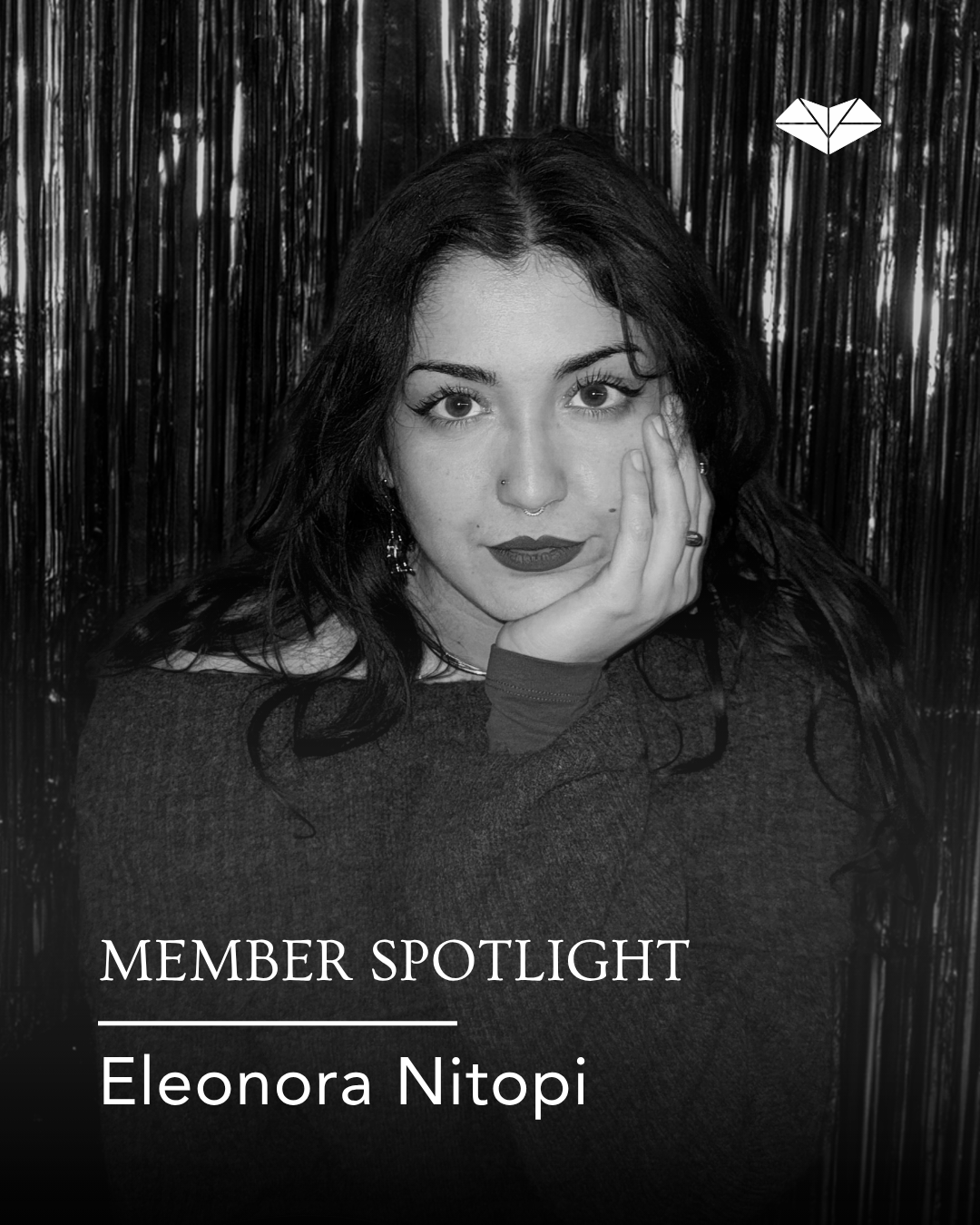
Eleonora Nitopi on Building a Creative Career in Music and Finding Your First Opportunities

Eleonora Nitopi is a London-based Art Director and multidisciplinary creative working across graphic design, photography, motion, and creative direction. Originally from Italy, she moved to London to study Art Direction at UAL, with the ambition of building a career in music and entertainment.

After recently leaving her role at Roc Nation’s Sports International team, where she worked across athlete branding, presentations, billboards, and event campaigns, she is now focusing more fully on creative work within music and artist development.

Alongside her background in sports and entertainment, Eleonora has been collaborating with emerging UK artists on album artwork, merchandise, and visual identity, translating music into immersive visual worlds. Drawing from both fandom culture and professional experience, her work explores how visuals can strengthen the emotional connection between artists and their audiences.

You had worked at Roc Nation on the Sports International team while collaborating with emerging artists. How have those experiences helped you develop skills that translate into the music world?   

I had the luck of starting my career in a company that intertwines sports, music and culture. Even if I worked in the sports team and didn’t deal with artists and music directly, there is constant collaboration across areas of the business. Roc Nation has an incredible track record on both the artist and athlete side when it comes to brand development, and being in that environment and seeing those strategies come to life up close, really taught me a lot about positioning in the entertainment business.

I think all the skills I learned while working on the sports team and the athlete side translate easily into the artist side: understanding talent, managing relationships at a high level, building personal brands and knowing how to make someone stand out. An athlete and an artist both have a story to tell, a fanbase to grow, and an incredible talent. 

When I started working with emerging music talent, I had on my side a creative skillset developed over the years, a deep understanding of fandom, and all the knowledge gained from working with professional athletes. Working on the athlete side taught me to always be strategic and intentional, and I carried those same principles into how I approach working with artists.

Many early-career creatives struggle to find their first opportunities in music. What practical steps helped you begin working with artists and building your portfolio?
Everyone who wants to work in the music industry has artists they love. Reimagining their existing visuals with your own spin is a great way to start building your portfolio. But if that's not your thing and you want to work on real life projects, there are so many talented young artists out there who would love to collaborate with emerging creatives.

Social media has made it so easy to connect and everyone is just one DM away. Music will always need visuals, so find a young artist whose world speaks your creative language and start making things together.

Don’t rely only on social media though, if you want to work in music and meet people in the industry, go where music is in your town. Don’t wait around music networking events, go check out open mics in your city and meet people in real life in a more relaxed environment.

You mentioned discovering shesaid.so while researching roles after graduating. What role do communities like this play in helping early-stage professionals navigate the industry? 

I think communities like shesaid.so are truly vital to this industry. Through this community I've met artists I now work with, collaborators and even new friends. It creates a space where everyone is on the same level, no matter how experienced you are. When you see senior people in the industry taking part in these communities, you know that they are the ones who genuinely care about the next generation of music professionals, and those are exactly the rooms you want to be in.

The entertainment industry can feel intimidating, especially when you come from a different country with no experience or connections. But in communities like shesaid.so, people are here to listen to your story, get to know you and see your passion, and that's where doors start to open!

Networking can feel intimidating at the beginning. What has helped you connect with collaborators, mentors, or artists in an authentic way?

The most important thing to remember is that anyone you connect with is just a person, with their own fears and insecurities, just like you. The key is shifting the mindset from "networking" to simply meeting people who do cool things and building genuine connections with them as people, not for what they do or what they can offer you.

I know everyone says it, but being truly yourself really does make the biggest difference. Be kind and humble, and never be afraid to let your passion show! 

Coming from a background rooted in fandom and audience culture, how has that perspective influenced the way you approach creative direction today?

Personally, I think it's all about the fans. My creative approach is to always put myself in the shoes of the people who created the campaigns, artworks and visuals that shaped my younger years. I imagine myself back in my fandom days and think about what resonated with me. Times have changed with new platforms and marketing strategies, but the way music connects artists, fans and communities never does.

Now more than ever, with all these conversations around where the industry is headed and how much fandom matters, it's important to remember that on the other side of each piece of work there is a real person who might find comfort, joy or belonging in that artist's world.

There's something really special about the bond between artists and fans, and when that is referenced creatively through an inside joke, or something that only their fandom would catch it is a moment of beautiful recognition that makes both parties feel understood. And that's what I try to hold onto when helping artists create their own worlds!

What is the most important lesson you’ve learned so far about building a creative career in the music and entertainment industries?

That unless you have the luck to come from a more privileged background, everyone you see at the top of the music & entertainment industry has worked hard for their spot. So when you take on all the free work, extra work hours after your 9-5 and ask yourself if it is worth it, it is good to remember that everyone you admire has been there and done that. 

What helps you reset or find inspiration when you’re feeling creatively stuck?

This is something I still work on, but it comes with the territory of being a creative. I'm big on getting off the screen and going outside, I love the outdoors and I draw from a lot of different art forms beyond my own practice, a huge example being theatre and art galleries.

I also try to look at everything around me as a potential source of inspiration, even the most mundane things. That said, there's a point where too much creative input becomes overwhelming, and when that happens the best thing that works for me is to step away entirely. See friends who have nothing to do with my industry. Go outside with no agenda. We as creatives are prone to getting trapped in our own heads, so I find it important to spend time with people who have no connection to my discipline.

What are you listening to at the moment?

BTS Arirang!!!!


Eleonora Nitopi on Instagram | LinkedIn | Website

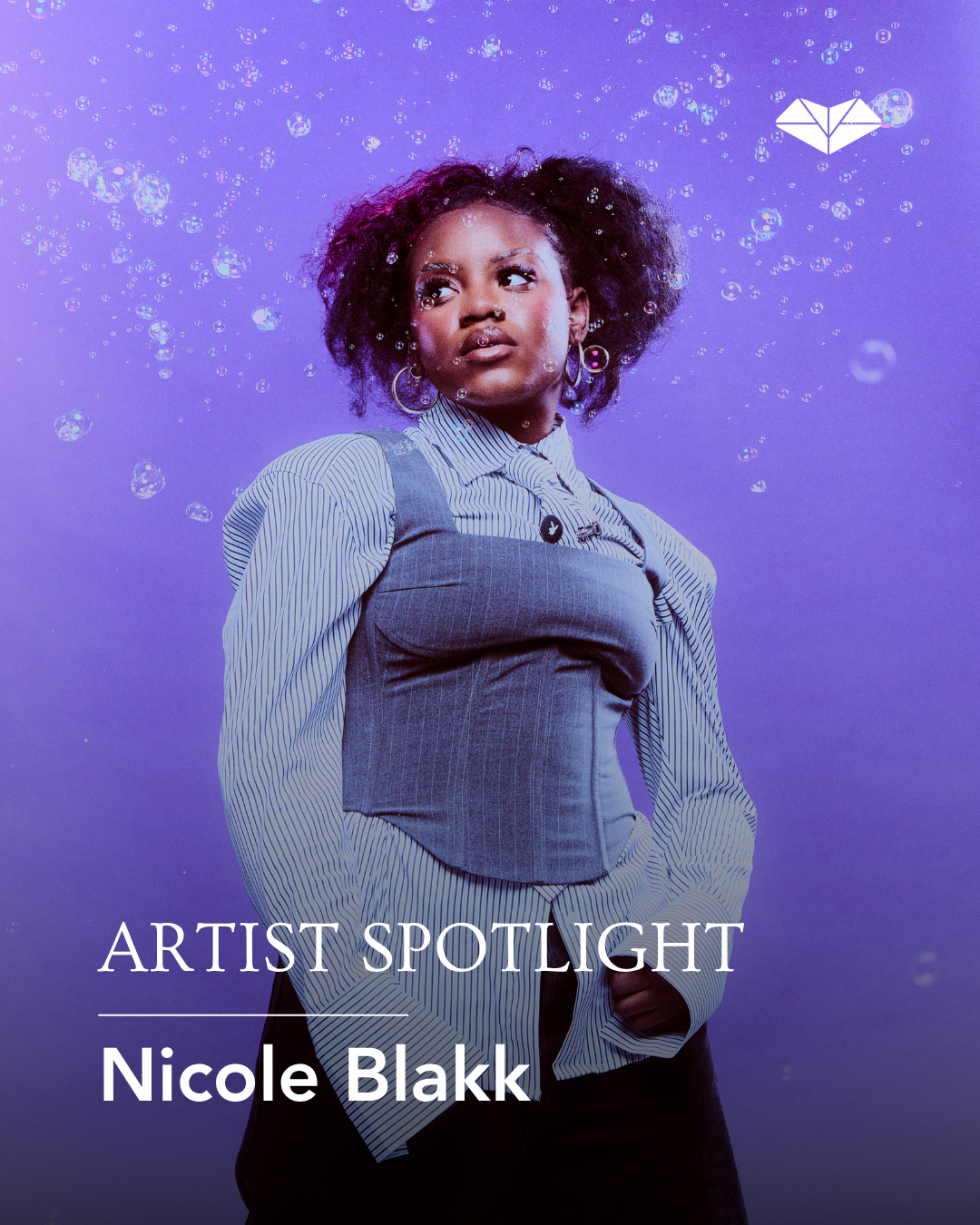
Nicole Blakk on Broke Love and Turning Awkward Dating Experiences Into Music

Nicole Blakk is a Watford-born rapper and singer-songwriter whose multilingual lyricism and soulful delivery across English, French and Punjabi are quickly turning heads across UK music. Blending sharp storytelling with melodic instinct and emotionally grounded writing, her music balances honesty, wit and lived experience in a way that feels both personal and immediately relatable.
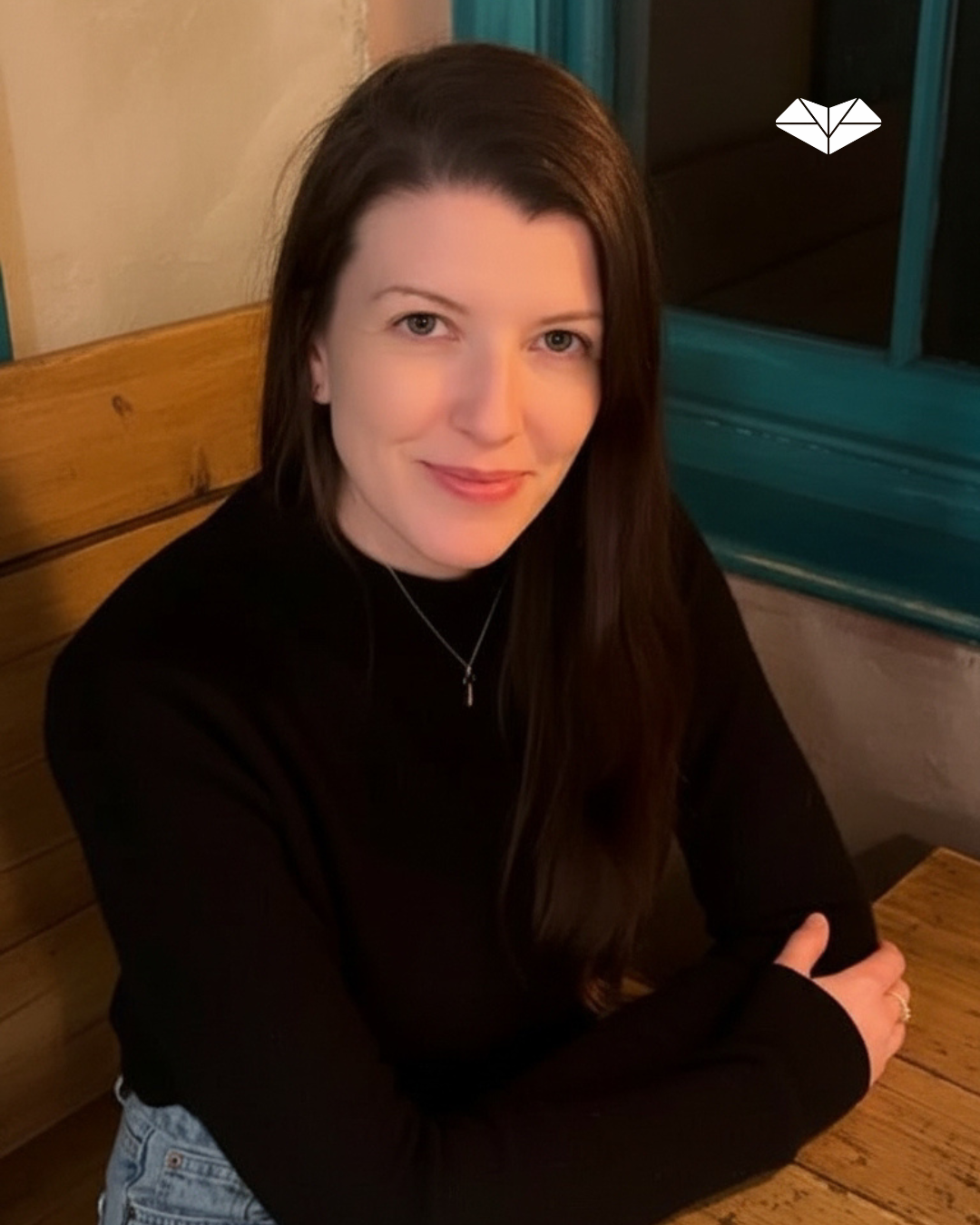
Over the past year, Nicole has steadily built momentum through viral freestyles, standout live performances, and a growing catalogue of releases that feel both personal and sharply observed. She recently appeared on Dave’s BRIT-nominated number one album The Boy Who Played the Harp, delivering a standout verse on “Fairchild”, while appearances alongside DJ Mak Ten, Red Bull freestyles, Glastonbury’s Shangri-La and SXSW showcases have further positioned her as one of the UK’s most exciting emerging voices.

Her latest single Broke Love continues that trajectory. Inspired by a painfully awkward date experience, the track transforms frustration into a witty but self-assured reflection on standards, boundaries, and modern dating culture. Set against a warm, lo-fi backdrop, Nicole moves effortlessly between melodic phrasing and incisive lyricism, capturing the kinds of everyday experiences that make her music resonate so widely with young audiences today.

What’s the story behind "Broke Love"?

It really did come from a place of pure awkwardness! I was out with this guy, he pushed through the train barriers and asked me to pay for his food when he’s the one who asked me out… I remember just sitting there like, "...oh."  When I got into the studio later, that phrase ‘broke love’ just kept sticking in my head, and we built the whole track around that specific energy of dating in this economy. It’s not a necessity - get your priorities in check before you date.

A lot of people discovered you through freestyles. Is that still a big part of how you create, or has your process evolved?

Freestyles are my roots and definitely how a lot of people have found me, but my process has definitely grown. I used to just jump on a beat and go, but now I’m much more intentional. I spend more time on the architecture of a song - the hooks, the bridge, and the overall concept - rather than just focusing on the bars. It’s about building a world now, not just a moment.

What do you enjoy most about making music, and what still challenges you?

What I love most is that "click" moment in the studio when a finished song sounds exactly like the feeling I had in my head. It’s like magic. The biggest challenge, honestly, is the consistency. Pushing through those days when creativity isn't just flowing naturally, and you have to actually *work* for the inspiration to kick in can be tough.

For artists coming up right now, what’s actually worth focusing on, and what’s just noise?

For anyone coming up: focus on consistency and your own lane. The "noise" is definitely the social media comparison game - looking at everyone else’s wins and feeling like you're behind. Don't chase the algorithm; chase the quality of your work. If the music is undeniable, the rest will follow.

What’s one habit or routine that’s really helped you improve as an artist?

One thing that really levelled me up was my routine. Having a healthy routine can be difficult with late-night sessions and eating junk and takeaways when you get in super late from the studio. I started intentionally doing earlier sessions, sleeping well and taking care of my routine. This helped me in so many ways, but it can be difficult to keep up. Once you get into it, you’ll see the benefits. 

What’s the most important thing you’ve learned about networking/building relationships in the industry?

The biggest lesson I’ve learned is that authenticity beats an elevator pitch every time. People in this industry can smell transactional vibes a mile away.

I’ve found that just being a cool, genuine person leads to much better collaborations than trying to use someone for a connection.

Build friends, not just contacts. I’ve made so many friendships, and these have then developed into amazing business relationships. Through having this mindset, I met my manager, and honestly, my life has changed for the better!

What’s been inspiring you creatively lately?

Just listening, I’ve been wearing my headphones less in public and truly just taking in the environment around me. There are so many beautiful things happening around us, and if we take a moment to just take it in, we will see and feel them.

Three things you can’t live without in your bag?

I never leave the house without these three:

  1. Lip gloss: obvs can’t have crusty lips

  2. White eyeliner for my eyebrows and lashes 

  3. And of course, my keys since they have both my house and car keys—I'd literally be stranded without them!


Nicole Blakk on Instagram & TikTok | More Links

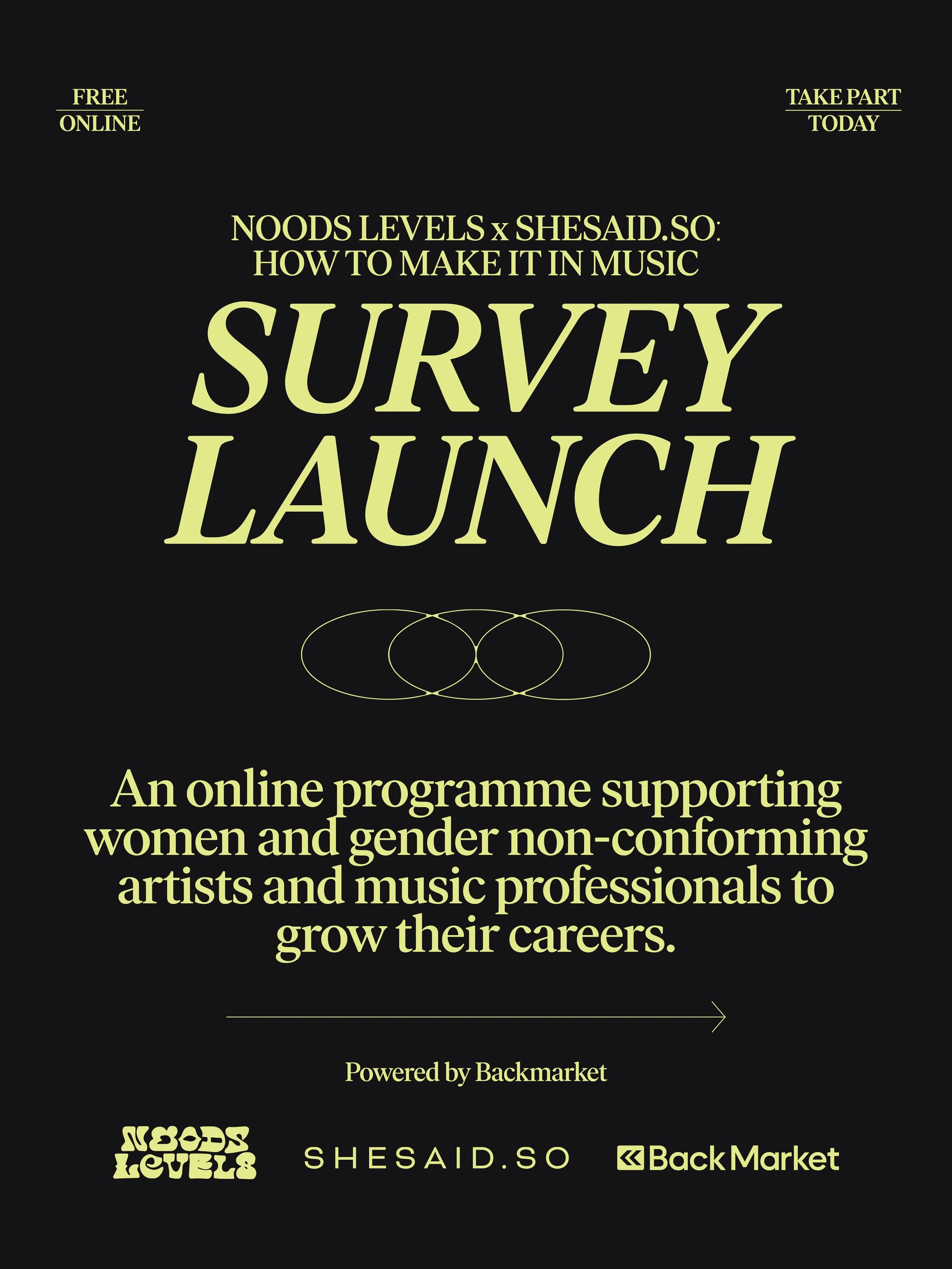
shesaid.so x Noods Levels: How to Make It in Music

A new online programme supporting women and gender non-conforming artists and music professionals to grow their careers.

shesaid.so and Noods Levels are developing a new online programme for women and gender non-conforming people working across the music industry  powered by Back Market.

The programme will focus on:

- Breaking down barriers to entering and progressing in the music industry

- Understanding gaps in access, knowledge and support across different roles

- Turning real experiences into practical tools, strategies and next steps

The programme will consist of three online sessions in June (open to participants globally), focused on key areas including sync and publishing, marketing and branding, touring, funding, and career development.

A short survey at sign-up will help us understand your background, challenges and support needs and shape the sessions accordingly.

Participants will be encouraged to attend all three sessions as part of a cohort.

Who it’s for:

Artists, creatives and music industry professionals at early to mid-stage, whether they are looking to enter the industry or already working in it, and want to build or grow their career or business, access support and resources, and expand their network.

Speakers

Speakers will be drawn from across our network, bringing relevant experience and perspectives from across the music industry.

A short survey at sign-up will help us understand your background, challenges and support needs and shape the sessions accordingly.

Take the survey HERE by 12th May (survey closes 23:59) to help shape the programme and secure your place.

More Info TBA | Got questions? Email Noods Levels at hello@noodslevels.com


About Noods Levels 

Noods Levels grew out of 10 years of DIY radio and community building through Noods Radio. What began as Sunday living room sessions evolved into a 24/7 global station, and in 2020 the not-for-profit arm was launched to support the next generation of creatives. Based in Bristol, it helps individuals and organisations build confidence, networks, and sustainable careers through long-term programmes and events.

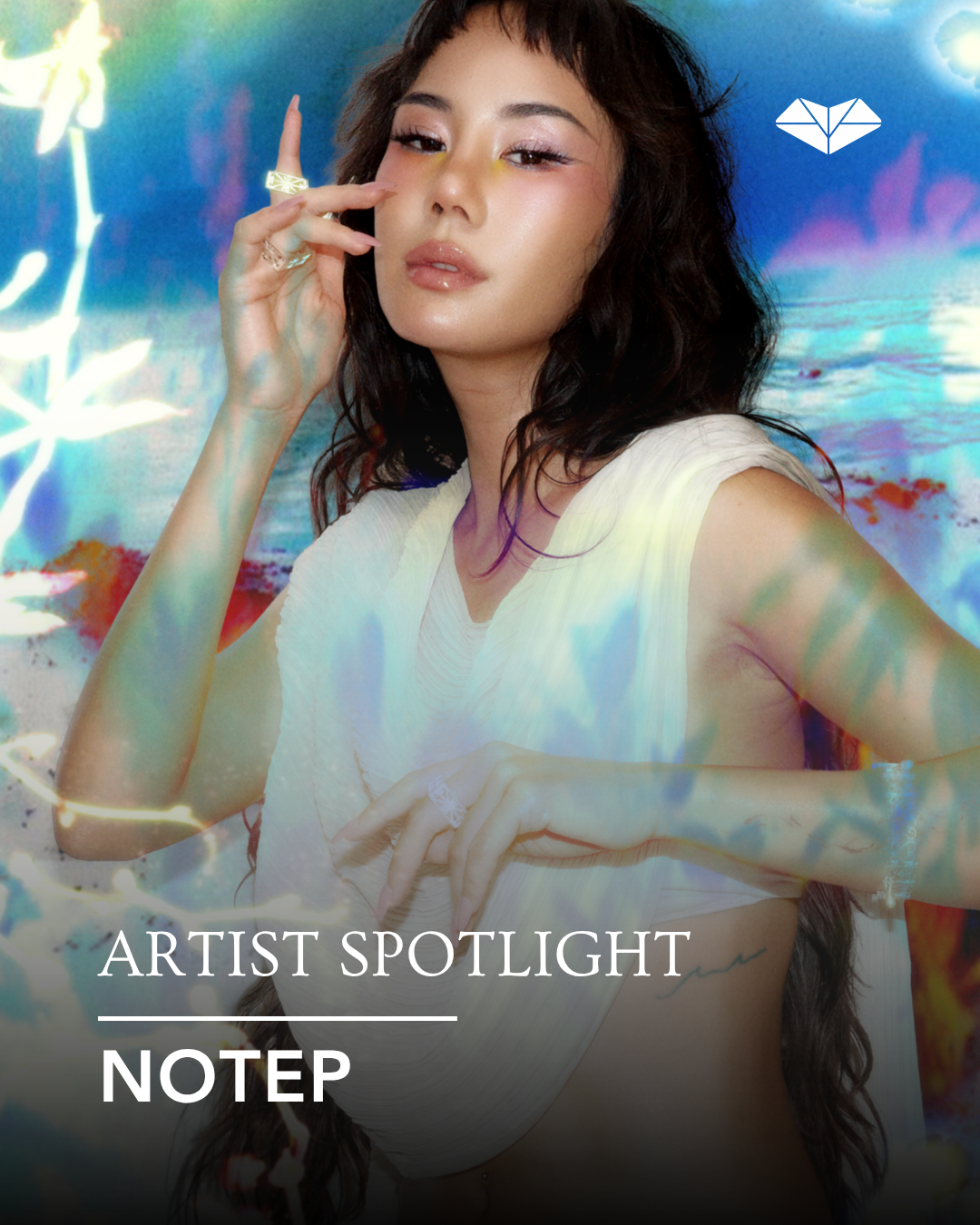
NOTEP on “Radio,” Filming at Sea in Koh Tao, and Working with Intention

NOTEP is a Thai musician, DJ, producer, and environmentalist working across electronic music and A/V performance, where sound, environment, and process are closely tied. Blending ambient textures, traditional elements, and her voice as an instrument, she builds immersive, multi-sensory sets that move between introspection and physicality.

Her work has extended beyond the studio through collaborations with Louis Vuitton, La Mer, Prada, and Nike, alongside her sustainability initiative “High On Your Own Supply” and projects with Greenpeace Thailand and UNDP. Her debut album Metamorphogenesis (2024) marked a move from ambient, sound-led work into more rhythm-driven territory, while maintaining an experimental edge.

Released on Earth Day, “Radio” is the first track from her upcoming EP PAKARANG—named after the Thai word for coral. The project draws a direct line between the ocean and the human body, grounding its ideas in material and structure rather than metaphor.

The video, filmed on the open ocean in Koh Tao with digital artist Cyrus James Khan, reflects that same approach: self-produced, stripped back, and built from reclaimed materials sourced from the sea.

“Radio” was released on Earth Day. What was the starting point for the track?

It actually started with a conversation I had with Alex, my co-writer and producer. I told him I felt like I was going through a quiet identity shift, so before we even opened the session, I suggested we meditate and ask for guidance.

After that, we entered the studio in a very calm, grounded state. I chose four beats that were completely different from each other, but each reflected a different part of me. We wove them into one track. At its core, “Radio” is about tuning into your inner frequency and reconnecting with a higher sense of self.

The video for “Radio” was filmed on the open ocean in Koh Tao. What was that experience like, and how did it shape the video?

It was a very intimate, two-person production between digital artist Cyrus James Khan and myself. We spent about three hours on a long-tail boat at sunset in the ocean around Koh Tao Island, where he’s based. We did everything ourselves, from concept and sourcing materials to styling, filming, and editing. Working together felt very natural. We balance each other’s strengths and gaps in a way that makes the process flow.

The project was especially meaningful because of our shared connection to Koh Tao and our concern about ocean waste there. That directly shaped the visual concept. My entire outfit was made from reclaimed materials: a dress by Eric Tobua using soda can tops, and a skirt and headpiece I created from ghost nets and ocean debris. It became a physical expression of the message.

You integrate natural soundscapes with electronic production. For artists interested in working this way, where do you begin—field recording, synthesis, or concept?

Start by listening to the things closest to you. Field recording is a powerful entry point because it forces you to pay attention to your environment. Once you begin observing sound more deeply, you naturally learn more about yourself as well. From there, the concept and production choices tend to reveal themselves.

There’s increasing conversation around eco-conscious production in music. Beyond visuals and messaging, what are some tangible ways artists can rethink how they create and present their work?
It starts with awareness. Think about the footprint your work leaves, both physically and psychologically. What materials are you using? What systems are you supporting? And just as important, what kind of mindset are you encouraging in your audience? Shifting perspective can be as impactful as reducing waste.

Environmental messaging in music can sometimes feel didactic or surface-level. How do you avoid that, and instead create something that feels embodied?

I don’t approach it as messaging. It’s more about lived experience. When something is genuinely part of your life, it naturally shows up in the work without needing to be explained.

I focus on translating feeling and connection rather than trying to instruct. That’s what makes it resonate on a deeper level.

What’s one piece of advice you’d give to producers or artists who are just starting out and trying to find their sound?

Set intention before you create. Even something simple like meditating with your collaborator before starting a session can completely shift the outcome.

It aligns your energy, clarifies what you want to express, and builds a deeper connection, which you can hear in the music.
On a challenging day, how do you unwind or reset to get back into a creative headspace?

Sleep helps the most. Beyond that, walking, spending time in water, going to an onsen, or getting a massage. Anything that brings me back into my body instead of my mind.

What’s something small or unexpected that often sparks an idea for you?

Being in nature. Even a small detail, like the texture of sound or light, can open up an entirely new direction.


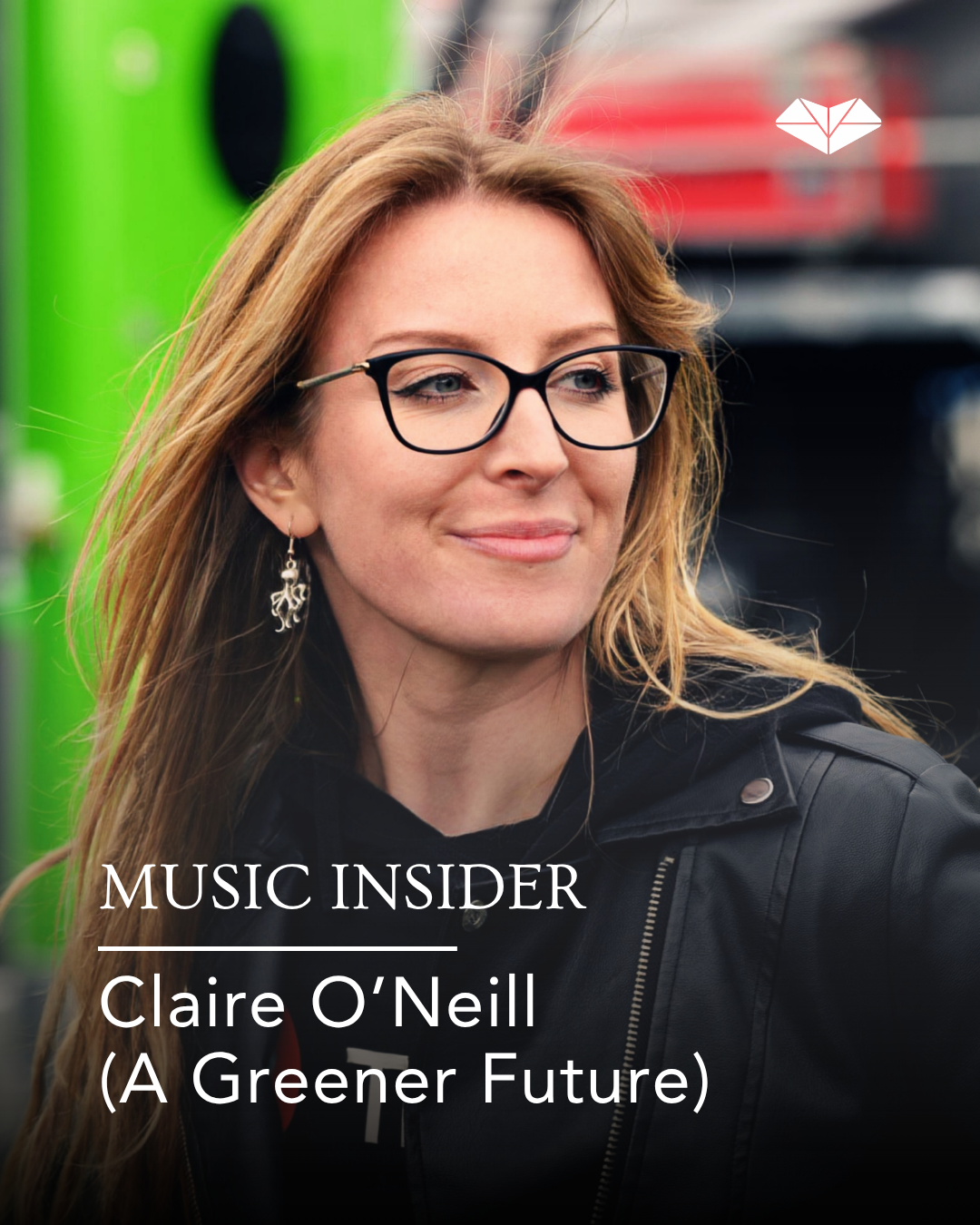
Claire O’Neill on How A Greener Future Is Shaping Sustainability in Live Music

Claire O’Neill has spent the past two decades helping shape how the live music industry approaches environmental impact. As CEO and co-founder of A Greener Future and green energy specialists Grid Faeries, her work sits across infrastructure, policy, and on-the-ground implementation — supporting festivals, venues, and tours to adopt more sustainable practices.

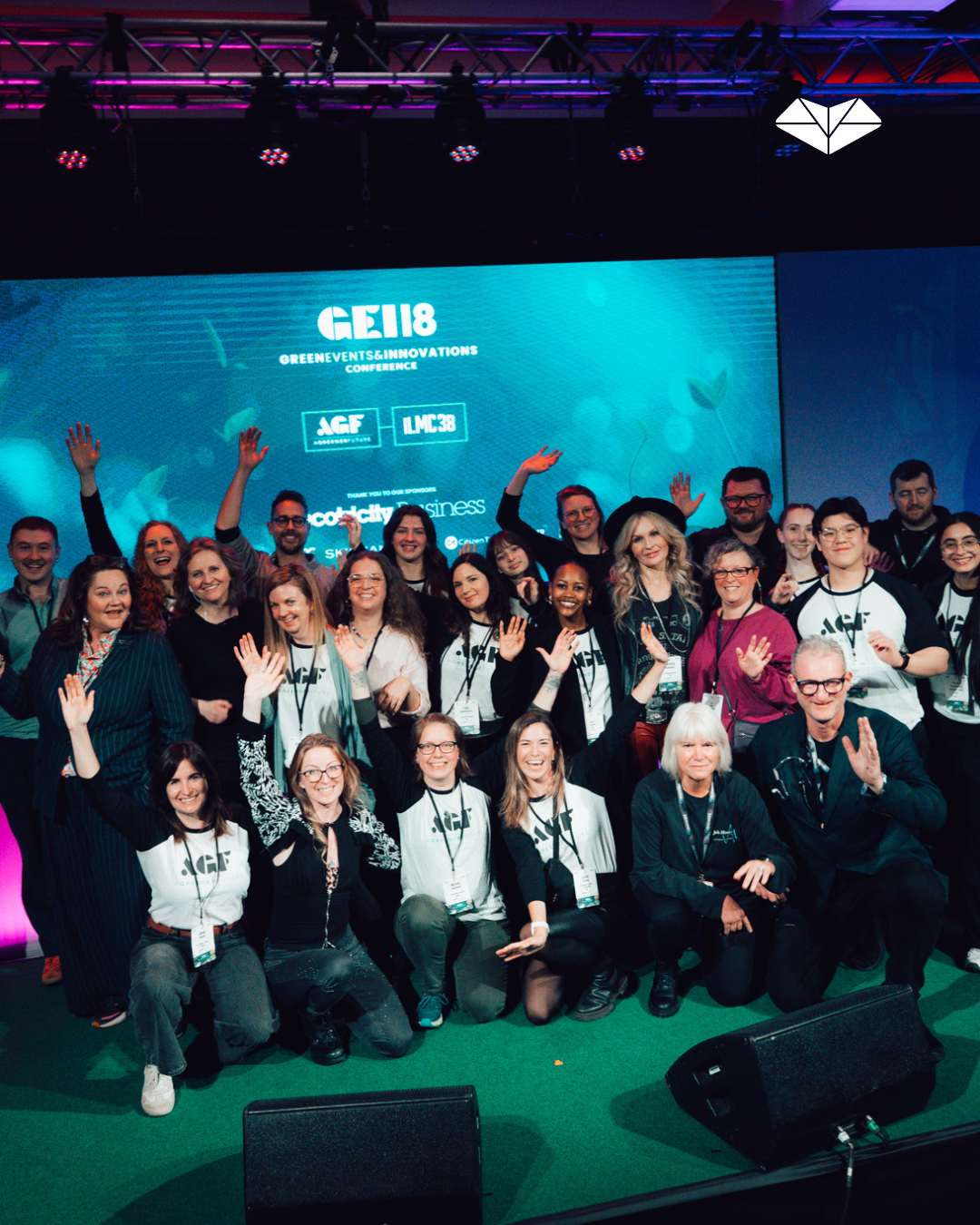
Founded in 2005, A Greener Future (AGF) was one of the early organisations to formalise what “green events” mean in practice. The not-for-profit works globally with festivals, venues, and live organisations to reduce environmental impact through certification, carbon measurement, and net zero strategy, while also building shared knowledge through training, research, and industry exchange.

From developing the world’s first green festival standards to initiatives like the Green Artist Rider with **Wasserman Agency and the Greener Arena Certification, AGF has played a key role in embedding sustainability into live event operations.

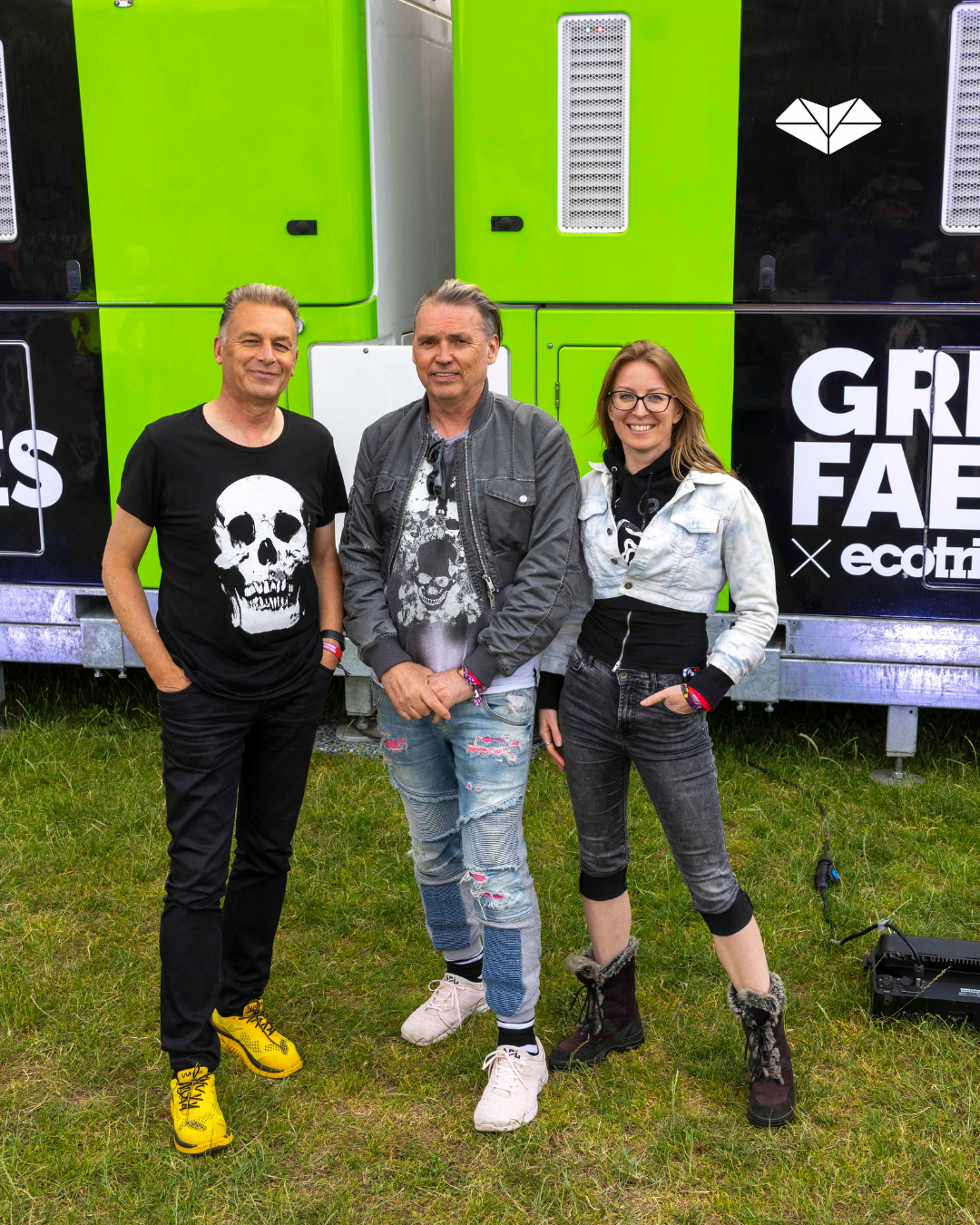
O’Neill’s work spans grassroots festivals to major global organisations, including AEG, UNFCCC, The O2, RHS and ASM Global. Through Grid Faeries, she has also supported the development of low-carbon energy solutions for live events — including powering stages with renewable energy, notably on Massive Attack’s Act 1.5 Climate Action Accelerator in partnership with Ecotricity.

A Greener Future (AGF) has been working in sustainability since long before it became an industry talking point. What has actually changed structurally, in how festivals and live events approach environmental impact today?  

When we began, sustainability was not a consideration or language in the live music industry. It was however the way that many grassroots festivals had always operated, and their way of life. For instance, Big Green Gathering and Green Futures at Glastonbury, for decades had been examples of sustainable living, and as such examples of greener festivals.

20 years later there is industry wide understanding and minimum requirements for sustainability, which reflects the wider governmental and societal adoption of the same. It is now commonplace for festivals and live sector organisations to have a sustainability manager, policy, action plan and to report on their impacts.

Waste Management Plans are more sophisticated with joined up approaches from purchasing to segregation to processing, with single us plastic bans being commonplace. Alternative power sources such as battery, renewables and grid are more widely adopted.

There are thousands of temporary compost toilets available for commercial hire in many European countries, and grey water recycling and urine nutrient capture systems are emerging in more places. Plant based menus and food salvage schemes are quite normal. Of course, everyone is conscious of the impact of audience travel and this year has seen the first electric truck tours and electrification of audience travel companies such as Big Green Coach. Sustainability criteria are commonplace in tenders, land-use agreements, and we expect soon for licensing conditions too. 

We often see a surge in messaging around Earth Day, but less clarity on action. From your perspective, what does meaningful commitment look like beyond the campaign moment?

Campaigning is important to raise awareness but without taking action it’s just talk. There are so many easy steps that can be taken by anyone in the live sector. Go plant based. Reduce high carbon travel and choose low emission alternatives. Switch to a renewable energy supplier.

There are so many actions that can be taken and a plethora of sign posts and guidance. All that is needed is the willingness to get on with it. The best way to lead is by example.

The Green Artist Rider and Green Touring Rider have become widely adopted. What have you learned about how artists can influence systemic change and where that influence has limits?

When artists require even small changes in their riders and contracts it starts to become the norm in the way that venues and festivals operate. We began the Green Artist Rider so that the green aspirations of artists, festivals and venues joined up and pushed in the same direction, with all of the necessary pieces of the puzzle.

Of course, some artists have greater influence to affect change in the industry than others. But all artists have the ability to reach and communicate with people. At one end of the scale, we’ve had the great pleasure to work closely with Massive Attack who are unwavering in their convictions.

For their Act 1.5 Climate Action Accelerator we were able to power their main stage entirely with our Grid Faeries x Ecotricity battery charged by the wind and the sun, with 100% plant based food, there was no car parking, extra trains and 100% electric shuttle buses.

Beyond the headliners, the trust and connection between artists and their fans, and the ability of music to convey meaning so directly and impactfully, is a vital tool to influence culture and to reach hearts and minds.

AGF’s work often involves analysing existing operations and translating that into actionable change. What are the most common blind spots you still see when organisations assess their own impact?

Food continues to be one of the most under-reported areas, alongside materials. These are some of the most impactful areas due to their production and embodied emissions. At AGF we work closely with caterers, traders, suppliers and concessions to gather robust data that can inform action.

Audience travel remains one of the largest impact areas and events often struggle to gather reliable data. We provide templates to help ask the right questions, and Øya festival in Norway have recently developed a similar model and are keen to align with others.

Sustainability is often framed as a cost, especially in a financially strained live sector. How should the industry be thinking about the balance between environmental responsibility and economic survival right now?

Ecological and economic sustainability go hand in hand. It is a false economy to deplete our natural resources, our health and ecosystems for temporary gain. Too many human and environmental costs have been externalised for too long.

The good news is that even in our current economic system the greener way is the economic way. Less waste. Renewable energy. Plant based food. Burning fewer fossil fuels. Local trade. The tide is turning, and the laws of physics have caught up with our fallible man-made extractive economic models of the past. 

For artists, promoters or teams who are just starting to engage with this space, what are the three most important things to have in place from day one?

Have an open mind to explore, make mistakes, and understand that you don’t need to be perfect to do something. 

A super quick win and big impact is reducing or eliminating meat consumption, especially red meat, which doesn’t cost a thing but is major for emissions, land use, water use and biodiversity.

Make a plan for what you want to tackle and how you’re going to achieve it together. Where do you have influence and what are you passionate about?

** As of March 2026, the international sports, music, and entertainment agency Wasserman has rebranded to THE·TEAM


A Greener Future | Claire O’Neill on LinkedIn

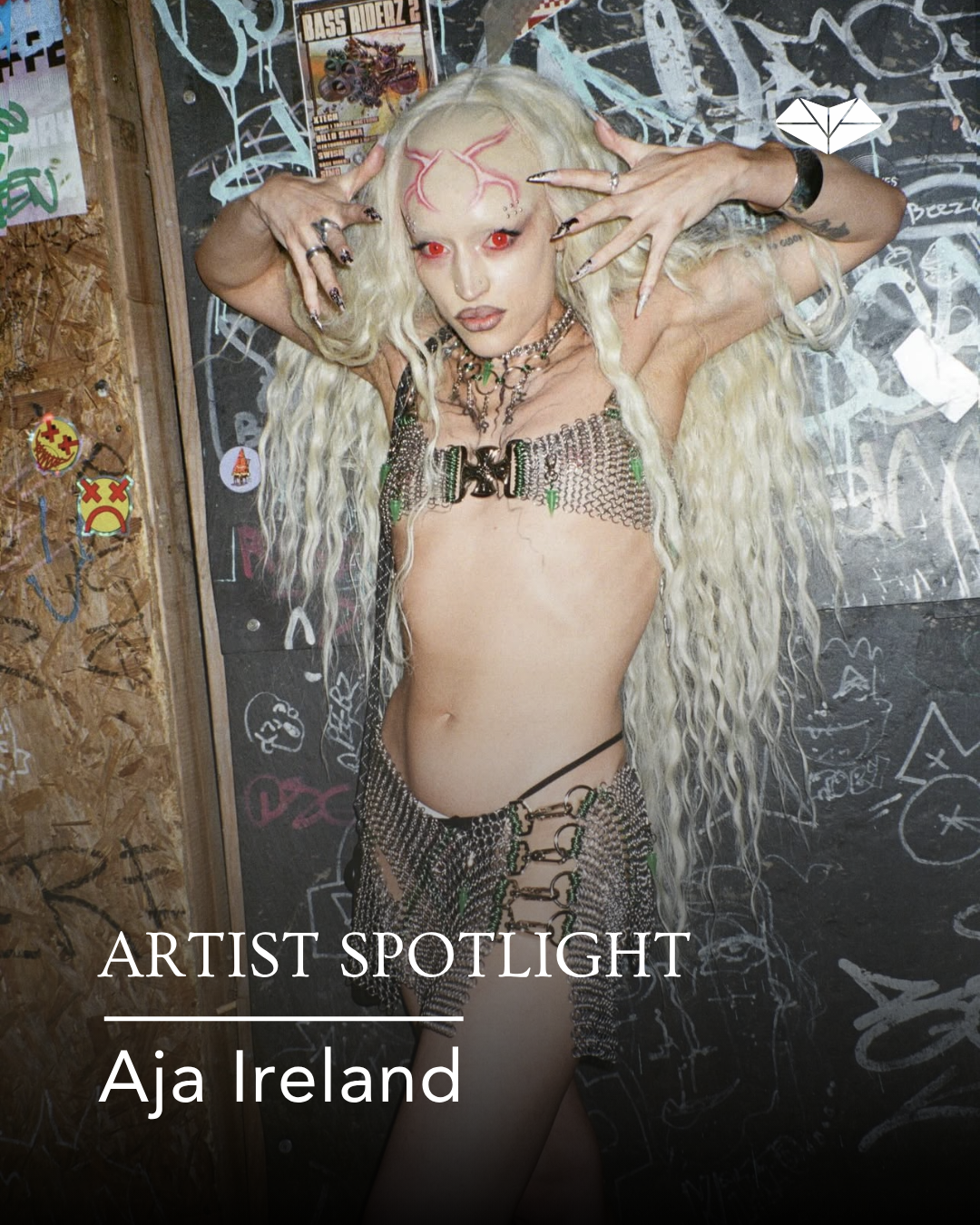
Multidisciplinary Electronic Artist Aja Ireland on New EP Moult Mouth, the Monstrous Aesthetic and Visual Collaboration with Joey Holder

Photo Credit Hogg: IG @999999999boyscrysendpics

Aja Ireland is a multidisciplinary electronic artist working across performance, sound design, visuals, DJing and creative development. Her work spans club, gallery and digital environments, with a focus on live performance, spatial sound and collaborative visual worlds.

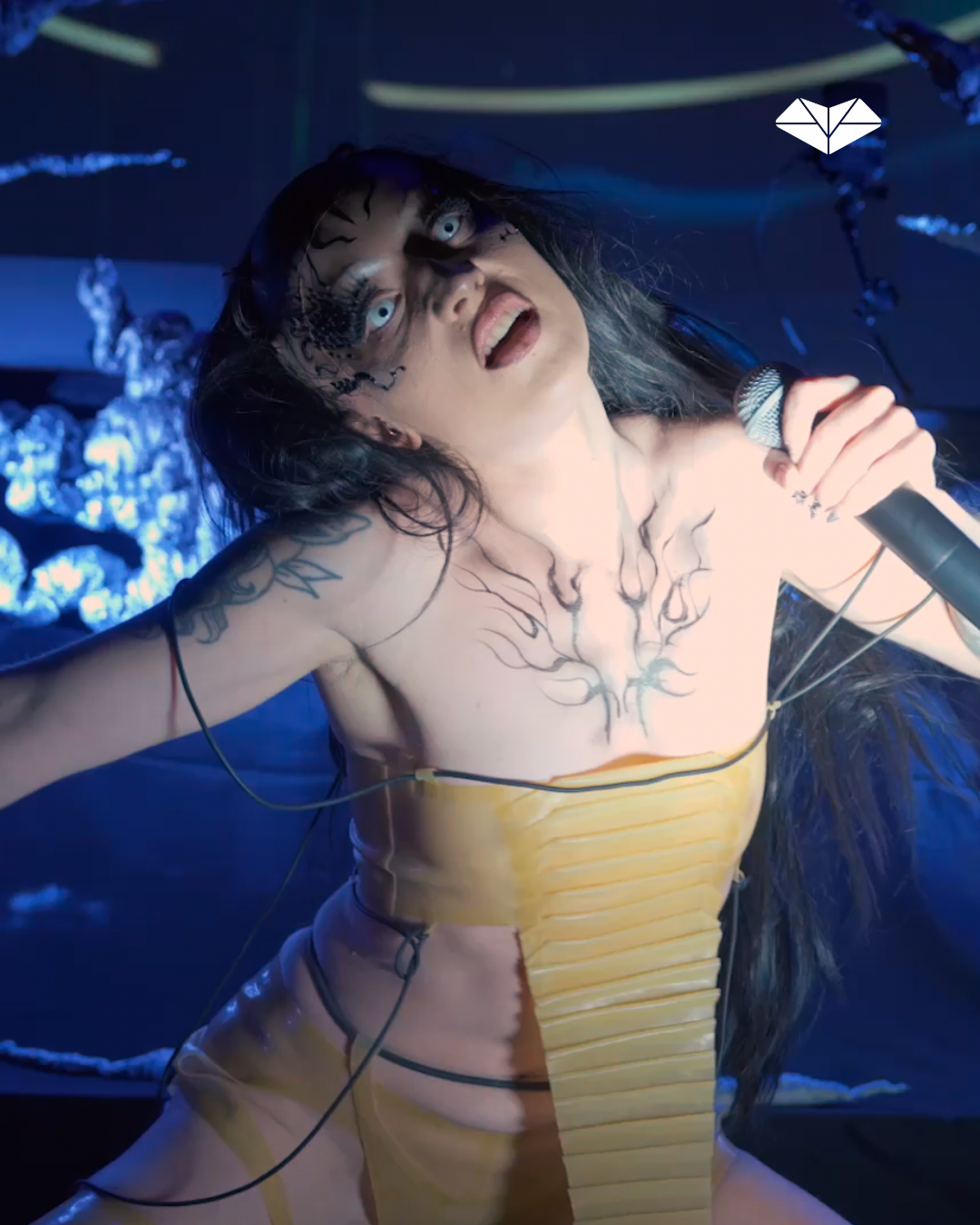
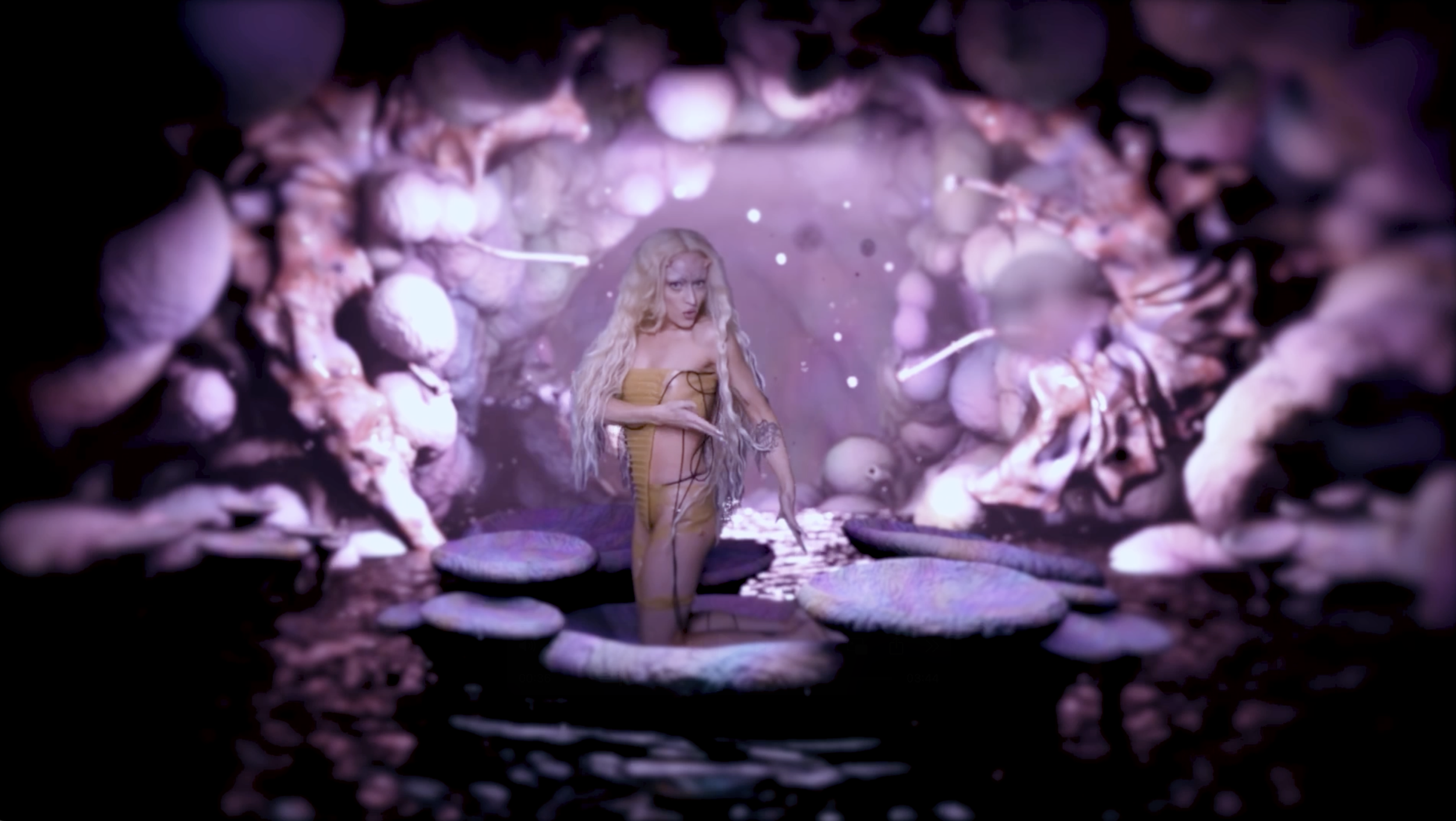
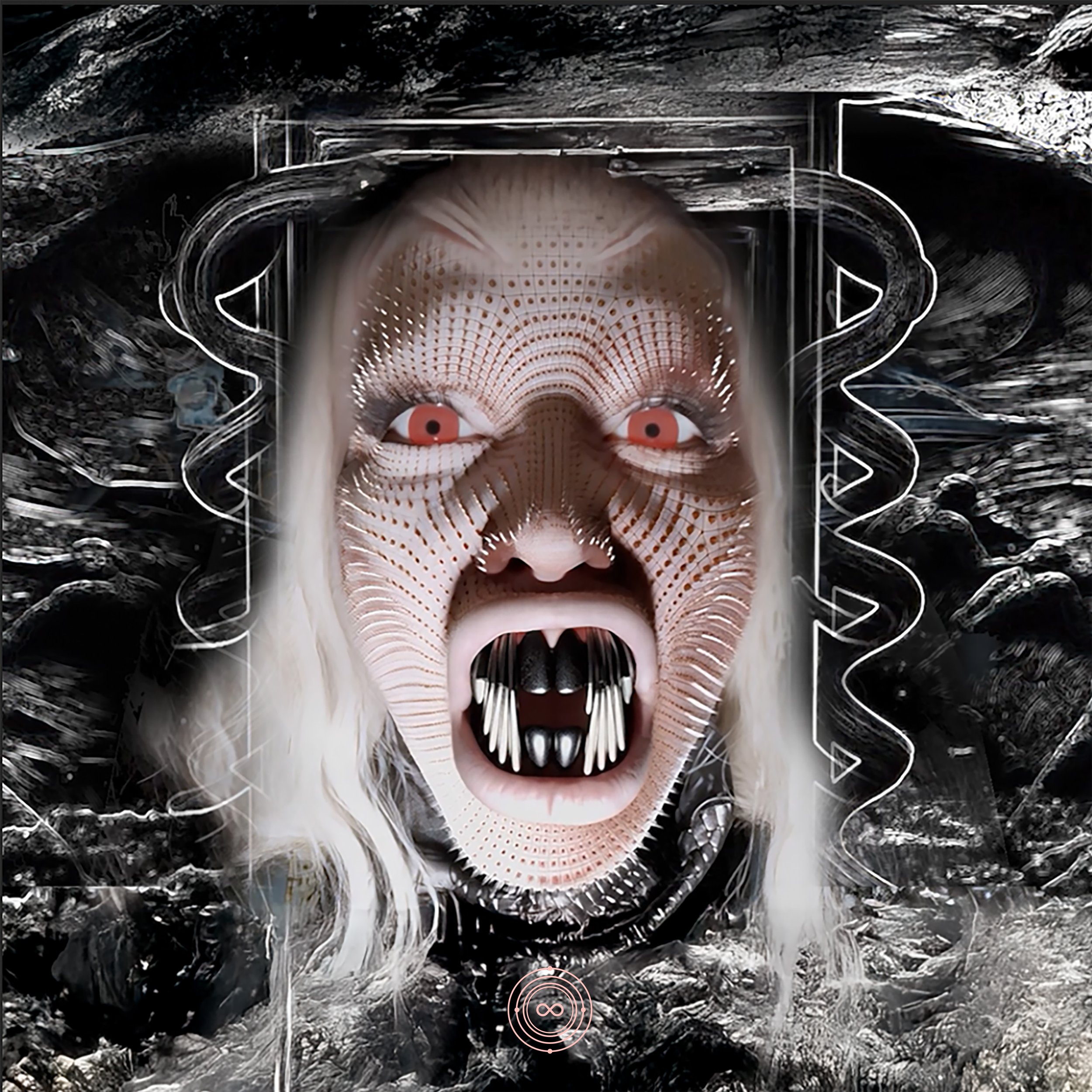
Her latest project, Moult Mouth, is an EP and live AV show released across February to April 2026. Blending experimental UK bass, industrial techno, baile funk percussion and detailed sound design, the record is built alongside a physical performance practice where movement plays a central role. Developed in collaboration with Joey Holder, the project extends into a multidisciplinary audiovisual work incorporating costume, choreography and digital visuals.

Across both the EP and the live show, the human form is continuously altered and reconfigured. Costumes by Studio FCLX and SKNDLSS exaggerate and distort the body, while the visual world introduces shifting, hybrid organisms and unstable physical states. Sound and image operate together to create an immersive environment that moves between club energy and performative intensity.

Movement functions as a core element within the work. Ireland approaches dance as a form of expression and construction, shaping both the performance and the way the music is realised. The result is a project that connects sound, body and image within a single framework, presented through both recorded material and live performance.

What follows is a conversation with Ireland on the development of Moult Mouth, her approach to collaboration, and the processes that inform her work across sound, movement and visual form.

Moult Mouth explores monstrous femininity, body autonomy and liberation through movement and sound. What drew you to the “monstrous” as a creative and emotional framework for this project?

Growing up as a woman in club spaces, you quickly learn that your sensuality isn't really yours. Men touching you, staring at you, your body existing to satisfy someone else's gaze. That's just a normal Tuesday night out for most women, and it makes it genuinely confusing to figure out how to have sexual and sensual energy and actually celebrate it in a healthy way. Nobody really teaches you that part.

Queer safe spaces changed that for me. Good music, a place to dress up, people who weren't watching to consume you. That's where I started to find and celebrate that side of myself.

The monstrous aesthetic is two things for me running alongside each other. The first is that I genuinely find it beautiful. Leigh Bowery, Hungry, Matières Fécales have been with me from the start, and more recently Niohuru X, who really leans into it. What people are calling post-human beauty now, distorted drag, contradictions and contrasts, that space has always felt like home.

What I love about it is that it lets the usually hidden things exist openly without needing to be fixed. Discomfort, imperfection, the parts of yourself that don't feel easy to show. It's like meeting your shadow self instead of pushing it away, recognising something in those warped, unfamiliar forms that reflects your own inner contradictions. Beauty stops being about becoming acceptable and starts being about letting everything be seen, even the parts you'd rather deny.

The second part is more personal. When I'm dressed like that, I can actually move the way I want to. The monstrous aesthetic acts as armour. Somehow it gives me permission to be sensual in a way that feels safe and entirely mine. So Moult Mouth was expressing the frustrations with the (like in the track Smile) but also celebrating moving through it (like with Mami Voguer and Grind it like).

The EP exists not only as music but as a multidisciplinary work spanning AV performance, costume and visual worlds with Joey Holder. How do you approach building a cohesive artistic universe across sound, body and image?

Joey and I have been collaborating for nearly ten years, so there's a real shorthand there. Our interests, references and instincts have a lot of crossover, and working together feels completely natural as a result.

In terms of how a project like Moult Mouth comes together, it's honestly less about planning and more about accumulation. I'm always collecting, always drip-feeding myself new inspiration. Then because of my ADHD, there'll be a burst, usually three to six months where I'm so fired up I just have to make something. With this EP, I was touring Cryptid, still producing constantly on the road, and this whole new body of work arrived.

The cohesion comes from staying true to a set of obsessions that have been with me my whole career: distorted drag, creaturely beauty, the monstrous as expression. It's never a decision, it's just where everything naturally lands.

Your live shows are intensely physical and performative. How has incorporating movement and embodiment changed the way you produce or structure your music in the studio?

Movement is an expression of the music I produce, and I always produce from a place of pure inspiration. Mami Voguer came directly from playing Dancity Festival and being so inspired by the other artists that I just had to make a song to represent what I'd just experienced.

Smile was made after playing with Slikbak at Avant Art Festival. Other artists inspire what I'm making, but the ones that affect me most are always the ones that make me move my body. It's almost like I'm detached from it, it does things I couldn't think of by myself.

Whilst making Moult Mouth, I was on my own journey of just wanting to move in a more sensual way and not feel self conscious doing it. There was a real block there, an insecurity.

So everything is created and expressed in flow state. In terms of specific production choices, I used more Brazilian percussion on the record, and structured the first few tracks in a more commercial way, with choruses and verses, which isn't something I always do but I felt they needed that structure. Then the techno tracks towards the end of the record were much more free flowing.

Photo Credit: Nanni Roberto

What is your favourite part of the music-making process, and what is the part you find most challenging or confronting?

When I'm at my most inspired I feel like a vessel and it just flows through me. I could make music for hours, days, without eating or sleeping or taking breaks.

The most challenging part is that I never feel like I reach what I actually want to sound like. And I change genre a lot, so when people connect with a particular track or sound I'll often completely change direction on the next record.

The WORM residency really reminded me why I make sound in the first place. Being fully immersed in a studio for days shifts something in how you think. Instead of chasing ideas they just start happening, textures unfolding, rhythms building, machines responding in ways you didn't expect.

Some of the best moments weren't about finding the perfect sound but letting the machines lead, responding instinctively rather than overthinking. I was drawn to the unpredictable, the way certain synths seem to breathe when pushed a certain way, how layering raw unprocessed sounds creates something deeply alien. The Synton Syrinx, only a few hundred were ever made between 1983 and 1984, the Emotional Machine by Dalin Waldo, the Blippoo Box by Rob Hordijk, the Roland D50. Every instrument had its own logic and I had to meet it on its terms.

That instinctive approach is how I work generally. I love to layer and manipulate sounds without listening back in between, just building blindly and discovering what's happened. I use Granulator a lot, autotune in places it's not supposed to be, I resample constantly. 

You’ve built a career across club culture, contemporary art, film and performance contexts. What helps you connect with the right collaborators and creative communities?

It's one thing to love someone's work, and for them to love yours, but you also have to connect on a level of energy and communication, both need the time and capacity, and there are so many things that have to align for a collaboration to actually work.

A lot of it I think is down to my higher power and who she wants me to work with. But social media is a genuinely useful tool for research and connection, and so is paying attention to what friends and peers are sharing, going to events, being on tour. I don't really go out unless I'm playing these days, but there are always so many inspiring artists to discover.

You have to listen to your gut. Just because you love someone's work doesn't mean it's going to be a good fit. I think you just know when you meet the right person. I’ve loved collaborating with Joey Holder, LULALOOP, IMPATV and BORA over the years and in the last year am so grateful for new collaboration with Nicholas Delap who created the music video for Mami Vogue and to Studio FCLX and SKNDLSS for the costumes for touring and music videos which have been an absolute dream. I love to be positive and show as much respect and gratitude as possible when working with other people and have built such beautiful relationships and long term friendships from this. 

What practical advice would you give to artists trying to develop a distinctive artistic identity and creative voice?

I've taught this to a lot of students and musicians over the years, and there's so much I could say, but I keep coming back to three things.

Be authentic. Stay true to what really moves you and what is right for the project.
Have anchor points. Key influences, people, images, anything from a record cover to a make-up artist to something like water or nature. Choose a few and keep returning to them, especially during creative blocks.

Do your research properly. Not just who and what is currently trending, but go back in time and understand who they were inspired by. Read books. Don't just build a Pinterest board, although those are genuinely useful too.

I do 1:1 sessions and workshops teaching this so make sure to follow me on IG for updates @ajaireland or drop me an email if you’d like more support with this musicwithaja@gmail.com

Mami Voguer Still

How do you stay creatively grounded or take care of yourself during intense creative periods or touring?

To be honest, the time I need to take most care of myself is actually during the booking period. There is so much rejection that comes with pitching shows, and that's what I struggle with most. The touring itself is the fun part, even if it's physically demanding.

When I'm on the road I make sure I do really thorough logistics planning so everything runs smoothly and I'm not carrying that mental load as I do all the bookings myself. Generally I have to do a lot of self care anyway in my life. I meditate, I'm sober, nearly nine years now, and I try to eat well and exercise. It all sounds very boring but the most basic things have the biggest impact. I also reach out to friends and fellow musicians for support, because doing everything yourself is a lot. And I do take proper breaks. Every few years I might take a year out, get a normal job for a while, have the same routine and feel grounded again.

What tools, techniques or approaches have been most important in shaping your sonic language?

Experimentation above everything. I use Ableton, I love Granulator, I use autotune in places it's not supposed to be used, and I resample constantly.

I love to draw my compositions out using shapes and symbols before I start, to plan the journey of the track. I also love to layer and manipulate sounds without actually listening back in between, just stacking plug ins, warping, stretching, reversing, tweaking parameters completely blind, and then discovering what's happened.

Recent plug ins I've been enjoying include Random, and I'm currently doing a course with Arca where I noticed she also loves Synplant, which I've been exploring. I had some lessons with Randomer last year too.

Generally I love polyrhythms, deconstructed club and experimental techno, and more recently I've been bringing in Brazilian percussion, which I've always loved but never really knew how to use properly until now. I pull raw samples from Splice, build in Drum Rack, and love generating random patterns as a starting point.

Live I use a Roland TR8S, an autotune pedal with distortion and delay on vocals, and I run the drums through a Metal Zone. I used to use a Korg Minilogue live but after so much international touring I had to reduce the setup, so now it's Ableton and a midi controller to trigger samples alongside the drum machine (although I hate using a computer on stage haha).

Looking back at your journey so far, what is something you wish you had known when you first started as a producer and performer?

I might have studied music if I'd known how much connections matter in this industry. Not really for the learning itself, but for the access. Getting in front of the right people is genuinely hard when you can't afford to live in London and you're not interested in the drinking and going out side of things. But really I wouldn’t have changed anything - I think everything happens for a reason, and we are exactly where we’re supposed to be. There is a lesson in all the difficulties and it builds strength and empathy.


Aja Ireland on Instagram

‘Moult Mouth’ on Bandcamp | Website

Delphine Seddon on Her Debut Novel Darkening Song and the Psychological Cost of Sudden Fame

Delphine Seddon is a writer and former music industry executive with more than two decades of experience working behind the scenes with artists and their teams. In her debut novel, Darkening Song, she draws on that experience to explore power, trust and the psychological toll of rising too fast.

Set between record label offices and the disorienting intensity of sudden fame, the novel follows Eva, an 18-year-old intern who discovers a 16-year-old artist, Alora, online. When no one at the label takes notice, Eva steps in and offers to manage her, despite having no experience. What follows is not a conventional rise-to-stardom narrative, but a more unsettling story about what happens when success accelerates faster than either of them can process.

At its centre is the relationship between artist and manager — one built on instinct and belief, but quickly shaped by pressure, expectation and power. As Alora is propelled into the spotlight, the bond between them deepens, then begins to fracture, exposing how easily care can blur into control, and how ambition can cloud judgement at critical moments.

Written with an insider’s perspective, Darkening Song moves beyond the surface of fame to examine its emotional and psychological impact, particularly on young women navigating an industry that does not always protect them. It is as much about friendship and betrayal as it is about responsibility — and the consequences of getting it wrong.

Darkening Song explores the relationship between a teenage artist and her female manager as they navigate fame and power. Why was it important for you to centre the book around the manager–artist relationship, rather than focusing solely on the artist? 

I’ve always found the relationship between artist and manager to be fascinating. It’s a business relationship, but the lines often blur into something more personal; a friendship, or in some cases, something akin to a maternal or paternal bond. There’s an enormous amount of trust which has to exist within that relationship, and the manager has a duty to act in the artist’s best interests at all times.

But we’re humans, we all have our own motivations and issues, and sometimes what might be best for the artist isn’t necessarily aligned with what’s best for making money – creativity, mental health and capitalism do not always co-exist in an entirely harmonious relationship, particularly when the forces of power and ego are also at play. I’ve witnessed first-hand in my career how power and success can change a person, and how it can cloud their judgement. I wanted to explore this in Darkening Song, so to just show the artist’s journey and perspective felt like only one side of the coin.

The novel captures how quickly a young artist can be propelled from obscurity into global visibility. What do you think the industry still misunderstands about the emotional and psychological impact of sudden success?

We live in what feels to me like a very pressurised society. The world is imploding around us, we’re constantly ‘on’ and available through mobile phones and email, it’s increasingly difficult to ascertain what information is real and what’s fake, and everyone who has an opinion, however callous and misguided, has a public forum in which to express it, aka the internet. We also live in a world of celebrity culture, where ‘fame’ is aspired to as an actual profession by some people.

But fame takes the pressures of a modern existence and multiplies them by a million, and to go from obscurity into everybody knowing who you are, wanting a piece of you and having an opinion about you is a lot to handle, and can have a very serious impact on mental health.

There’s a paragraph in Darkening Song where Eva (the artist manager) and Alora (the artist) are talking about Alora’s boyfriend. The conversation goes like this:

Without looking up, Eva said, ‘You’ve got yourself a handy little servant there.’ I asked her what she was talking about and she said, ‘Oh come on, don’t tell me you haven’t noticed. He follows you around like a lovesick puppy.’

 ‘No he doesn’t.’

 She rested her phone on her lap and gave me an accusatory stare. ‘A couple of days ago I watched him follow you into the toilet.’

‘Oh, he just does that sometimes.’

‘And what, watches you piss?’

‘He usually just looks at himself in the mirror, actually.’

‘That’s really weird, Alora.’

‘Is it?’ I don’t think by that point in my life I had any bearing on what was or wasn’t weird. Grown men with cameras stalked me everywhere I went. I had no grasp on normality whatsoever. 

And yet, the ‘stalking culture’ we – the general public – accept as normal. We seem to think that fame entitles us an AAA pass into every aspect of a famous person’s life, something which Chappell Roan has spoken out about fairly forcefully. Artists by their nature can be extremely sensitive people.

In creating, they aren’t necessarily seeking the notoriety of fame, they simply want to live by their art. And yet, with success comes fame and they have to acclimatise to that level of exposure. When I first started out in the music industry twenty years ago, I don’t remember mental health ever being a talking point.

I do think there’s a much greater understanding of the importance of prioritising mental health and the pressures of fame nowadays, but the industry has learned at the expense of lives. Whether it’s taking sufficient steps to support the artists which, like Alora in the book, sky-rocket into overnight success or equally damagingly, plummet from the dizzy heights of it, is a different question entirely – there’s definitely been a shift and more resource offered, but I would say that there’s much work yet to be done.

Darkening Song is going to be adapted for television, which is incredible as it’s your debut novel. What excites you most about bringing the story to the screen?

Thank you so much! I feel very lucky to be working with such amazing people on the TV side. When we were negotiating the adaptation deal, there was a lot of talk about how much creative input I would be allowed to have over the adaptation. But what was most important to me was to sign with people I felt really understood Darkening Song, and I trusted to make something true to the story and its messaging and not turn it into something which would make me cringe.

When I was first sent the deck with actor and actress ideas for the key characters, it was so brilliant seeing the production company’s interpretation of people who, until that moment, had only existed in my head. So what I’m most excited about is seeing their vision for the book come to life in ways I didn’t necessarily imagine myself. 

You’ve seen artists at very different stages of their careers. In your experience, what qualities or decisions often make the biggest difference in sustaining a long-term career?

As much as I hate to say this, I think anybody’s career where creativity is concerned – musician, writer, artist and so on –  is never entirely within their own control. A lot depends on market trends, the passion and ability of a marketing team and to a degree, the stars aligning.

All that said, I do believe people can take certain steps to give themselves the best possible chance of success.

Work hard, be kind, polite and appreciative to those around you and those supporting you, try to keep your feet on the ground and listen to the opinions of people who you trust rather than thinking you know best all the time, know who you are creatively, and surround yourself with good people who have your best interests at heart – I think that last one is super important. 

What kind of stories—whether in books, film or music—have stayed with you recently?

With a few exceptions (e.g. Garth Greenwell, who I adore) I tend to read books written by women, and I tend to read fiction rather than non-fiction. However, I recently read a non-fiction by Sunday Times best-selling author Emma Gannon called A Year Of Nothing, which is about her recovery from burn-out.

It’s incredibly honest, insightful and inspiring. In this modern world, most of us live in a perpetual state of busy, constantly striving for more, meeting deadlines, checking emails as soon as we wake up, and don’t even get me started on social media…This takes its toll on our health, as Emma Gannon experienced. But A Year Of Nothing isn’t a depressing read – it’s uplifting and wise.

There’s a quote the author takes from Fleishman Is In Trouble: ‘I’m a big fan of the nervous breakdown as a completely rational response.’

This really hit home for me. We need to listen to our bodies. We need to slow down, look around us and appreciate the small things and in particular, nature – a beautiful burning sunset which cracks the sky in two, swimming in the ocean, the first morning light seeping through the trees. The world gives us so many beautiful gifts which are entirely free, we just need to take a deep breath, look up from our phone screens and notice them there.

What advice would you give to someone who feels creatively unfulfilled but is afraid to pursue their own creative work?

I asked a friend for some advice recently and he said, ‘I don’t give advice, I can only tell you about my own experiences,’ and I thought to myself, well, that’s excellent advice in itself! In my humble opinion, creating – whatever form it may take – is one of the reasons we’re on this planet as humans. And yet, relying on creativity to make money can be pretty treacherous, so advising someone to leave their safe secure job and ‘go for it’ when there are so many different factors which may be at play (e.g. mortgages, kids) is not necessarily advice anyone should be giving.

That said, that’s exactly what I did! I signed a publishing deal with an imprint of Macmillan and realised that it was going to be pretty much impossible for me to meet my writing commitments under the contract and continue working in my job as COO for Adele’s manager, operationally running the business across London and LA and the two fairly opposing time-zones which came with that.

So after much deliberation and soul-searching, I resigned from my safe, secure, well-paid job in the music business to become a full time writer. I don’t regret that decision, but what I will say is using creativity as my job puts a pressure on it which I didn’t previously feel. Will any of my books be commercially successful?

Who knows! Maybe I will, at some point, need to start looking for ‘conventional employment’ again. But if I do, it will be with a renewed understanding of the importance of balance – of making sure I still have time and headspace to write. Because for me personally, writing (creating) is what makes me feel truly alive, and it connects me to myself and to other people.

When I receive a message from someone who’s read Darkening Song telling me how the book, or a particular character, really resonated with them, it feels like reaching out into the ether and taking hold of the hand of this other person who I don’t even know and have never met, and I feel somehow seen as the truest version of myself – it’s an amazing feeling.


Delphine Seddon on Instagram

Get your copy of Darkening Song

Iris Gold on ‘Sugar On My Lips’, Healing Through Music and Working with Eurythmics’ Dave Stewart

Photo credit: Emil Hamburg

Iris Gold’s work has always existed in flux—shaped by shifting geographies, hybrid influences and a refusal to settle into one fixed identity.

Born in London and raised in Copenhagen’s Christiania, her Indian and Jamaican heritage runs through a body of work that resists settling in one place for too long, pulling from soul, pop and psychedelia with a lightness of touch.

Nominated for Best New Live Act at the Danish Music Awards in 2019, Gold has since appeared at festivals across Europe. Her live résumé stretches further still, with support slots for artists including Taylor Swift, Doja Cat, Robbie Williams, Miguel and Blur.

Later in 2026, she will take on the lead role in a Tina Turner musical—casting that carries a certain resonance, not least following Dave Stewart’s comparison of her to Turner. In the meantime, her focus remains on her third album, Sugar On My Lips, which she is touring across Denmark—her first full run of shows in the country in four years.

With Sugar On My Lips, Gold shifts again—towards something more open-ended, less concerned with definition than with feeling, and more willing to hold vulnerability alongside confidence.

What's the story behind "Sugar On My Lips" and how did you and Dave Stewart first connect?

"Sugar On My Lips" came from a deep desire to bring softness, sweetness, and love into a world that feels a bit heavy sometimes. I wanted to create something that feels like a hug, but also has power in it.

I connected with Dave Stewart very naturally. There was an instant creative spark. He's someone who really listens and creates space, and I felt free to just be myself from the beginning. It never felt forced—more like two energies meeting at the right time.

You've described the album as a "celebration of life." What did that look like in practice while making it?

It looked like letting go. Laughing a lot. Being present. We didn't overthink things—we followed the feeling. Some days were light and playful, others more emotional, but everything was welcome. It was about capturing real moments instead of trying to perfect them. That's life to me—messy, beautiful, alive.

There's a strong balance between softness and strength across the record. Was that intentional, or something you discovered as the album unfolded?

I think it's just who I am. I've always felt that softness is a strength. There's so much power in being open, in feeling deeply, in staying connected to your heart. So the balance wasn't something I planned—it revealed itself as I allowed myself to be fully present in the music.

Photo credit: Emil Hamburg

How do you decide which ideas are worth developing into full songs, and which ones to leave behind?

It's very intuitive for me. If something sticks—if I keep coming back to it, or it gives me a certain feeling in my body—then I know it has something. Some ideas are nice, but they don't have that spark yet. And I've learned to trust that. You can't force magic.

Working with someone like Dave Stewart, who has such a strong legacy, how do you hold onto your own voice while still being open to that level of input?

For me, it starts with being grounded in who I am. When you know your voice, collaboration becomes something that expands you instead of changing you.

Dave was really beautiful in that way—he never tried to shape me into something else. He supported my vision and helped me bring it further.

What does a typical day on tour look like for you right now—from waking up to going on stage?

I try to keep it very grounded and gentle. I wake up slowly, drink water, maybe do some breathwork or stretching. During the day I protect my energy—eat well, take walks, stay a bit in my own bubble.

Before the show I have my rituals—warming up, getting quiet, tuning in. And then stepping on stage is like opening a portal. That's where everything flows.

For artists preparing for their first tour, what are 2–3 things you wish you had understood earlier about touring?

Protect your energy. Not everything needs your attention. Rest is part of the work—it's essential. And stay connected to yourself. It's easy to get pulled in many directions, but your center is everything.

How do you balance performance, vocal health, and overall wellbeing during a busy run of shows?

I listen to my body. Hydration, sleep, and vocal care are non-negotiable. But also silence—giving myself space to not always be "on." There's a discipline in taking care of yourself that allows you to keep showing up with love and presence.

When you're on the road, how do you stay creatively connected—are you writing, collecting ideas, or fully switching off?

It comes in waves. Sometimes I'm collecting everything—little melodies, conversations, emotions. Other times I need to fully switch off and just live. That's just as important, because that's where the real inspiration comes from.


shesaid.so Launches WhatsApp Community with “DJs” and “Parents” Groups, Supported by AlphaTheta

shesaid.so announces the launch of its new WhatsApp Community, a space for members to connect, network and stay in the loop — sharing opportunities, updates and conversations in a more direct and accessible way.

As part of this transition, shesaid.so will introduce two new groups, DJs and Parents, powered by our ALLIES partner AlphaTheta.

The DJs group, powered by AlphaTheta, will focus on exchange within DJ culture, including opportunities, knowledge-sharing and peer connection.

The Parents subgroup, powered by AlphaTheta, will provide a space for music professionals balancing work and caregiving, encouraging exchange, support and visibility.

For a limited time at launch, we’re opening the WhatsApp Community to non-members with one month of FREE access.

1 month FREE access: shesaid.so WhatsApp Community Sign-up Form

shesaid.so connects artists, executives and creatives across the music industry.

As a member, you get access to curated job listings, mentoring programmes, events and a global network, while supporting initiatives that create opportunities for emerging talent. 

shesaid.so Membership

shesaid.so Membership Changes FAQs


About AlphaTheta

AlphaTheta’s mission is “One Through Music.” It’s our aim to make meaningful contributions to the world through innovative technology and high-quality audio equipment, software, and services, and by fostering connections with the music community. Our core DJ business started in 1994 as a division of Pioneer Corporation and has played a pivotal role in shaping and advancing dance music and DJ culture around the world. In 2015, the company became independent as Pioneer DJ Corporation and, in 2020, with the aspiration to grow in new business areas, its name was changed to AlphaTheta Corporation.

In 2024, we began releasing products with the AlphaTheta name, helping it inherit the longstanding trust we’ve built with customers by employing the technical and design know-how we’ve accumulated over the years, all of which we aim to develop further. We want customers to see familiarity and playfulness in us as we offer value in fresh and unexpected ways, expanding horizons in ways only AlphaTheta can. Innovation is at the heart of everything we do. We’re committed to continuously evolving and being an indispensable part of society by fulfilling the diverse needs of our customers. AlphaTheta Corporation's portfolio includes brands such as AlphaTheta, Pioneer DJ, rekordbox, KUVO, TORAIZ, and Pioneer PRO AUDIO. AlphaTheta Corporation is in the Noritsu Koki (TSE:7744) Group.


Martha Bolton on Building NOT BAD FOR A GIRL, Line-Up Inequality and Driving Change in Electronic Music

Martha Bolton is a champion of grassroots electronic music, a campaigner for gender equality, and an entrepreneur shaping a future for underrepresented artists. As the founder and director of NOT BAD FOR A GIRL (NBFG), she has built a platform that supports women and gender-diverse artists while pushing for better representation across line-ups, teams and opportunities.

Martha’s career spans the full spectrum of the industry, from grassroots venues to global brands. Starting out with an internship at The Cause, she went on to hold roles at Fuse FM, Critical Music, UKF and Defected Records, where she led digital strategy across major brand partnerships and campaigns, developing a strong understanding of how the industry operates across events, operations, labels and marketing.

Alongside this, NBFG has grown from a small collective into a recognised force in UK dance music — delivering events, building a roster of DJs, reaching millions through digital content and launching the EQUAL PARTS imprint, which has already received support from BBC Radio 1. Its artists now play at festivals and venues including The Warehouse Project, Glastonbury and Boomtown, while the collective has partnered with brands such as Converse and Schuh and featured in Mixmag, DJ Mag and UKF.

In 2025, Bolton stepped away from full-time roles to focus entirely on NBFG, as it continues to expand its work across events, releases and advocacy.

Through NBFG and your EQUAL PARTS imprint, you’ve supported emerging artists at early stages of their careers. What are the biggest barriers you see underrepresented artists facing -e .g. when trying to access live opportunities?

Currently the market favours artists who are releasing music and DJing, it’s often not enough to be doing just one or the other. Agents require streaming or monthly listener stats in order to build a strong case for a DJ. But there are various barriers for women and gender-diverse artists to access studio space in a significant way in order to refine their production skills.

These are typically male-dominated environments, not to mention there’s a 51% chance that they will experience gender discrimination in the workplace, with 33% of them experiencing sexual harassment. The world of production was not built with women in mind and is even less welcoming for women of colour, and trans women. 

So not only do underrepresented artists have to beat the stats to secure bookings on line-ups, but in order to be considered for those gigs, they need to beat the stats to occupy studio space so they can fulfill the ‘producer’ requirement that the industry demands, in order to keep up a competitive edge.        

You’ve worked across multiple areas of the industry, from grassroots venues like The Cause to global brands at Defected. What skills or experiences proved most valuable in helping you build a sustainable career?

I got my first job in music (at The Cause) via a Facebook message - it was the only ‘yes’ I received from around 100 clubs and promoters I’d contacted looking for work. In that and other jobs I had early on, the teams were small and scrappy meaning I had a lot of free reign.

I made the absolute most of that freedom, trying my hand at new things and being really ambitious. So I got really good experience in all sorts of areas of the industry very quickly. My two mottos are ‘fake it until you make it’, and ‘don’t ask don’t get’ - I can’t recommend those mindsets enough. Since I’ve started applying them to every area of my life I’ve achieved things that used to feel like unattainable dreams.

Something that’s consistently served me well is a good grasp of digital marketing. I’ve kept on top of changes in the marketing landscape and applied them in every role - from building a website from scratch in my first job, to owning digital strategies for brand partnerships at Defected. NOT BAD FOR A GIRL now reaches up to 4M people a month with our content, and growing!         

NBFG published an open letter highlighting the regression in line-up diversity across festivals and clubs. What motivated you to speak out and what response have you seen from the industry so far?

I was motivated to publish the open letter after seeing a number of 2026 line-up announcements. My heart was sinking and it tapped into an intangible feeling a lot of us in the community were having. When I looked into it in detail to come up with some stats and compared them with previous years, it became very real - the industry has taken some enormous steps back with gender representation. 

With the letter, it seems that I put into words what a lot of people were thinking and feeling. So we quickly received a lot of support from likeminded people in the industry, including CEOs from Association For Electronic Music, Featured Artist Coalition and Directors from PPL, Anjunadeep, Body Movements Festival as well as booking agents, nightclub owners and high profile artists like Mall Grab, Romy, HAAi, Dixon and more.

Their support is much needed of course, but actually the responses we’ve been most excited to receive were from bookers who were reconsidering their line-ups after reading it, or have said they’re not comfortable signing it yet until they’ve made some improvements, and want to work with us to see how we can help them do that. Directly influencing change was the goal!     

For promoters, bookers and artists who want to improve representation but don’t know where to start, what are some practical actions they can take immediately?

Engaging with organisations like us and other champions of gender-diverse talent online to broaden your booking pool is a good place to start. What we hear a lot is “but there just aren’t that many women DJs!” and this is just simply not the case if you are looking in the right places. Social media platforms can do a lot of the research for you - and it’s free!

Start engaging with gender-diverse artists and you will be fed more similar content/profiles by the algorithm.

Also, review who it is that’s making your booking decisions. If you are lacking diverse perspectives in the team, it’s likely that your bookings will skew less diverse and just being aware of that is a step in the right direction.

Of course I understand that immediately restructuring the team might be unrealistic - in which case, connect with your peers that are getting it right, or hire a consultant. They will suggest some fresh approaches and maybe even connect you with some suitable talent. I know there’s discomfort in asking for help, but in my experience, people who are making good progress are generally open to sharing and bringing others along with them. That’s one of the reasons we exist - to call people in, not call them out. 

Networking can often feel inaccessible or opaque, especially for newcomers. What helped you connect with the right people, and what advice would you give to artists or professionals trying to build meaningful industry relationships?

If in-person ‘networking’ feels inaccessible or daunting, start by finding communities online. Maximise on your social media feeds. It makes starting a conversation or feeling connected super accessible - and free! Follow fellow artists, professionals or companies you’re interested in, send them a DM, celebrate their wins and learn from their achievements. This could make meeting in-person feel less scary.

There are organisations like NOT BAD FOR A GIRL, shesaid.so and more that also organise regional events or advertise networking opportunities so following the right people online could open up a world of new connections for you. 

I think it’s important to say that our NOT BAD FOR A GIRL residents don’t all live in London, and most of them are part of really active dance music communities in their areas. Not living near a big city can sometimes feel like a disadvantage, but there are local scenes that thrive around radio stations, clubs, studios etc.  

In fact, because we know how crucial these local scenes are, we're working on a series of regional events, and encouraging people from cities and towns outside of Manchester and London to get in touch if they want us in their area.

How do you stay motivated and protect your energy while continuing this work?

Maintaining a sense of humour has proved important! It can be draining work, because I hold myself and the rest of the team to a high standard. And the fight can feel relentless. But that’s why NOT BAD FOR A GIRL exists as a collective - we have each other to lean on and I wouldn’t be able to do this work without them. I have a safe space to offload. 

Plus I have so much love for nightlife which keeps me going - our motto is ‘Equal Opportunity, Equal Pay and Equal Parts Spirit and Mixer’.   

What do you think artists often misunderstand about how bookings and opportunities actually happen?

Show up to the events that you want to play at, don’t just expect them to come to you. There’s nothing wrong with being a fan first - support the scene that you want to be considered part of.

Also, what’s often misunderstood is how much graft it takes to be visible and attract the opportunities that you want! Let’s not understate how hard emerging dance artists have to work to be successful. In the current market, not only do you have to be making music, recording mixes and DJing, you have to be a digital marketing specialist producing regular content for multiple channels, a confident networker, a manager and agent negotiating bookings and navigating deals, all while also being active in nightlife which often means travelling and recovering from late nights. Add to that the additional barriers that intersections like race, age, class and gender have on people, and it can be truly exhausting. 

That’s why NOT BAD FOR A GIRL’s fundamental values of friendship and solidarity are so important to us - we need a place to vent, sustain and inspire each other through it all. Everyone should build that for themselves.

3 things you can’t live without in your bag. 

I have ADHD so if I only ever have three things in my bag my partner would probably perform a welfare check!

But my answer would have to be airpods, my laptop and a really good book. I am the kind of person who spends 5 minutes finding the perfect soundtrack for a 30 second walk. I’m also CEO of joining meetings from ridiculous locations - much to the amusement of my team. A few weeks ago I told my partner I was climbing the O2 and he replied “bet that’s a lovely spot to check your emails”. My ability to work on the go gives me so much freedom, which I love.


Event: NOT BAD FOR A GIRL / Residents & Friends

Location: Planet Wax, 318 New Cross Road, London, SE14 6AF

Date & Time: Thursday, 30th April, 6pm-midnight

Line-up: Bklava, CASE, Jess Hands, Noli (Viola + Jungle Set) + Special Guests

Tickets: https://ra.co/events/2413765


Evann McIntosh on New Album ‘Fantasy Fuel’, 60+ Million Streams and Stepping Back from Industry Pressure

Photo credit: Nicholas Cantu

Evann McIntosh is a singer, songwriter and producer whose breakout EP MOJO has surpassed 60 million streams. Their second album Fantasy Fuel arrives after a period of stepping back from that rapid rise, and follows a relocation to Chicago, where they began writing from a different vantage point.

Written between Chicago and Los Angeles and produced with Abe Rounds, the record reflects that shift in both environment and approach. It moves beyond the insular world of their earlier work into something more collaborative, rhythm-forward and emotionally exposed, with contributions from artists including Meshell Ndegeocello and Madison Cunningham.

Across its ten tracks, Fantasy Fuel centres on desire, projection and miscommunication, tracing the tension between staying in emotional loops and choosing to move forward — a push and pull captured between “Mull It Over” and “Better”, their collaboration with Ndegeocello.

The release arrives alongside a run of live dates across the US, with shows scheduled through April, May and June, including stops in Chicago, Seattle and San Francisco.

After the momentum of MOJO, you took a step back before making this record. What did that distance give you creatively?

Perspective. In this industry it bodes well for artists to have a very “go go go” mindset and work ethic, and for some people that sort of grind is in their nature but I don’t think I operate that way. Especially in the context of my situation at the time I’d made MOJO, it went crazy in an unexpected way and I was 16. My life and my trajectory as a human being and the trajectory of my career as an artist are so intertwined and so separate.

I feel like the quality of my work is informed by the quality of me. MOJO brought me so many great opportunities and experiences, it brought me to where I am, but there were a lot of really important and necessary canon young person experiences I needed to have, I needed to figure out who I was outside of a social media personality and how I exist in the world. I was scared to try and fail in a lot of ways because of a perceived social standing, both in my creative work and outside of it. I thought if I messed up people would care, and I needed space to breathe and the freedom to figure it out, become a well rounded individual.

Few 16 year old people have the necessary boundaries and sense of self to be able to navigate that level of visibility. I think as things progressed with MOJO and the project following I became aware that I wanted to be more equipped for the world I was moving into, and that stability in what can feel like a really turbulent environment that’s subject to change from second to second has to come from within.

Artistically I also knew I wanted to progress, though I’m proud of everything I’ve ever made, I knew I wanted the next project to feel like growth and that just takes time. Also in the rapid fire nonstop endless stream of product (that is only speeding up), I did not see a future for myself.

Longevity and the future of anything worthwhile is in tuning all of that out and zooming all the way out to see where you’re at in the timeline of everyone who’s ever done what you’ve done before you. Let that motivate the decisions you make, not what’s happening on your phone. It’s not in the screen, it’s in tangible things like books and records and the community you’re living in. Those things are real and have real history and significance. Everything else feels like a distraction from that. That way of thinking informed the making of Fantasy Fuel. 

The album touches on desire, projection, and identity. How do you approach writing about those themes in a way that still feels honest and grounded?

I try not to be so intentional about it, I was having a writing drought because I was overthinking my process and trying to be very exact about what was going to come out on the page. I can’t get anything genuine that way, I think it’s better to have fun and let whatever honesty is in the music sneak in how it wants to. The themes are subconscious and feel like something that’s none of my business lol. If you’re living a certain experience it’s going to bleed into anything you do.

What’s your favourite part of making music and what’s the part you enjoy the least?

My favorite part of making music is seeing the vision come together, and the high you get when you’re in the zone and pieces start to fall into place, even if you listen back the next day and it sounds nothing like it did when you were making it. The part I enjoy least is probably trying to promote it.  

What’s the best piece of advice you’ve received so far when it comes to building a career in music?

I feel like I don’t get too much advice outside of the obvious “read those contracts!”. Very important. Or I get unwarranted advice from a lot of people that isn’t really productive, usually it’s dudes who like to hear themselves talk. But it seems like this industry is just as ambiguous to everybody else as it is to me. I’d say it has never benefited me in my career (or life) to shrink or try to conform. I’m inherently hip, this is nothing to worry about, I’ve just got to be myself.

The more certain you are of yourself the less easy it is for things to shake you or for you to be swayed into making decisions you don’t feel good about. Young women are both encouraged to be and discouraged from being unyielding and sometimes even by the same people. It’s a confusing world, a really confusing space, you can’t make everyone happy but you certainly can make yourself. 

What’s your top networking tip for artists trying to find the right collaborators or community?

Who do you like? Whose work moves you? Follow that.

What are you listening to at the moment?

Recently this guy Bill Callahan. I was listening to a lot of Rufus Wainwright who I’m super stoked to get to open for. Attica Blues by Archie Shepp and English Settlement by XTC. 

And outside of music, what’s been inspiring you lately?

I just finished reading Gravity’s Rainbow by Thomas Pynchon and I’m now on to Libra by Don Delillo.


Photo credit: Nicholas Cantu

Evann McIntosh on Instagram | Fantasy Fuel Vinyl | Tour

Alma Ernst, Senior Agent and Founder of quietloud, on Artist Representation and Supporting Emerging Talent in Music

Alma Ernst has worked across record stores, media, artist management and booking, building a career that spans more than three decades in electronic music. She began in the late 1980s touring with punk and hardcore bands while independently organising concerts, before moving into Frankfurt’s record store and club ecosystem in the early 1990s — a period that placed her at the centre of a rapidly evolving scene.

In 1994, she founded her first agency, Infect Entertainment, later rebranding it as Backroom Entertainment in 1999. Alongside her work with Groove Magazine, where she curated and organised club tours, she developed early relationships with artists including Daft Punk, Moodymann, Cajmere and Adam Beyer, working with them before wider industry recognition.

She later managed Ian Pooley during his international touring period on V2 Records and co-founded a record label, gaining experience across both the creative and operational sides of the industry. Through Backroom Entertainment, she went on to represent artists such as Âme, Metro Area, Todd Terje and KiNK, contributing to the development of a generation of electronic artists.

Ernst is currently a Senior Agent at LittleBig Agency and the founder of quietloud, an education and consulting platform through which she mentors emerging booking agents and supports artists in building long-term careers in music.

You’ve worked across record stores, media, management, and booking. At what point did you realise booking and artist representation was where you could have the most impact?

it was after I actually dipped into every other position and found myself too alienated with the codex / language or behaviour in those ecosystems. I realised that the biggest freedom to choose who I want to work with was within the booking context.

I liked to feel “we are in this together and got each others back“ instead of comparing, competing and being overwhelmed by egos.

You were working with artists like Daft Punk, Moodymann and Adam Beyer early in their journeys. What helped you recognise and support artists before wider industry recognition?

The fact that this is a path with steps you follow through and learn from each other, instead of having someone at their peak or already long established, where you need to meet their expectations.

Booking agents play a crucial role in shaping artists’ careers, yet the role is often misunderstood. What does a great agent actually do beyond securing shows?

They play chess every day and are a few steps ahead of what is actually happening. They envision the bigger picture while also understanding the artist’s potential in relation to their personal limitations — whether that’s family circumstances, mental health, or wider political and social factors.

A great agent needs to know when it’s right to push an artist a bit further, and when it’s more important to have their back and protect them from burnout.

Networking is essential in music, but it can feel opaque to newcomers. What practical advice would you give to professionals trying to build meaningful, long-term relationships in the industry?

You need to work on your own personal growth in order to feel confident enough to appear in networking situations. Going to a place where you have to “network” shouldn’t feel like: I need to find the right people to talk to who can help me with what I need. Instead, you should be in whatever state you are in, whatever mood — either active, nice and clear, or rather observing and inspired by what you see.

The right people will find their way to you, and you to them, once you lean back and stay with what you are and who you are in that actual moment.

You founded quietloud to mentor the next generation of agents and artists. What gaps in industry knowledge or support motivated you to create this platform?

The gap is that more artists who are actually totally amazing suffer from not fitting into any agency format or seem to not tick the right boxes, and agents who have all just randomly made it into this profession.

Since there is no real chance to study the field of becoming an agent in our music industry, I thought, why not teach people and make sure the next ones also come in with the right ethos and understanding that you can build a sustainable, healthy living from this.

In 2025, you co-created a number of empowerment and leadership workshops, including at ADE. What are the key conversations or changes you feel the industry urgently needs right now?

We are exchanging knowledge with other women globally on positive developments for women in the industry and how to navigate still challenging issues.

It is definitely meant to feel empowering, knowing we are one and can support each other.

For someone at the very beginning of their career who dreams of working in booking, management, or artist development, what practical first steps would you recommend?

Check yourself: are you someone who is good at just selling a product, or do you need to feel aligned with the artist’s musical identity?

These are two ways to go in this business. Both are legit and both can be very successful.

The key is: don’t try to be a salesperson if you can’t sell what you don’t like. And don’t try to be so dedicated and enthusiastic that you won’t be taken seriously enough to do this professionally.

I would research artists and agents/managers and see if I can find interviews, documentaries, etc. about what I need to learn.

Next, I would see if I can understand what it is about and maybe find an artist within my community who I can try to help with a few things.

What I also think is a good step is to volunteer at festivals/events in certain positions (artist care, runner, production), as this will really help you to gain insights and is always well received by agents in the scene to see that you have already done some groundwork.


Alma Ernst on Instagram | quiteLoud

Chuffed Founder Dulcie Horn on Festival Storytelling and the Business Behind It

Photo credit: Amy Fern

Dulcie Horn is the founder of Chuffed, a creative strategy studio working across festivals and cultural events, with a focus on brand strategy and social storytelling.

Her work centres on how festivals are experienced and communicated in real time — from leading on-site media teams to shaping the way audiences engage with events beyond the physical space. Operating internationally, Chuffed has built a reputation for delivering social-first coverage that reflects the culture on the ground rather than simply documenting it.

Alongside this, Horn has been vocal about the need for greater gender representation within festival media spaces, an area that continues to lag behind other parts of the industry.

How was your journey into music and what inspired you to launch Chuffed?

I have been lucky enough to be attending festivals since I was 11 and have always been massively passionate about them, working full seasons since I was 18 and just keen to do anything that allowed me to go to more! I think they’re incredibly important cultural spaces and one of the things that the UK does amazingly well - I think they’re more important than they’ve ever been. 

I’ve always been pretty online and creative. I originally wanted to work in magazines (RIP!), so marketing felt like a pretty natural path. I landed a job at Boomtown doing a mix of customer service and digital marketing and from there became the digital marketing manager. I picked up more clients along the way, and became known for doing strong live social coverage at festivals before that was really much of a thing. Eventually, I stepped out and started Chuffed because I wanted the freedom to work with more of the people, brands and events I believed in.

When establishing Chuffed, what proved most difficult -e.g. building the right team, securing clients, or defining the studio’s creative positioning? What helped you navigate that phase?

Scaling, absolutely. Getting the right amount of work in, and charging enough for it, has probably been the hardest part. The bigger the team gets, the bigger the risk gets too… I’ve had some pretty spicy years with five people on the team, low resilience in the business, and the reality of me not actually earning any more money for carrying all of that. The business side has definitely been a huge learning curve, and the festival industry is its own beast as well, seasonal, fast-moving, and often quite unpredictable. I think we came into it quite naively, and a lot of that phase was about learning in real time how to build something sustainable, not just exciting. 

What helped, unfortunately, was not very sexy! It was experience earned the hard way, learning to be more realistic about capacity, more confident on pricing, and more honest with myself. 

For anyone hoping to work in your field - e.g. festival production, marketing, or cultural strategy -  what skills should they focus on developing early in their careers?

For anyone wanting to get into marketing, brand strategy or this world more broadly, my biggest advice is just to get stuck in. I had a couple of my own little businesses in my early 20s that I marketed on Facebook and Instagram, I offered to help with socials for employers I was working for, and volunteered with charities and other projects wherever I could. 

There is also so much free information online now that you can teach yourself a huge amount. But beyond that, I think one of the most valuable things you can do early on is develop your eye, really pay attention to what makes people care, what builds trust, what creates a feeling, what makes someone want to be part of something. That’s the bit that moves you beyond just posting content and into understanding brand and audience properly.

The beauty of marketing and social media is that you do not need to wait for permission to start. You can build something, grow an audience, experiment with ideas and learn by doing, even if you do not have a product to sell yet. So much of what I know has come from passion projects over the years, from running a festival blog to posting silly videos online, because all of it teaches you how people connect.

What’s your best networking tip to connect with the right people in the industry? 

Go out!!!! A huge part of my network came from clubbing a lot in my early 20s and bopping around the festival scene. So much of this industry is built on real relationships, and those tend to grow from shared spaces, shared interests and just being around.

Say yes to events that interest you, be part of your community, join the WhatsApp groups, and get involved in what’s happening around you. And don’t just think about networking in terms of what other people can do for you - recommend people to each other, connect others, be generous. One of my greatest joys in life is introducing people who should know each other, and that always comes back around in some form.

Many people enter the industry through short-term or freelance work. How can early-career professionals turn those opportunities into sustainable careers?

There’s a lot of opportunity out there for content creators and creative marketing freelancers, and it’s a brilliant space to build a sustainable career because, unlike a lot of festival work, it exists year-round!! For me, taste is everything in this kind of role - you need to keep tuning it, practising, and sharpening your skills, because the platforms and the culture are always moving.

The real magic is when creative ability comes with organisation, reliability and strategic thinking. That’s the killer combo. Plenty of people can make nice things, but the people who build lasting careers are the ones who can also deliver consistently, communicate well, and understand the bigger picture.

Photo credit: Amy Fern

Who are some women who have inspired your approach to work and leadership?

So many!! I’ve been lucky enough to work with some real powerhouses over the years. I’ve spent plenty of time in Event Control at festivals and always loved watching brilliant operation leads in action - people like Judy, Poppy and Lou from my Boomtown days all taught me a lot about how comms and marketing intersects with what’s actually happening on the ground. 

The fantastic Anna Wade, who I worked under at Boomtown and who pushed some really important boundary-breaking work around harm reduction and more. Penny Warner at Team Love, who is leading in such an ethical and values-led way. And I always love seeing the rare female festival directors doing their thing - Vicky Fenton from Wild Wood Disco, Elle Beattie from Field Maneuvers and Marjana Jaidi from Oasis Festival. 

What is one of the most important leadership lessons you’ve learned?

Go on holiday. Having no time off and being really stressed is counter-productive. In the long run, you get less done, your judgement gets worse, you become reactive and just a bit of an arsehole! I really struggle working with people when I can tell they’re not looking after themselves properly, because it always seeps into how they lead.

It felt impossible to take proper time off in the early years of Chuffed, but now it’s a non-negotiable. I will always do better, more creative work and be a better person to work with when I’ve had a break. 


Dulcie Horn Instagram | Chuffed

Grace Davies, the Artist Behind 100 Million Streams, on Building an Independent Music Career

Grace Davies has spent the past decade steadily building a career defined by independence, persistence and creative control. The Blackburn-born singer, songwriter and producer first gained national attention through BBC Introducing before reaching a wider audience in 2017, when her original song Roots went viral during her appearance on The X Factor. Rather than following the traditional path of covering other artists, Davies stood out for performing her own material throughout the competition, a rare move that helped establish her reputation as a songwriter first and foremost.

Since then, she has continued to carve out her own lane in the industry. With more than 100 million streams across her catalogue and consistent radio support from BBC Radio 1, Radio 2 and major commercial stations, Davies has built a growing audience while navigating the realities of an evolving music business. Following the closure of her former label SYCO, she moved fully into independence, self-releasing projects and taking greater control over everything from songwriting to production and catalogue ownership.

Her long-awaited debut album, The Wrong Side of 25, marks a defining chapter in that journey. Written and produced on her own terms, the record reflects years of creative development and hard-earned industry experience.

Your debut album The Wrong Side of 25 was years in the making. How did you decide when the right time was to release it, and what did you learn from that rollout?

I actually don’t think I’ve ever decided when the right time to release something was. It feels like my whole career has just been waiting to be either contractually or financially allowed to put things out. I’d have loved to make an album 8 years ago - but I truly believe everything happens for a reason and my debut album would be nowhere near as spectacular as it is now had I done it back then.

It’s taken a lot of placing trust in the universe and, as frustrating as being an indie artist can be, it does make you appreciate the big milestones that bit more after you’ve worked so hard to make it to them. 

You produce your own music, which still remains rare in mainstream pop. How has producing your own work changed your creative control, business decisions, and long-term ownership of your catalogue?

I genuinely think it just made me realise who I am as an artist. I started out by writing songs by myself and making demos in my room, so when I started being put in writing sessions with another top liner and a producer, I just got lost.

I felt inferior and like these are the professionals and I should let them take the lead - but as soon as I learnt and understood production properly, I felt like I was able to take the reins a bit more and find a sound that felt genuine to me rather than the producer’s “go to” sound.

I think on the business side it’s meant that I’m not automatically giving that role - and the rights that come with it - to someone else for the sake of it. It’s made me much more conscious financially as the master holder (than when I was with a major label, for example) but also conscious of how credits, royalties and ownership are structured and making sure I have a stake in those things long term.

Your releases have accumulated over 100 million streams and significant radio support. What were the most effective steps you took early on to build momentum and reach new audiences?

With things like radio, I banged down the doors of gatekeepers until, I think, they played me just to shut me up. In terms of streams and building momentum, I do think consistency is key. Consistently delivering high quality music and delivering it often enough that you don’t slip out of view really helped.

As soon as I became an independent artist, I was able to do that. I stopped treating songs like precious things that had to sit on a hard drive waiting for the ‘perfect’ moment - and while moving back in with my parents in my mid-twenties wasn’t glamorous, it meant that money I would’ve been spending on London rent went into making and releasing music consistently.

That decision gave me the momentum I needed. Social media also allowed me to take songs straight to listeners without waiting for permission. I’ve always tried to be really honest in my songwriting and in how I connect with people online. If someone finds a song and feels like it genuinely reflects their own experience, they’re much more likely to stick around and share it.

You recently performed a sold-out show at The Jazz Cafe. What did that night represent for you creatively, and how did it shape your connection to this new chapter of your music?

Playing The Jazz Cafe is one of those things you always hope you’ll get to do as an artist, it’s such an iconic venue, so the fact that it sold out felt really special. It was the first time I was able to perform the whole album, many of them for the first time.

I think sometimes when you release a song or project it can feel like shouting into a dark void - you’re never really sure if anyone is there or listening - so to hear an audience singing back the lyrics you put blood sweat and many, many pennies into makes it entirely worth it. That night really made the whole album feel real to me and I’ve honestly never felt more like an artist than I did on that stage

You’ve re-released “Butterflies” with Sonny Tennet. What factors influence your decision to revisit or rework an existing song?

I think when songs are released as part of a project they can get lost. The core fans will know and love them, but let’s be honest, releasing 13 songs in one day is overwhelming for any listener and most people listen to them once - so giving those songs the chance to stand out is always exciting. You also get the opportunity to reimagine them, which is such a fun process.

Suddenly you can ask things like: who would be my dream collaborator, or what would I change if I could revisit the song now? Working on “Butterflies” again with Sonny was a really nice example of that, because it allowed the song to take on a slightly different life.

If I’m completely honest, streaming platforms (potentially) giving songs a chance in playlists really influences a decision. If you don’t treat a song like a single you don’t get those (potential) opportunities, so it’s so worth a shot just in case - because that can really help you reach new audiences and build a bigger platform than the one you can give yourself. 

Streaming has transformed how artists build careers. Beyond streaming numbers, what metrics or signals do you personally consider meaningful indicators?

Streams are obviously important because they show that people are finding the music, but I don’t think they tell the whole story. For me, the most meaningful indicators are the things that show a genuine connection with listeners. If people are coming to shows, singing the words back, messaging me about what a song means to them, buying physical copies of the music, or choosing to follow along with each new release - that means far more than a number on a screen.

I also think it’s so easy with streams to get obsessed with following the numbers and wondering why they’re not the same as last week or last month or the artist who just played the same venue as you - it can be such an unhealthy mindset. I pay attention to whether the audience is growing in a sustainable way. Are people sticking around? Are they coming back for the next song, the next tour, the next chapter?

Those are the signals that tell me the music is actually resonating for the long term rather than just having a fleeting moment. At the end of the day, a healthy career is built on real fans, not just big numbers, so those are the things I try to focus on.

For artists trying to build sustainable careers independently or semi-independently, what practical steps would you recommend focusing on first?

Be as self-sufficient as you possibly can. To be an independent artist, especially at a ‘starting out’ level, is to be constantly paying everyone around you and never yourself.

Learn how to play an instrument so you can support yourself live, learn how to produce, learn how to be your own graphic designer and video editor. Write your own press-releases, reach out to radio gatekeepers yourself.

Make contacts. It’s fucking hard but it truly is the only way to shove your face in other peoples faces without bankrupting yourself. 


Follow Grace Davies: 

Instagram| YouTube| Spotify| TikTok| Facebook

Balancing Motherhood in the Music Industry and Making It Work

For Women’s History Month, we’re focusing on mothers across the music industry; artists and executives who are shaping culture while balancing the realities of care.

Across these conversations, one thing becomes clear: the pace of the industry doesn’t always align with the realities of motherhood. What comes through instead are honest experiences of adapting, making trade-offs, finding clarity, and leading in ways that aren’t always recognised.

Together, these voices raise a bigger question: what would it look like to build a music industry that can genuinely support both?


Photo Credit: Njaheut Gilles

ESINAM

Esinam Dogbatse is a Belgian-Ghanaian multi-instru- mentalist based in Brussels. With her artist moniker ESINAM, she creates a musical world of her own, fil- led with rhythms, grooves, melodies and loops.

Solely carried away by sound, ESINAM succeeds in blending her soulful voice with traditional African percussion, adding here and there some electronic influences combined with sensible melodies and flu- te improvisations. Her compositions carry traces from numerous geographical, cultural and musical influen- ces, which she collected from her personal history and through various travels, encounters, tours and colla- borations.

What has your experience been navigating a career in music while also being a mother?

The experience of being a mother itself is already a big life challenge! It's definitely a transformation to embrace, a new definition of myself.  I am grateful that I could be back on stage quiet fast;  but also taking moment of break when needed, and be focus on my child. I am enjoying witnessing her growth, and I am deeply inspired by her.

Mothering while being a musician is challenging spacially when breastfeeding is part of the process. I felt sometimes alone, and vulnerable because of the huge tiredness. Trying to find the right balance, adjusting. Sometimes it has been overwhelming, but also empowering. 

With time and patience, I learned a lot, I keep learning, I find tricks, I trust the process and I see that my daughter is an amazing travel partner. I am so happy to bring her along on tour even if it is not always easy. She has traveled the world in her first year and half and showed us how positif it was for her. When I brought her as baby, backstage I usually had nice feedback, smiles or kind reactions about being a mother.

The real happiness is to find the right balance beetween mothering and making music. Being an artist is not my main priority now, but my career is co-existing with my family life.

What advice would you give to parents or caregivers working in the music industry?

Being patient is the key. Trust your intuition. Stay passionate. It is all depending of the child, and the age too.. but if you feel that your baby has to come with you on tour, do it !! 

Transmission, is also very important. Transmission of our passion for art, and the love for the music. I beleive that a child will learn so much coming along, and witnessing the kind of life we have. 

ESINAM on Facebook | Instagram | YouTube | Bandcamp | Spotify


Cristina Lazic

Italian-born and London-based, Cristina Lazic is a rising force in underground electronic music, crafting sets that flow between hypnotic subtlety and infectious energy through a fusion of elegant minimal, groovy tech beats, and melodic, spacey textures. Shaped by influences like Laurent Garnier, The XX, Moby, and The Chemical Brothers, she has performed at UNVRS, Hï and Amnesia Ibiza, Space Miami, Sunwaves, Exit Festival, and KOKO London, with releases on Crosstown Rebels, Bedrock, Factory 93, and Moxy Muzik.

In 2024 she founded La Zic, a platform uniting a record label, learning hub, and community for underground music lovers, while advocating for diversity and gender equity through her work with shesaid.so and MDLBEAST’s Hunna program. Her mission is simple: move people physically and emotionally, and keep underground music thriving with integrity, inclusivity, and her unmistakable sound.

What advice would you give to parents or caregivers working in the music industry?

Being a parent requires ongoing effort, discipline, and responsibility. For me, finding balance has meant carving out time for myself, prioritizing my health, and learning to say no to opportunities that don’t feel aligned with my role as a mother — such as extremely intense touring schedules. Setting those boundaries has not limited me; it has actually strengthened me. I’ve become a better leader in my work and more present in my motherhood. Overall, I’m happier and more grounded because of those choices.

What changes would you like to see to better support mothers and caregivers in music?

I would love to see more structured childcare support at festivals and music events. At the moment, this kind of support is largely nonexistent. An agency or organization that provides childcare services for musicians and their team members while touring would make a meaningful difference. Practical support like this would allow parents to fully focus on their work, knowing their children are safe and cared for nearby.|

Cristina on Instagram | Soundcloud | Youtube | TikTok | LA ZIC


Nyeesha D. Williams - Founder & CEO of The Serenity Haus

Nyeesha D. Williams is a Grammy-nominated music executive and the Founder & CEO of The Serenity Haus, a management and development firm integrating touring logistics, strategic partnerships, and performance systems within high-demand creative environments.

Over the past two decades, she has supported the development and touring infrastructure of more than 50 artists and creative leaders, embedding recovery strategy and capacity planning across 15+ touring cycles and international performance markets. Under her leadership, Serenity Haus has led 30+ institutional partnerships spanning universities, festivals, and creative organizations, with programs and collaborations across six countries in North America, Europe, Africa, and the Caribbean.

Drawing from a background in clinical systems and performance science, Nyeesha designs operational models that treat sustainability as executive infrastructure rather than personal resilience.

She is the creator of Tour Wellness & Care™, a framework implemented within live production and touring environments to stabilize performance and protect long-term capacity.

A 2025 Keychange U.S. Innovator Award recipient, she contributes to industry dialogue through the Music Managers Forum, ISPA, Americans for the Arts, and Mamas in Music, where she serves as Vice Chair of Strategic Culture & Wellness.

What has your experience been navigating a career in music while also being a mother or caregiver?

Navigating a career in music while being a mother has required intention more than ambition. The industry moves quickly and often rewards constant availability. Motherhood requires presence. Holding both has stretched me in ways I didn’t anticipate. There were many moments when opportunities were on the table, and I chose to stay home. Between my husband and me, I was often the one anchoring our children’s routines, tending to their emotional needs, and shaping the energy of our household. 

That wasn’t accidental. It was a decision I made. And if I’m honest, there were seasons when that choice felt heavy. Watching opportunities move forward while I stayed back required maturity. It required me to confront my own ego, my own timeline, and sometimes my frustration. But what I never wanted was for my children to feel like they were competing with my career. Homeschooling adds another layer. It means I’m not just building a company — I’m building daily structure, education, and stability. 

There are days when tour logistics overlap with math lessons, when partnership calls sit next to rehearsals. That tension is real. Over time, I’ve learned to think in seasons instead of sacrifices. Some seasons are for expansion. Some are for anchoring. And some calls for you to be behind-the-scenes and not in the limelight. And that, to me, is the most effective way to navigate while building a legacy as a Mother in Music.

What advice would you give to parents or caregivers working in the music industry?

First, stop trying to prove that you can do everything at once. This industry rewards constant motion, but parenting requires steadiness. You cannot operate well in both spaces without being intentional about your capacity. Second, give yourself grace — not the kind that lowers your standards, but the kind that acknowledges your season. There is a difference.

The music industry creates a sense of urgency that isn’t always real. Everything can feel time-sensitive. But when you’re raising children or caring for someone, your timeline shifts. If you rush to keep up with every opportunity, you may win professionally, but lose where it's most important, and that's at home. So, before saying yes, I’ve learned to pause and ask these questions:

  • Does this align with the rhythm of my household right now?

  • What will this cost us emotionally?

  • Am I moving from clarity, or am I reacting out of pressure?

Lastly, your children don’t just need to see you succeed. They need to see you choose wisely. They need to see you rest, reset, and build in a way that doesn’t fracture the home. You can have a meaningful career in music and be a present parent. It just may not look like the industry's standard — and that’s okay.

Nyeesha D. Williams on LinkedIn | Website | The Serenity Haus


Rebecca Ayres

Rebecca Ayres is Managing Director of Sound City and a 2025 Music Week Women In Music Awards Roll Of Honour inductee.

Sound City is the UK’s longest-running independent new music showcase festival and industry conference, having presented over 7,500 emerging artists to more than 550,000 music fans and industry professionals from over 40 countries. The festival also serves as the UK lead for Keychange, the global movement for gender equality in music.

Alongside the flagship festival, Rebecca leads initiatives including Sound City Launch, which has supported over 600 young people from disadvantaged backgrounds into education, employment and entrepreneurship, and Sound City Satellite: Music Careers Day, which has reached over 1,000 young people across the Liverpool City Region.

Rebecca also leads wider projects including Salt and Tar Music Weekender, part of a broader regeneration programme in North Liverpool, as well as international collaborations such as Sound City Korea and Sounds of the Xity in partnership with Modern Sky China.

What has your experience been navigating a career in music while also being a mother or caregiver?

I have been very fortunate to be supported by a wonderful company and team at Sound City. As a single mother of three young children aged 6 and under, I am very appreciative of a flexible work culture which I have cultivated with my team - being able to collect my three boys or stay at home if they are unwell at short notice has been essential and there is a lot of grace and understanding that goes with that. I have become better at time management - when you're a parent there are times you have to stop everything to give your full attention to your children and I have managed to become a lot more focused when I am working as a result.

What has been a meaningful or proud moment in your career since becoming a parent or caregiver?

My sons coming to Sound City and watching one of their favourite artists Mick Head from the balcony and another band the love, The Lathums in a tiny venue, being able to see live music in a venue with them at such young ages has been such a privelige.

What advice would you give to parents or caregivers working in the music industry?

Raising children is a full time job in itself so don't be hard on yourself. Also remember that in the UK you can take unpaid leave if you need extra time off work to look after your children.

What changes would you like to see to better support mothers and caregivers in music?

More roles with flexible hours so that parents are not put off applying for jobs they could be brilliant at because the hours state say 9-6pm.  More flexibility for artists on tour including backstage facilities for parents with children.

Rebecca Ayres on Instagram | LinkedIn | Sound City


Rhea Pasricha Kullas - Head of A&R (West Coast) at Prescription Songs

Rhea Pasricha Kullas is Head of A&R (West Coast) at Prescription Songs, where she oversees the LA A&R team, signs new talent, and drives creative opportunities. Across 12 years, she has signed or supported writers including Emily Warren, Kim Petras, LU KALA, Vaughn Oliver, bülow, David Pramik, KBeaZy, and Peter Fenn, and manages Steph Jones (co-writer of Sabrina Carpenter’s Grammy-winning, multi-platinum hits “Espresso” and “Nonsense”).

Her credits include major records such as “TEXAS HOLD ‘EM” (Beyoncé), “Unholy” (Sam Smith & Kim Petras), “Don’t Start Now” and “New Rules” (Dua Lipa), “Don’t Let Me Down” (The Chainsmokers ft. Daya), “Monsters” (All Time Low ft. blackbear & Demi Lovato), and “Stargazing” (Myles Smith), alongside placements with Machine Gun Kelly, Martin Garrix, Selena Gomez, BLACKPINK, and Anitta. She has also driven international songwriter signings and placements across London, Sweden, Australia, and Korea.

Born in Gorakhpur, India, and raised in the U.S. (with time in Singapore), Rhea studied Music Production and Business at NYU’s Clive Davis Institute. She began her career at Atlantic Records (working with Pete Ganbarg and Aaron Bay-Schuck) before joining Prescription Songs. She is also committed to supporting women in music, leading initiatives such as all-female writing camps and masterclasses.

What advice would you give to parents or caregivers working in the music industry?

There’s no perfect work-life balance. Most days, something will feel like it’s falling short. Either missing a meeting or missing a milestone. Give yourself grace and remember you’re doing your best. And hopefully one day, your kids will be proud to see that you chose to pursue work you truly love and perhaps feel inspired to do the same.

What changes would you like to see to better support mothers and caregivers in music?

Better parental and caregiver leave policies, along with stronger support overall. I admire how many European countries offer longer leave and, in some cases, clear pathways for career growth and promotions when parents return to work. Too often here, caregivers feel pressure to skip leave or come back early to prove their value. But to me, being a well-rounded person makes me a better executive.

Rhea Pasricha on Instagram | LinkedIn


Siân Rogers - Company Director & Music Supervisor SIREN

Siân Rogers is a multi-award winning producer & music supervisor and SIREN’s Company Director. Siân studied music from a young age; playing piano, flute and singing in choirs including NYCGB, The CBSO Chorus & The Bach Choir. Siân joined the SIREN team and quickly fell in love with the art of producing music to picture. She has worked on global advertising campaigns brands such as Nike, Coca Cola, BBC, Google and Samsung to name a few.

As well as a vast array of high-end advertising projects Siân has also been involved music supervision for feature films such as ‘Raging Grace’ which won the SXSW Narrative Feature Competition award and currently the upcoming Rebecca Hall staring sci-fi ‘The End of It’. Siân is a Fellow of the Royal Society of Arts, sits on the Board for The UK & European Guild of Music Supervisors and is currently on the jury for the 2025 BAFTA Television Craft Awards, BIFA Craft and the British Arrows Craft Awards 50th Anniversary.

What advice would you give to parents or caregivers working in the music industry?

Find your own harmony… People talk a lot about balance but I really like the idea of finding harmony because everything is not always going to be equally balanced. Things move and change and it’s about being present where it matters most and the other parts shifting and finding the harmonies around that. 

Don’t worry too much about what others are doing. It’s so easy to fall into the trap of simply adhering to societal norms because of a lifetime of conditioning - find what works for your clan and go with it.

We talk about it a lot in the SIREN x AWFC podcast Equalised Sound but find your tribe. Having a community of people navigating the same thing is invaluable, peer support is everything. 

What changes would you like to see to better support mothers and caregivers in music?

Much discussed topics like flexible working (as a genuine norm, rather than it feeling like a favour) along with affordable, accessible childcare are absolutely key. 

I also believe that greater equality is paramount – the change I want to see most is genuinely improved parental leave. Leave that allows partners to step up as equal caregivers from the very beginning. When the load is more evenly shared at home women have a real chance to show up fully in their careers. It’s better for everyone involved. 

I think spotlights like this one that shesaid.so are giving us are important so that mothers and caregivers in the industry are visible and signalling that ambition and caregiving aren’t mutually exclusive. 

Siân Rogers on Instagram | LinkedIn | SIREN


Linda Ayoola - Global Head of Music at Apple Music

Linda Ayoola’s Accounting and Financial Management degree launched her career as a Senior Project Manager at the Royal Bank of Scotland. She led a global voting drive before pursing an expected career in music given the fact she always had one foot in the creative industry through her husband, Spoken Word Artist, Suli Breaks.

Transitioning from Africa Lead/Services Lead to Global Head of Music at Platoon (now Apple), Linda now oversees all genres with a global team and has nurtured stars like Ayra Starr and Amaarae. Rooted in her Nigerian heritage, she champions African music, organises TEDx events in Peckham, and has served as a magistrate.

What has your experience been navigating a career in music while also being a mother or caregiver?

My career and motherhood have really grown alongside each other. I joined Platoon very early on, so I experienced the intensity of helping build a company from its early days through to its evolution after becoming part of Apple, all while becoming a mother. I was actually the first person on our team to have a child, which meant we didn’t yet have a maternity policy in place. I remember working with the team to help put one together, which in hindsight was quite a meaningful moment. It reminded me that sometimes when you’re navigating something for the first time, you’re also quietly shaping the path for others.

Motherhood also made me much more intentional about how I structure my life. The music industry can easily become all-consuming, so I try to protect certain rhythms, things like office hours and family time, so I can be fully present in both spaces. I’m also very aware that none of this happens alone. I’m incredibly grateful for a supportive husband, family, and community around us. I really believe in the idea that it takes a village. My faith also keeps me grounded and reminds me that my identity and purpose are bigger than my career.

What advice would you give to parents or caregivers working in the music industry?

First, build your village early. Whether that’s family, friends, childcare, or supportive colleagues, trying to do everything alone isn’t sustainable.

Second, be intentional about your time. The music industry can easily blur boundaries, so creating structure, whether that’s office hours or protected family time, can make a huge difference.

And finally, recognise that becoming a parent can actually strengthen your leadership. It sharpens your ability to prioritise, builds empathy, and gives you a much deeper perspective on what really matters.

Linda Ayoola on LinkedIn | Instagram


Alexandra Greenberg

Alexandra Greenberg is the founder of Falcon Publicity and a recognised industry leader, named Billboard Power Publicist (2023), Touring Publicist of the Year nominee at the Pollstar Awards (2024), Industry Leader – Music PR by EDM.com (2025), and a Dance 100 Judge for NYLON House (2026).

Founded in 2019, Falcon Publicity navigates the continuous shift in public, media and industry relations in music, nightlife, entertainment, and culture. From major festival, venue and show launches from The Castro Theatre to Sphere Las Vegas for ILLENIUM and Anyma and specialty GRAMMY campaigns to album and single releases, Alexandra Greenberg brings to Falcon Publicity unparalleled experience. Her independent client roster features entertainment company Another Planet Entertainment and publishing company Prescription Songs as well as talents across various disciplines from John Carpenter and deadmau5 to ZHU and HAYLA just to name a few.

Prior to forming Falcon Publicity, Alexandra Greenberg served an 18-year tenure at MSO PR where she rose up the ranks from Account Executive to Senior Vice President. Greenberg also served as a publicist at innovative fashion & lifestyle agency People’s Revolution and began her career as publicity manager at former label Red Ant Entertainment. She is a graduate of Marist College in Poughkeepsie, NY with a Bachelor of Arts degree, majoring in public relations.

What changes would you like to see to better support mothers and caregivers in music?

Easy access to discrete, dedicated spaces for breastfeeding mothers is something I wish there was more of. I think people will find their co-workers in this period of their lives more present if they don't have to stress about pumping. This is a reality and it doesn't need to be that hard to figure out.

What has been a meaningful or proud moment in your career since becoming a parent or caregiver?

My longtime client deadmau5 headlined the Coliseum in Los Angeles with Kaskade as Kx5, a career defining moment for them and for me. I got to bring my son who was about 9 at the time to soundcheck and for him to see his mom at work around this massive show is a moment I'll never forget.

Alexandra Greenberg on Instagram | Falcon Publicity